



Got Milk? Changes in Pasteurization on the Horizon for Milk Processing Extending Shelf-Life

Got Milk? Changes in Pasteurization on the Horizon for Milk Processing Extending Shelf-Life

In 1864, Louis Pasteur invented the process that we recognize today as pasteurization. Pasteur was a French chemist who had, at that time, had already contributed to the studies of health and science with his revolutionary explanation of germ theory in 1859. Because of Pasteur's growing fame, Napoleon III approached Pasteur with the problem that French wine, which was prized around Europe, was spoiling before it would reach its destination. After a series of experiments, Pasteur discovered that by heating the wine to fifty-five degrees it would kill the bacteria without destroying the taste. This process was later applied to milk and solidified Pasteur's importance to the health and sciences. Since that time, the process of pasteurization has not fundamentally changed. The most common type of pasteurization in the United States is referred to as High Temperature-Short Time (HTST).This process uses metal plates and hot water to heat the milk to at least 161°F for no less than fifteen seconds.

California's Water Woes

California's Water Woes

This January, California received what it has been waiting five years for. The exceptionally thirsty state has been in the midst of a drought, which has led to a three year (and counting) state of emergency and a call to reduce the state’s water consumption by over twenty-five percent. The effects of this drought have been felt throughout the state, as well as the country. Farmers are scrambling to do what they can as their lands dry out; in 2015 alone, the drought cost California farmers an estimated $2.7 billion. Meanwhile, trees are dying at an alarming rate. As estimated by the National Forest Service, there are over 100 million dead trees in California’s forests. For an environment that is prone to wildfires, this is a disaster waiting to happen.

Wasteful Flooding

Wasteful Flooding

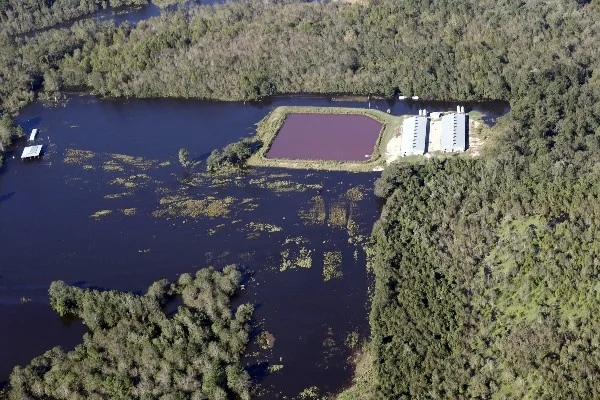
On October 8, 2016, Hurricane Matthew hit the eastern U.S. seaboard with category one force. Among the several states hit with Matthew’s force was the state of North Carolina. As with all hurricanes, heavy rains ensued. With heavy rains came flooding, more specifically, the flooding of anaerobic lagoons. An anaerobic lagoon, also known as an animal waste lagoon, is a lined or unlined man-made body of water that is used for wastewater treatment. The flooding of these lagoons has presented health and environmental concerns for the state of North Carolina. Because of an increase in animal operations, the North Carolina legislature has sought to regulate the disposal of animal waste as a means to protect water quality and to protect against other environmental issues.

States Should be Careful with Legislation About Renewable Energy Intergration

States Should be Careful with Legislation About Renewable Energy Intergration

Something of a scandal happened in Florida surrounding the state’s recent proposed constitutional amendment. Amendment 1 contained language that would have made it easier for Floridians to have solar panels installed on their homes. However, it also contained language that would have given utility companies the right to charge fees, specifically to solar panel owners. The utility backed amendment drew a lot of criticism and kick-started a vote no campaign when audio from a conservative think tank calling the amendment “political jiu-jitsu” was released. The amendment did not pass, but this event, and others like it, suggests that states should be wary before implementing strong legislation on this complex matter.

Kicking the Soda Habit

Kicking the Soda Habit

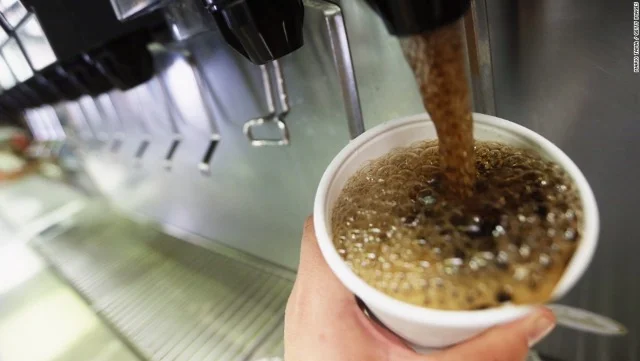
For many Americans, drinking soda is probably not the first thing to come to mind when thinking about unhealthy habits. However, Americans who drink sugary sodas daily gain more weight than those who do not. Rising consumption of sugary drinks has been a major contributor to the obesity epidemic. Also, people who consume sugary drinks regularly—one to two cans a day or more—have a twenty-six percent greater risk of developing type 2 diabetes than people who rarely have such drinks. Eliminating soda from the workplace is the first step in combating diabetes, obesity, and addiction to caffeine. Several universities and businesses across the country are fighting hard to combat this “sweet” addiction.


Kentucky Amish Not Dropping the Fight

Kentucky Amish Not Dropping the Fight

Recently, Amish residents in Auburn, Kentucky received attention for fighting back against an ordinance requiring large animals to wear collection bags to catch their droppings. The language of the ordinance requires that “a properly fitted collection device shall be securely in place on all horses or other large animals while such animals are on the street within the city limits.”  Anyone found guilty of violating the ordinance is only guilty of a violation (rather than a misdemeanor or a felony) and is subject to a $50 fine for each offense.  Many have refused to comply based on concerns that the bags may frighten their horses, which has led to an accumulation of cases being brought on the issue. 

Cautious Optimism: The Future of Renewable Energy under a Trump Administration

Cautious Optimism: The Future of Renewable Energy under a Trump Administration

On November 8, 2016, Donald J. Trump was elected the forty-fifth President of the United States. Shortly thereafter, corporations within the renewable energy sector experienced a substantial market reaction. The stock price of the nation’s largest solar panel manufacturer, First Solar, plunged 6.5 percent, and investors in Vestas Wind Systems, a global leader in wind energy, realized a loss of approximately ten percent. SunPower, the Silicon Valley based front-runner in solar innovation, watched as the value of its shares plummeted nearly eighteen percent. In the days that followed the presidential election, industry-wide stock prices partially recovered; however, the shares of many renewable energy corporations continue to trade beneath pre-election figures.

Chemical Water Contamination Leads to Lawsuits But No Solution

Chemical Water Contamination Leads to Lawsuits But No Solution

Recently, citizens of three townships in Pennsylvania discovered that toxic chemicals had contaminated both their public and private water supplies. Two residents, J. Davy and Josephine Yockey, are suing six major companies that used hazardous chemicals and compounds in their products, which allegedly lead to the water’s contamination. The plaintiffs are suing individually but have also instituted a class action on behalf of all similarly situated residents. The plaintiffs and members of the class action claim they have been exposed for years to these chemicals at unsafe levels, and since discovery of the contamination in the summer of 2016, they have been forced to buy bottled water for drinking and cooking. Defendants include The 3M Company, The Ansul Company, National Foam, Chemguard, Buckeye Fire Protection, and Angus Fire.

The End Doesn't Justify the Means: Why the EPA's Clean Power Plan is Unconstitutional

The End Doesn't Justify the Means: Why the EPA's Clean Power Plan is Unconstitutional

Coal has been a bedrock component of our national economy and energy policy for decades. Not so long ago, John F. Kennedy said, “It would be the height of folly for this nation to permit its coal mines to be abandoned… and to neglect further research and development in this major American industry.” Even under the current administration, U.S. policy has supported investing in clean coal technologies. As recently as 2010, the Environmental Protection Agency (hereinafter “EPA”) acknowledged that “[c]lean coal is an important part of our energy future,” and listed advanced coal technologies among its key environmental initiatives.