

Blog By: Amy Rice
For nearly a century, animal testing has served as the default pathway for demonstrating drug safety and efficacy before human trials and regulatory approval. That assumption, however, increasingly conflicts with advances in modern biomedical science. Through the FDA Modernization Act 2.0, Congress amended the Federal Food, Drug, and Cosmetic Act to clarify that preclinical evidence supporting regulatory submissions need not come exclusively from animal studies.[1] Instead, regulators may consider scientifically valid “nonclinical tests,” including emerging technologies known as New Approach Methodologies (“NAMs”).[2] This statutory reform represents a notable shift in evaluating evidence of efficacy that regulators should affirmatively embrace, rather than cautiously resist.
In regulatory science, efficacy refers to evidence demonstrating that a drug or therapeutic product produces its intended biological effect under controlled conditions.[3] Demonstrating efficacy is essential because regulatory approval by the FDA, regardless of whether it is a human pharmaceutical or a veterinary medicine, requires proof that a product provides real therapeutic benefit rather than merely theoretical promise.[4] Historically, regulators relied heavily on animal studies to generate early efficacy data to justify the basis for that product to proceed to human trials.[5] Preclinical animal testing alone can cost drug developers anywhere from $15 million to $100 million per candidate.[6] Yet the return on that investment is deeply uncertain: over 90% of drugs that appear safe and effective in animal studies ultimately fail to receive FDA approval.[7] The predictive gap between animal models and human outcomes is not merely a scientific inconvenience; it is a structural driver of clinical trial failure and billions of dollars in wasted development costs.[8]
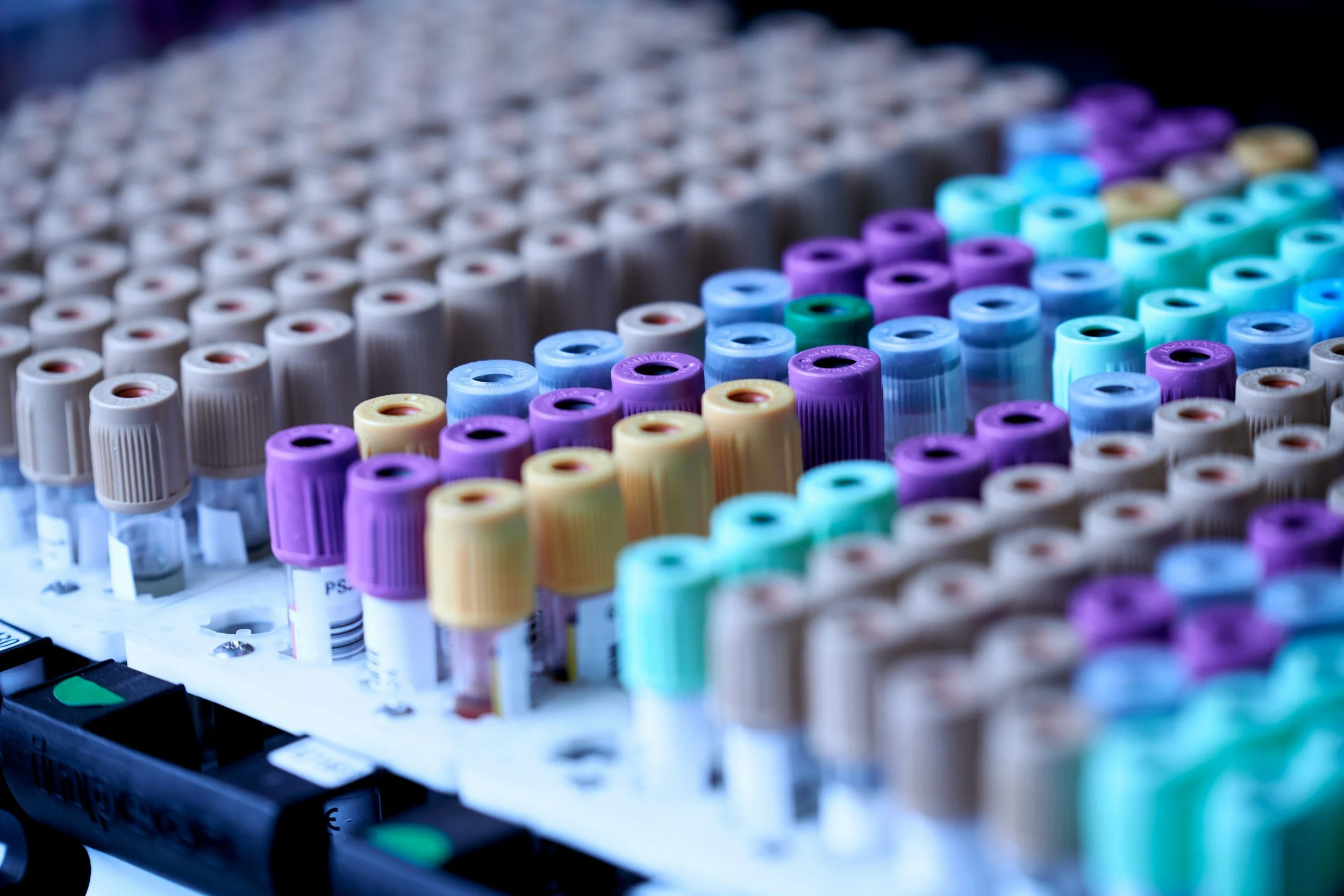
In response to these limitations, researchers and regulators have increasingly turned to NAMs. NAMs broadly refer to scientifically validated tools capable of generating biological data without relying on traditional animal testing.[9] NAMs offer a way to overcome many of these challenges posed using animal models in both pre-clinical and clinical stage research. These approaches include in vitro systems using human cells and tissues, organ-on-chip technologies that replicate human organ functions, and in silico computational models that simulate biological processes using advanced algorithms.[10] Rather than relying on cross-species extrapolation, NAMs can generate mechanistic data that is often more directly relevant to human biology.[11] Using NAMs, researchers can evaluate biological mechanisms, identify promising compounds, and optimize dosing strategies before conducting targeted animal trials. This approach can dramatically reduce development costs while improving the scientific precision of subsequent in vivo studies.[12]
Recognizing these advances, Congress enacted the FDA Modernization Act 2.0 in 2022 to remove statutory language that had been interpreted as requiring animal testing for drug development.[13] Though the FDA Modernization Act 2.0 is most commonly discussed in the context of human drug development, its method-neutral framework extends equally to veterinary medicines and animal biologics.[14] The law instead authorizes regulators to rely on any scientifically valid "nonclinical test" capable of producing reliable evidence about safety or efficacy.[15] This reform does not prohibit animal studies, nor does it eliminate their scientific value; rather, it eliminates the legal presumption that animal testing must be the primary or preferred method of generating regulatory evidence.[16]
Moreover, the FDA has begun translating this statutory mandate into concrete agency guidance. In March 2026, the Center for Drug Evaluation and Research released a draft guidance establishing a validation framework for NAMs used in regulatory submissions.[17] The framework identifies four core principles against which NAM-generated data should be evaluated: clarity of intended regulatory purpose, demonstrated human biological relevance, technical characterization through robust and reproducible methods, and fitness for regulatory decision-making.[18] That the agency would publish such a framework at all signals a meaningful institutional shift from treating NAMs as novelties requiring extraordinary justification to treating them as methods requiring standard scientific validation.

Congress has continued to push regulators toward this more flexible framework. The proposed FDA Modernization Act 3.0, which passed the U.S. Senate in 2025, seeks to ensure that the U.S. Food and Drug Administration fully implements the method-neutral approach envisioned in the earlier reforms by updating regulations and guidance to facilitate the use of NAM-based evidence.[19] Together, these efforts signal a clear congressional and regulatory intent: regulatory evaluation should focus on the quality and relevance of scientific evidence, not the historical precedent set by particular testing method.
Despite these advantages, regulatory hesitation has historically slowed the adoption of NAM-based evidence, with agencies treating NAM-generated data as supplementary to traditional animal studies rather than as legitimate primary evidence of efficacy. The March 2026 draft guidance represents a genuine step toward correcting this posture. FDA Commissioner Makary acknowledged directly that animal testing has a poor track record of predicting human responses to drugs; this on record submission represents a significant shift in the rhetoric from regulators. Yet a draft guidance containing non-binding recommendations is not the same as finalized, enforceable regulatory practice. If the validation framework articulated in the guidance is implemented selectively (i.e., applied only to novel or exotic NAMs while conventional animal data continues to receive deference by default) the underlying problem persists. Regulators must go further, embedding their support of method neutrality not just in guidance documents but in review of applications, submission expectations, and approval decisions.
Shakespeare’s Juliet famously asked, “What’s in a name?” A rose, she argued, would smell just as sweet regardless of the label attached to it.[20] The same principle should guide modern regulatory science. Evidence of efficacy should stand on its scientific merits, not on the traditional name of the testing method that produced it. The FDA’s March 2026 draft guidance, including its frank admission that animal models are outdated, suggests the agency is beginning to internalize this principle. The task now is to ensure that institutional follow-through matches the ambition of the guidance. By fully embracing NAM-generated evidence as legitimate proof of efficacy, regulators can accelerate biomedical innovation, reduce unnecessary animal testing, and align regulatory policy with the realities of twenty-first-century science.
[1] FDA Modernization Act 2.0, Pub. L. No. 117-328, 136 Stat. 4459 (2022).
[2] Id.; See also Julia Williams, FDA Modernization Act 2.0: The Beginning of the End for Animal Testing in Drug Development, 30 Animal L. 139 (2024).
[3] Nat’l Ctr. for Advancing Translational Scis., Efficacy, NCATS Toolkit, https://toolkit.ncats.nih.gov/glossary/efficacy/ [https://perma.cc/F3YR-K4MU] (last visited Mar. 13, 2026).
[4] See 21 C.F.R. § 314.126.
[5] Lewis B. Kinter et al., A Brief History of Use of Animals in Biomedical Research and Perspective on Non-Animal Alternatives, 62 ILAR J. 7 (2021), https://doi.org/10.1093/ilar/ilab020.
[6] Brian Roden, The Staggering Cost of Drug Development: A Look at the Numbers, GreenField Chemical Inc. (Aug. 10, 2023), https://greenfieldchemical.com/2023/08/10/the-staggering-cost-of-drug-development-a-look-at-the-numbers/ [https://perma.cc/4KYU-P49D].
[7] L.J. Marshall et al., Poor Translatability of Biomedical Research Using Animals — A Narrative Review, 51 altex: alternatives to laboratory animals 102, 102 (2023).
[8] J.T. Atkins et al., Pre-clinical Animal Models Are Poor Predictors of Human Toxicities in Phase 1 Oncology Clinical Trials, 123 Brit. J. Cancer 1496 (2020); See also, Jarrod Bailey et al., An Analysis of the Use of Animal Models in Predicting Human Toxicology and Drug Safety, 42 atla 181 (2014).
[9] New Approach Methodologies (NAMs), U.S. Food & Drug Admin., https://www.fda.gov/food/toxicology-research/new-approach-methods-nams [https://perma.cc/9RD3-LLEX] (last visited Mar. 13, 2026).
[10] Id.
[11] Id.
[12] See generally, Mario Beilmann et al., Application of New Approach Methodologies for Nonclinical Safety Assessment of Drug Candidates, 24 Nat. Rev. Drug Discov. 705 (2025).
[13] Williams, supra, note 2.
[14] From an Idea to the Marketplace: The Journey of an Animal Drug Through the Approval Process, U.S. Food & Drug Admin., https://www.fda.gov/animal-veterinary/animal-health-literacy/idea-marketplace-journey-animal-drug-through-approval-process [https://perma.cc/HC8W-JZB3] (last visited Mar. 10, 2026).
[15] Williams, supra, note 2.
[16] Id.
[17] Ctrs. for Drug Evaluation & Research, U.S. Food & Drug Admin., Draft Guidance for Industry, General Considerations for the Use of New Approach Methodologies in Drug Development (Mar. 2026), https://www.fda.gov/media/191589/download [https://perma.cc/6LY5-NC7Z]. (draft guidance; non-binding recommendations).
[18] Id.
[19] FDA Modernization Act 3.0, S.355, 119th Cong. (2025) (as passed by Senate).
[20] William Shakespeare, Romeo and Juliet act 2, sc. 2 (1597).