















In this blog, 2L staffer Nicholas Marini explores the ramifications of a recent EPA ruling affirming the right to repair. For years, farm equipment manufacturers paid steep premiums to repair their equipment with the manufacturers, not because the quality was better, but because they were legally required to do so.
In this blog, 2L staffer Katie Collins argues that the Alcohol and Tobacco Tax and Trade Bureau should permit fruit wines, cider, and mead to display vintage labels, just as grape wines do. Collins takes the position that allowing for truthful, non-misleading vintage labels on non-grape wine allows for transparency to the consumer and creates consistency within the market.
In this blog, 2L staffer Jordan Guancione uses the reality television show Farmer Wants a Wife as a cultural lens to discuss the legal consequences of marriage and divorce on inherited farmland, arguing that because farmland is a unique, non-liquid asset, family law should prioritize keeping farms intact during divorce and succession disputes. Guancione advocates for stronger tools to adequately protect farmland, including Kentucky’s adoption of the Uniform Partition of Heirs Property Act to prevent forced land sales.
In this blog, 2L staffer Emma Jury illustrates how popular media often suggests that nature thrives when there is human withdrawal rather than human engagement. she examines how the Wilderness Act of 1964, though celebrated by some, now limits important scientific research and disregards Indigenous land stewardship in many laws. Jury contends that reimagining the wilderness and rewriting our laws to include responsible human use and protection may be essential to preserving our ecosystems and our unique biodiversity.
In the face of growing global competition, the U.S. accelerates its decoupling from China’s monopoly on critical minerals. The American legal landscape, however, prohibits continuity in the pursuit of mineral independence. In this blog, 2L staffer Lexi Frazier argues that the Congressional Review Act is a vital tool for establishing regulatory certainty in pursuing mineral projects, so long as Congress exercises scrutiny in protecting projects that genuinely implicate national security.
In this blog, 2L staffer Lauren Barnhorn highlights how the United States has shifted its tone from international cooperation concerning outer space to privatization and utilization of space’s resources for its own economic and military interests. Barnhorn illustrates how this shift does not comport with the signed Outer Space Treaty’s ban on national appropriation and its requirement for the peaceful uses of outer space. She argues in order to guarantee scientific discoveries and promote the interests of all mankind, the United States must abide by international law.
In this blog, 2L staffer Conner Jackson examines how federal trade policy and retaliatory tariffs on bourbon exports have affected Kentucky's agricultural sector. He contends that trade retaliation directed at bourbon exports creates an economic harm that extends beyond distilleries to Kentucky agricultural producers. Based on past state responses and existing statutory frameworks, he argues that Kentucky can adopt a loss-based compensation program to support its farm producers amid the current trade disputes.
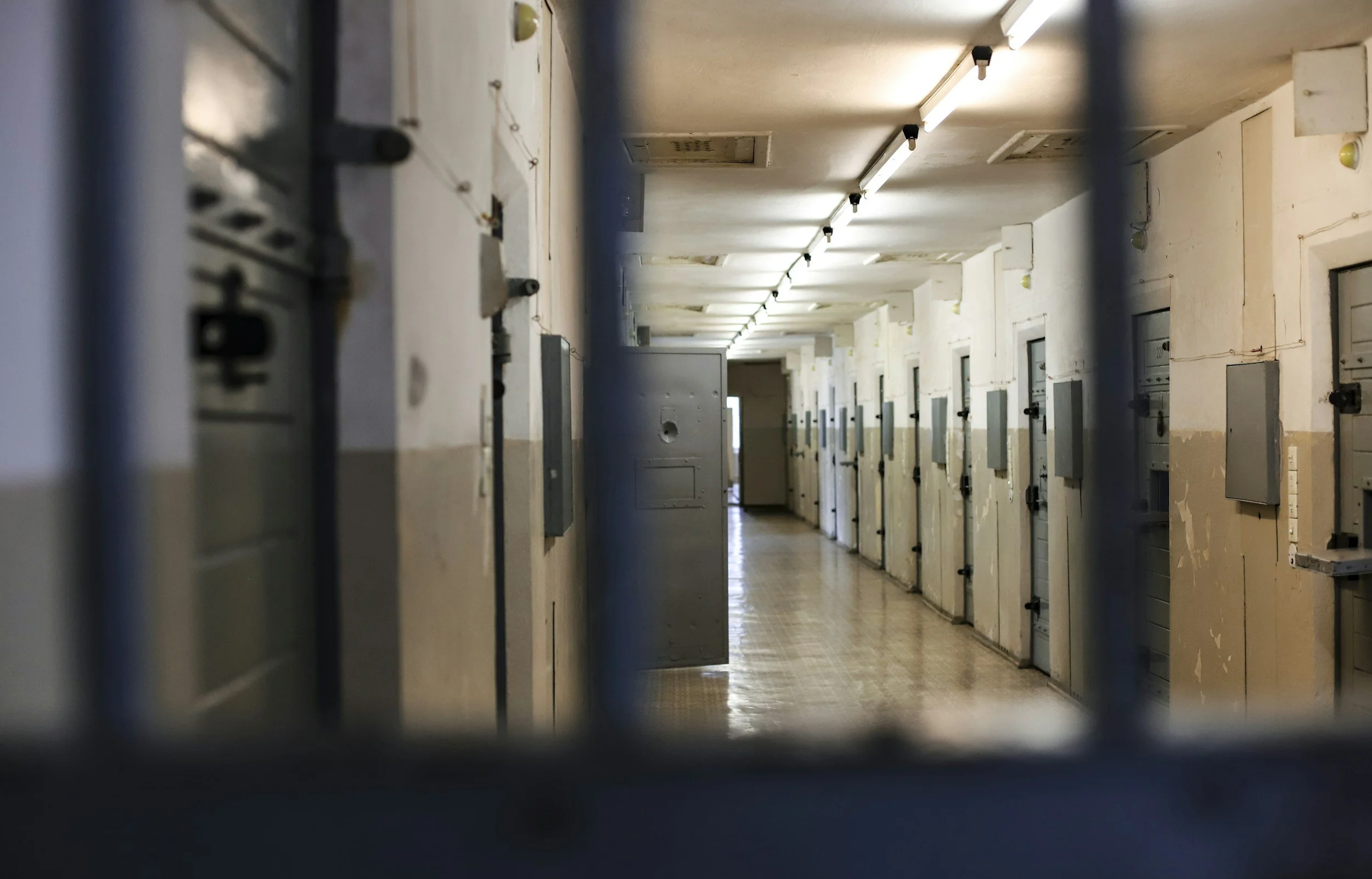
In this blog, 2L staffer Johnna Adams argues that the Second Chance Act (SCA), which has already been proven effective at reducing recidivism, should be expanded to include equine-assisted rehabilitation programs. Adams explains how these programs help participants overcome unique challenges that traditional rehabilitation models often fail to address through hands-on work with horses. Adams contends that by broadening the SCA’s coverage, recidivism can be further reduced without the need for additional spending.
In this blog, 3L Staffer Jacob Krummen examines Kentucky House Bill 630, introduced in the 2025 Regular Session in order to change eminent domain laws in Kentucky, protect certain uses of land, and strike a balance between development and conservation. Krummen argues the proposed changes in the bill would substantially impair the development of critical infrastructure in Kentucky and should undergo significant revisions before it is made into law.
Many fear the health effects of PFAS “forever chemicals,” which have permeated our environment and are now present in our food, water, and everyday products. In this blog, 2L staffer Holly Lefevre explores the growing concern over the presence of these chemicals in breastmilk and the legal and policy failures that allowed this situation to develop. She highlights the critical steps that policymakers, corporations, and communities must take to help protect infants and families.
Heirs' property ownership is increasingly unstable and fragmented. In this blog, 3L Senior Staffer Ben Bertram argues for the implementation of the Uniform Partition of Heirs' Property Act to protect family-owned farms and ancestral land from forced sales and speculative exploitation. Bertram contends that the procedural adjustments required by the UPHPA are outweighed by the preservation of rural land ownership.
In this blog, 2L staffer Aaron Withers examines Kentucky’s emerging shift from a coal-based economy to advanced nuclear and critical-mineral projects on retired mine sites. He argues that this transition is welcome only if implemented through a community-centered legal framework with strict siting requirements, enforceable local-benefit obligations, and long-term accountability to prevent repeating past harms.
In this blog, 2L staffer Alexander Bowman tackles the issue of whether new equine inspection laws for racehorses should be extended to apply to show horses as well. Bowman discusses the new inspection laws and analyzes the benefits of them. Next, he discusses the potentially injurious effects on show horses without these inspection laws. Bowman recommends that these laws should be applied to show horses in a uniform manner through the creation of a similar independent agency like the KHRGC.
The Animal Welfare Act (AWA) remains outdated in excluding invertebrates such as hermit crabs and shrimp, despite mounting scientific evidence of their sentience. To address this gap, 2L staffer Calvin Scott Bailey believes Congress should amend the AWA or direct the USDA to develop welfare standards for decapod crustaceans, aligning U.S. animal welfare law with contemporary science and global reforms.
In this blog, 2L staffer Emma Carlo explains how the Environmental Protection Agency (EPA) is currently attempting to rescind newly implemented drinking water regulations regarding chemicals known as PFAs. Carlo argues that this deregulation action is indicative of corporate favoritism and proves that water utility companies and the EPA believe the $800 million implementation cost is too expensive to protect the public and the environment. Carlo explains that EPA is acting contrary to its intended purpose, as this deregulation will allow continued exposure to these chemicals for more than 70 million people, despite the high likelihood of adverse health effects from low exposure to PFAS.
In this blog, 2L staffer Kalista Thomas focuses on the issues surrounding the lowering levels of water in the Colorado River and how these lowering levels are exacerbated by climate change. Thomas argues how the United States needs to continue to be a member in the Paris Agreement and gives an outline of how the Paris Agreement helps countries reduce their greenhouse gas emissions.
In this blog, 3L Senior Staffer Erica Joan Radermacher discusses the recent case of Skipper v. United States Fish and Wildlife Service, in which the court in the Southern District of Alabama ruled for private landowners. Radermacher argues that the abuse of agency power to designate thousands of acres of private lands as critical habitat after only a singular sighting of the black pinesnake on the land in the recent past is an example of government overreach at its most egregious.
Whether or not you believe Bigfoot is real, in this blog, 3L staffer Lauren Repa explores the legality of hunting the elusive creature. Repa explains how various states have implemented laws that forbid the hunting and killing of Bigfoot. She demonstrates whether hunting the creature would be worth the trouble with the Kentucky State Government.
In this blog, 3L staffer Sam Hilgeman examines the impact that the One Big Beautiful Bill Act will have on solar energy in the Bluegrass State. He argues that the removal of the residential solar credit will have long-term detrimental impacts to the state's residential solar energy market unless state legislators can provide their own incentive.
- March 2026 (3)
- February 2026 (5)
- November 2025 (10)
- October 2025 (10)
- September 2025 (1)
- August 2025 (2)
- April 2025 (3)
- March 2025 (6)
- February 2025 (6)
- January 2025 (1)
- December 2024 (1)
- November 2024 (2)
- September 2024 (1)
- July 2024 (1)
- May 2024 (5)
- April 2024 (6)
- March 2024 (4)
- February 2024 (4)
- January 2024 (1)
- December 2023 (1)
- November 2023 (2)
- October 2023 (9)
- September 2023 (3)
- August 2023 (3)
- May 2023 (4)
- April 2023 (12)
- March 2023 (5)
- February 2023 (2)
- January 2023 (4)
- December 2022 (2)
- November 2022 (5)
- October 2022 (6)
- September 2022 (1)
- May 2022 (1)
- April 2022 (1)
- March 2022 (8)
- February 2022 (7)
- January 2022 (4)
- December 2021 (3)
- November 2021 (1)
- October 2021 (16)
- September 2021 (3)
- August 2021 (1)
- July 2021 (1)
- June 2021 (2)
- April 2021 (2)
- March 2021 (12)
- February 2021 (11)
- January 2021 (2)
- November 2020 (2)
- October 2020 (4)
- April 2020 (9)
- March 2020 (3)
- February 2020 (4)
- January 2020 (1)
- November 2019 (5)
- October 2019 (6)
- September 2019 (4)
- July 2019 (2)
- June 2019 (2)
- March 2019 (9)
- February 2019 (4)
- January 2019 (2)
- November 2018 (2)
- October 2018 (3)
- September 2018 (3)
- July 2018 (1)
- April 2018 (7)
- March 2018 (1)
- February 2018 (4)
- January 2018 (13)
- December 2017 (4)
- November 2017 (3)
- October 2017 (4)
- September 2017 (2)
- August 2017 (5)
- July 2017 (6)
- June 2017 (1)
- May 2017 (1)
- April 2017 (5)
- March 2017 (8)
- February 2017 (5)
- January 2017 (4)
- November 2016 (3)
- October 2016 (6)
- September 2016 (6)
- August 2016 (4)
- July 2016 (2)
- June 2016 (3)
- May 2016 (1)
- April 2016 (3)
- March 2016 (7)
- February 2016 (5)
- November 2015 (6)
- October 2015 (8)
- September 2015 (4)
- August 2015 (5)
- July 2015 (5)
- June 2015 (5)
- May 2015 (10)
- April 2015 (4)
- March 2015 (4)
- February 2015 (3)
- January 2015 (5)
- December 2014 (3)
- November 2014 (4)
- October 2014 (7)
- September 2014 (4)
- August 2014 (1)
- July 2014 (2)
- April 2014 (7)
- March 2014 (7)
- February 2014 (8)
- January 2014 (5)
- December 2013 (1)
- November 2013 (8)
- October 2013 (10)
- September 2013 (6)
- August 2013 (4)
- July 2013 (4)
- June 2013 (4)
- May 2013 (4)
- April 2013 (8)
- March 2013 (10)
- February 2013 (9)
- January 2013 (7)
- December 2012 (4)
- November 2012 (6)
- October 2012 (9)
- September 2012 (10)
- August 2012 (5)
- July 2012 (4)
- June 2012 (7)
- May 2012 (7)
- April 2012 (4)
- March 2012 (9)
- February 2012 (8)
- January 2012 (5)
- December 2011 (8)
- November 2011 (8)
- October 2011 (9)
- September 2011 (8)
- August 2011 (1)
- May 2011 (1)
- April 2011 (1)
- March 2011 (1)
- February 2011 (4)
- January 2011 (1)
- December 2010 (1)
- November 2010 (4)
- October 2010 (5)
- September 2010 (2)
- August 2010 (2)
- April 2010 (11)
- March 2010 (17)
- February 2010 (21)
- January 2010 (7)
- December 2009 (3)
- November 2009 (17)
- October 2009 (22)
- September 2009 (24)
- August 2009 (8)

In this blog, 2L Staffer Georgia Arrington discusses how the Environmental Protection Agency’s (EPA) Federal Insecticide, Fungicide, and Rodenticide Act (FIFRA) has missed its mark by neglecting to include golf course workers as a covered group under its Worker Protection Standards (WPS). In excluding these workers and excluding golf courses that are not used for sod production from the WPS, Arrington argues FIFRA is failing to provide meaningful protection from the dangers of pesticides on golf courses. Arrington illustrates that if the increased rates of Parkinson’s disease and non-Hodgkin's lymphoma in this cohort are not enough to demand regulatory reform, the EPA's continued approval of pesticides banned in other sectors but still used on golf courses certainly should be.