
Blog By: Samuel Lay
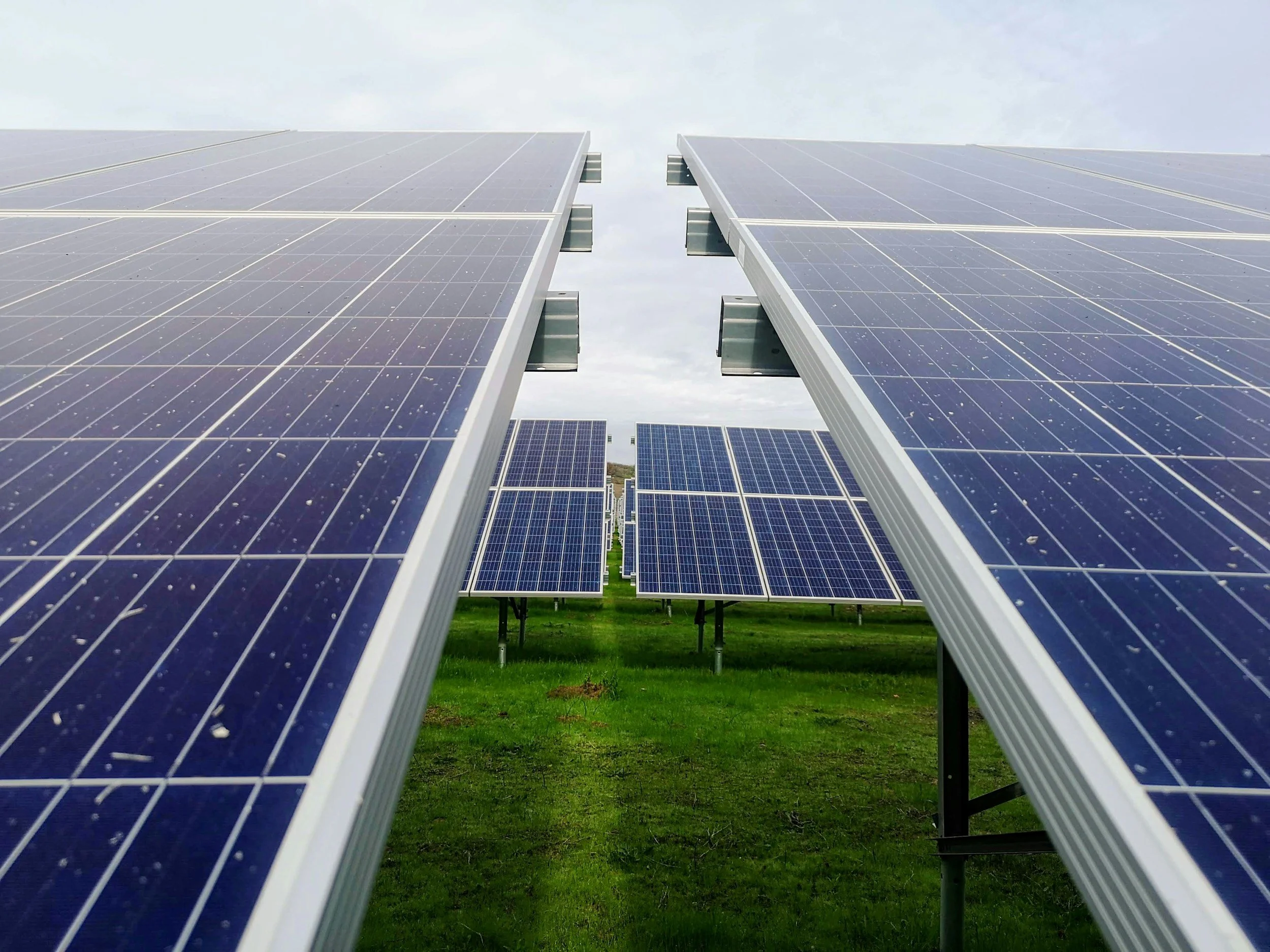
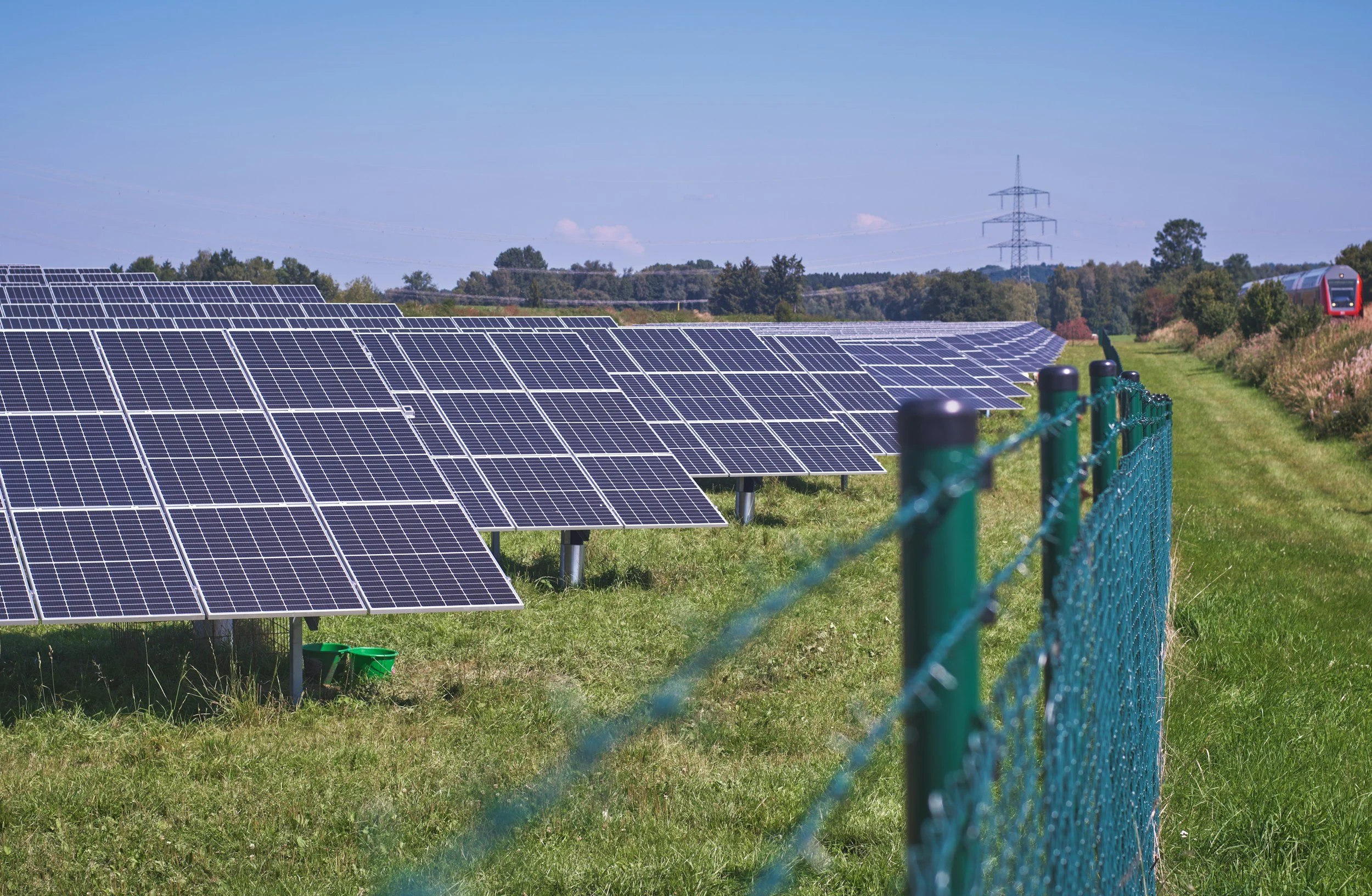
In the fall of 2025, the Lexington City Council unanimously voted to approve new zoning amendments regarding the placement of solar panels in the city and the surrounding Fayette County.[1] These amendments instituted a ban on large-scale solar farms on agricultural farmland.[2] Additionally, intermediate-scale installations would be limited to only 1% of available farmland, amounting to about 1800 acres.[3] The concern among some on the Council and in the community is the unknown effects on the farmlands' topsoil if large-scale solar farms were to be constructed.[4] If a developer wanted to construct a large-scale solar farm in Lexington, the new amendment would limit construction to certain industrial-zoned areas.[5] As of 2024, 132,000 acres in Lexington and Fayette County are zoned for agricultural uses.[6] More pressing is the lack of certainty of this issue, with the Lexington Council recently moving to now all such large scale solar farms.[7]
Generally, local governments are permitted to impose land use restrictions to protect the character of the city.[8] However, when opportunists challenge such laws, they are faced with rational basis review, which only requires that the ordinances not be arbitrary, unreasonable, or lack merit regarding public policy issues.[9] Ordinarily, this would be the end of the discussion and alternative paths to litigation are often overlooked. To circumvent the zoning issue, solar farmers are better off using a Takings Clause argument.
Under the Takings Clause of the 5th Amendment to the United States Constitution, the government cannot deprive someone of their property for public use without just compensation.[10] In the case of local governments forbidding solar farm facilities on certain farmland, this deprivation by the government could be interpreted as a per se taking. For this type of taking to occur, there must either be a physical occupation of the land or total economic deprivation of the land.[11]
Under a per se analysis, mandating solar farms cannot be built on certain farmland completely deprives the land of its desired economic value if the land were only to build a large-scale solar farm. A claim that may seem dubious given the known high quality of the farmland in Lexington.[12]
If the new City Council proposal goes through, but they suddenly reverse course again, a takings claim may be in play. Under Lucas v. South Carolina Coastal Council, an owner is said to have suffered a taking if they are called to give up the entire economic benefit of their land in the name of a public goal.[13] Currently, a per se taking only occurs in two situations, one being when the economic value of one’s property is totally deprived, in the name of the public good, that the property is then rendered idle.[14] If a taking does occur, the government must provide the owner with just compensation for their property.[15] Under the current view, the land having value as farmland would make it difficult to claim it has been deprived of its economic value solely because it cannot be used as solar. This places a solar farm proprietor in an undesirable position.[16] While this is the current view, it is not the best view.

Going forward, calculating a fairer interpretation of economic value could consider the value of the land from the point of view of the owner, not its hypothetical value. While advocating against expanding the courts new test for takings, Justice Stevens dissent in Lucas highlights the lack of consensus regarding the issue of economic deprivation.[17] Given the substantial costs of constructing a solar farm, this would allow landowners to claim a Taking when their land is deprived of the value which they intended to use the land up purchase.[18] While a nonissue some projects, the threat still remains for others.[19] Under this new view, the value of the land may more accurately reflect the intent and wants of the owners in the event their solar projects are banned.
While unclear how the Lexington City Council will proceed on the issue of Solar zoning, the fact remains that even they do not know where they stand. If the Council reverses course again, it could place major financial burdens on developers, which may be illegal under a Takings Claim. This underscores the importance of a better interpretation of a taking. Land should reflect the value from the perspective of the owner, not a hypothetical value for all other uses. This would better serve landowners who may be affected by unexpected changes in public policy.
[1] Beth Musgrave, Lexington Council Moves Forward Solar Ban on County Farmland, Lexington Herald Leader (August 20, 2025) https://www.kentucky.com/news/local/counties/fayette-county/article311759748.html [https://perma.cc/77AM-XC4M].
[2] Id.
[3] Id.
[4] Id.
[5] Lexington-Fayette Urb. Cnty. Gov't., Ky. Zoning Ordinance No. 069 (Sep. 11, 2025).
[6] Mayor Linda Gorton Comments on Proposed Solar Farm, Lexington City Gov. (Tuesday, Oct. 29, 2024) https://www.lexingtonky.gov/news/mayor-linda-gorton-comments-proposed-solar-farm [https://perma.cc/M94W-F2VC].
[7] Carlee Hogsetn, Lexington Council Committee Advances Solar Farm Proposal for Agricultural Land, WKYT (March 10, 2026) https://www.wkyt.com/2026/03/10/lexington-council-committee-advances-solar-farm-proposal-agricultural-land/ [https://perma.cc/AU6Y-B9EA].
[8] Penn Cent. Transp. Co. v. City of New York, 438 U.S. 104, 128-29 (1978).
[9] Village of Euclid v. Ambler Realty Co., 272 U.S. 365, 395 (1926).
[10] U.S. Const. Amend. V.
[11] Lucas v. South Carolina Costal Counsil, 505 U.S. 1003, 1015 (1992).
[12] Brittany Roethemeier, et al., New Farmland Solar Proposals Exclude agricultural stakeholder form discussion, Lexington Herald Leader (March 10, 2026) https://www.kentucky.com/opinion/op-ed/article314994142.html ) [https://perma.cc/2RLJ-K7A3].
[13] Lucas, 505 U.S. at 1019.
[14] Id. at 1020.
[15] Id. at 1003.
[16] See Id. at 1019-20 (In Lucas, South Carolina had passed a law regarding regulations for protecting the states beachfronts, and such regulations rendered the owners property completely valueless).
[17] See Id. at 1064-67 (In dissenting, Stevens argues that there is no support for a per se rule for takings and he was concerned that certain investors would take advantage of this new rule to their own benefit).
[18] See What to Consider When Evaluating the Costs of Solar, Genie Solar Energy, https://geniesolarenergy.com/understanding-the-costs-of-solar/ [https://perma.cc/8YH5-GXU3].
[19] Musgrave, supra note 1.