




In a recent decision, the Kentucky Supreme Court found that Kentucky’s Article 6 regulation on claiming races was not in violation of the Commerce Clause. This blog discribes their reasoning.

In this blog, 3L staffer Lakyn LeMaster analyzes how the increasing popularity of GLP-1 medications may be reshaping consumer food habits and, in turn, impacting Kentucky’s agricultural industry. LeMaster addresses the risks that changing demands could create for Kentucky, particularly as consumers purchase less ultra-processed and fast food while showing increased interest in fresh foods. Ultimately, she argues that Kentucky’s agricultural community should proactively monitor these trends and encourage diversification to ensure producers are prepared for an evolving market.
In this blog, 2L staffer Grace Hager analyzes the escalating legal crisis facing the "Clean Beauty" industry driven by 2026 FDA findings and new state-level bans. Hager explores the debate between the industry’s current reliance on self-defined clean standards versus the growing legal demand for lab-verified transparency. Ultimately, she takes the position that retailers must assume a heightened legal risk that can no longer be hidden by vague marketing claims.
In this blog, senior staffer Amy Rice argues that the FDA should fully embrace a "method-neutral" approach by accepting New Approach Methodologies (“NAMs”) as primary evidence of drug efficacy. She contends that traditional animal testing is often an outdated and poor predictor of human outcomes, whereas modern tools like organ-on-chip models offer superior scientific precision. Ultimately, Rice asserts that regulators must move beyond historical biases to implement the FDA Modernization Acts, thereby accelerating innovation and reducing the costs of biomedical and agricultural development.
In this blog, 2L staffer Samuel Lay examines a new method to apply 5th Amendment Takings Claims in response to changing regulations regarding Solar Farms built on farmland in Lexington, Ky. Lay breaks down the changing landscape regarding the city’s solar regulations. This is followed by a proposed new method in determining what constitutes total economic deprivation for a per se takings. The proposed change would alter the current meaning of total deprivation to depriving the owner of the value they have in the land. Lay argues that this new method is fairer to those who want to build solar farms in Lexington but may be discouraged due to the ever-changing landscape of solar regulation in Lexington.
In this blog, 2L staffer Emma Johns explores the expansion of solar energy projects on reclaimed coal lands in Eastern Kentucky. She argues that although these developments offer potential economic and environmental benefits, current legal and regulatory systems fail to adequately protect landowners and local communities. She concludes that stronger regulations and greater community protections are necessary to ensure a fair and effective transition to renewable energy.
Recently, an Illinois tax tribunal ruled that compressed natural gas (CNG) is taxable under the state’s eighty-seven year old Motor Fuel Tax Law (MFTL). The tribunal decided that CNG was taxable under the statute because it was left intentionally ambiguous as to what fuel was taxable by prefacing a non-exhaustive list with ‘among other things. By ignoring the distinction between traditional fuels and alternative fuels, the tax tribunal could extend the MFTL to any fuel usable by a vehicle. This tax is extended to CNG without any mention of that fuel in the statute.
In March 31, 2016, a lawsuit was filed against an exorbitant list of defendants, but the most notable on that list were Governor Rick Snyder, the Michigan Department of Environmental Quality, and the State of Michigan. A handful of plaintiffs brought this action alleging a violation of the Safe Drinking Water Act. This lawsuit is apropos of the Flint Water Crisis.
Mongolia, one of the least densely populated countries in the world,[i] has undergone dramatic change in its recent history. Upon the fall of the USSR, Mongolia transitioned to a democracy in 1990, opening its markets and privatizing its land. In 2010, I lived with nomadic herders in the Eastern Khentii Province of Delgerkhaan sum, a community well-aware it was only a matter of time before they could no longer live as their ancestors had for centuries.
On October 11th, 2016, the United States Court of Appeals for the Tenth Circuit made yet another ruling regarding the treatment and management of the wild horse population under the control of the Bureau of Land Management (BLM). The court ruled for the BLM after the state of Wyoming alleged the BLM had violated its “discretionary obligations” in its management of the wild horse population in seven herd management areas (HMAs) across the state. Many see this ruling as a victory but it may instead simply be another roadblock on the way to the effective management of wild horse herds across the country.
On September 7, 2016, the House of Representatives voted 241-174 to pass the Stop Settlement Slush Funds Act of 2016 (H.R. 5063). This bill prevents the government from entering into settlements providing for payments to anyone except the government itself unless the payments represent restitution for harm caused directly by the payer. In other words, this bill will bar the Department of Justice (DOJ) from requiring settling defendants to donate money to third parties.
As if we needed anything else to shake up this year’s election cycle, a recent earthquake in Oklahoma has provided yet another point of controversy for Americans to keep in mind as they head to the polls this fall. Pawnee, Oklahoma was home to the latest of a string of seismic events that have added to the weight of a pending lawsuit between one of the largest environmental organizations in the United States and four producers and developers of natural gas, oil, and natural gas liquids.[iii] Sierra Club, plaintiff in the action, is claiming that, “the spike in earthquakes stems from the injection of wastewater from fracking and other oil and gas development activities into thousands of deep wells around Oklahoma.” Defendants, on the other hand, raise valid concerns regarding issues of causation.
On August 16, 2016, new regulations, demanding that heavy-duty trucks reduce their emissions, were unveiled.[i] During his first term, President Obama actively strove to combat rising greenhouse gas emissions from the transportation sector. Specifically, the Obama Administration “put in place the first national policy to increase the fuel economy of medium- and heavy-duty trucks with model years between 2014 and 2018.” The regulations that were recently unveiled mandate that heavy-duty pickup trucks and vans “must become 2.5 percent more efficient each year between 2021 and 2027. Among those targeted by these regulations are diesel truck owners.
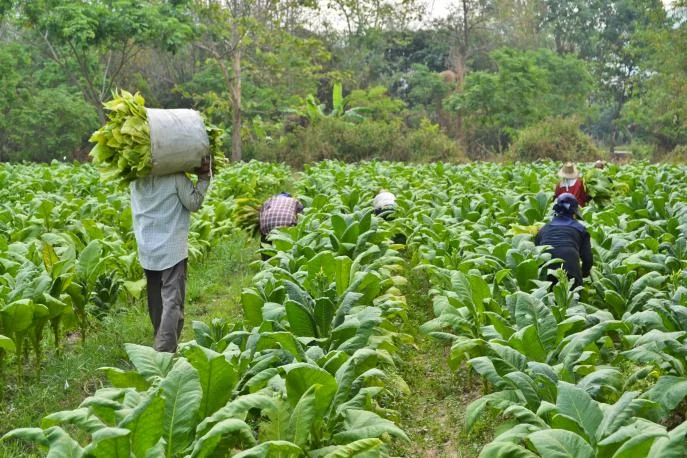
For years Kentucky has been known as one of the leading producers of tobacco, but as trends have begun to change, the demand for tobacco has slowly begun to decrease. In 1964, a discovery was made showing tobacco caused lung cancer. Ever since this discovery, the tobacco industry has been gradually shrinking, forcing many Kentucky farmers to either switch to growing other crops, or completely shut down farming production.