




The Revival of the Eastern Oyster and the Regulations that Hinder Restoration Efforts
by Collier Marsh, Editor in Chief__________________________________________

In this blog, 3L staffer Lakyn LeMaster analyzes how the increasing popularity of GLP-1 medications may be reshaping consumer food habits and, in turn, impacting Kentucky’s agricultural industry. LeMaster addresses the risks that changing demands could create for Kentucky, particularly as consumers purchase less ultra-processed and fast food while showing increased interest in fresh foods. Ultimately, she argues that Kentucky’s agricultural community should proactively monitor these trends and encourage diversification to ensure producers are prepared for an evolving market.
In this blog, 2L staffer Grace Hager analyzes the escalating legal crisis facing the "Clean Beauty" industry driven by 2026 FDA findings and new state-level bans. Hager explores the debate between the industry’s current reliance on self-defined clean standards versus the growing legal demand for lab-verified transparency. Ultimately, she takes the position that retailers must assume a heightened legal risk that can no longer be hidden by vague marketing claims.
In this blog, senior staffer Amy Rice argues that the FDA should fully embrace a "method-neutral" approach by accepting New Approach Methodologies (“NAMs”) as primary evidence of drug efficacy. She contends that traditional animal testing is often an outdated and poor predictor of human outcomes, whereas modern tools like organ-on-chip models offer superior scientific precision. Ultimately, Rice asserts that regulators must move beyond historical biases to implement the FDA Modernization Acts, thereby accelerating innovation and reducing the costs of biomedical and agricultural development.
In this blog, 2L staffer Samuel Lay examines a new method to apply 5th Amendment Takings Claims in response to changing regulations regarding Solar Farms built on farmland in Lexington, Ky. Lay breaks down the changing landscape regarding the city’s solar regulations. This is followed by a proposed new method in determining what constitutes total economic deprivation for a per se takings. The proposed change would alter the current meaning of total deprivation to depriving the owner of the value they have in the land. Lay argues that this new method is fairer to those who want to build solar farms in Lexington but may be discouraged due to the ever-changing landscape of solar regulation in Lexington.
In this blog, 2L staffer Emma Johns explores the expansion of solar energy projects on reclaimed coal lands in Eastern Kentucky. She argues that although these developments offer potential economic and environmental benefits, current legal and regulatory systems fail to adequately protect landowners and local communities. She concludes that stronger regulations and greater community protections are necessary to ensure a fair and effective transition to renewable energy.

By: Jordan Stanton, Staff Member
"Imagine the NBA if every state had different-sized courts, different referees and rules, and no coordinated schedule."[1] That colorable analogy by racing enthusiast, H. Robb Levinsky, sums up the present pitfall in the horse racing industry. Currently there is no central governing body responsible for providing uniformity throughout the sport.[2] Instead, rules and regulations vary from state to state, which has been a profound reason for the sport's demise.[3] Levinsky urges that the main reason the sport has failed to generate significant media attention is because there is not a consistent product to follow.[4]
So how does this billion dollar industry bolster its declining product?[5] This issue is not foreign to congressional consideration. In 2008, a congressional hearing directly focused on the state of thoroughbred racing.[6] The meeting generated potential solutions to remedy this fractured industry, but nothing ended up coming to fruition.[7] Interested parties have suggested that horse racing adopt the commissioner approach which has been lucratively implemented by the National Football League, National Basketball Association, and Major League Baseball.[8] However, this desire has been met with opposition from parties that wish to continue the current practice of individual state operation.[9] Further, opponents of the commissioner approach assert that the industry is in such poor shape that it has no way of successfully reforming.[10]
Betting totals in horse racing took a three billion dollar hit from 2007 to 2010.[11] Horse racing is immersed with issues relating to gambling competition, lack of media exposure, drug problems, and overall poor public perception.[12] The remedy to those problems appears clear. Boxing and horse racing are the only two sports in this country that have no central governing body, and, oddly enough, they are both in the worst shape.[13] With that being said, for this industry to emerge from the depths of rapid decline, Congress needs to push for a bill requiring the creation of a national horse racing commission, similar to what is already in place in the NBA, NFL, and MLB. Since horse racing has failed to put greed to the side, if this industry has any hopes of resurgence, Congress needs to step in and create a governing body to uniformly address the problems festering in horse racing, before it is too late.
_______________________
[1] John Platt,
Horse Racing: An Industry in Crisis
,
Mother Nature Network
(June 7, 2012, 3:56 PM), http://www.mnn.com/lifestyle/arts-culture/stories/horse-racing-an-industry-in-crisis.
[2]
Id.
[3]
Id.
[4]
Id.
[5]
Id.
(stating that the horse racing industry has a $39 billion dollar direct economic impact).
[6] Mike Jensen,
Reforms in Horse Racing? Central Body for Industry Considered at Hearing
,
The Inquirer
(June 20, 2008), http://articles.philly.com/2008-06-20/sports/25250567_1_delaware-park-national-thoroughbred-racing-association-thoroughbred-horse-owner.
[7]
Id.
[8] William C. Rhoden,
Uncontrolled Sport May Not Merit Triple Crown Glory
,
The New York Times
(May 27, 2012), http://www.nytimes.com/2012/05/28/sports/horse-racing-may-not-deserve-triple-crown-glory.html?pagewanted=all&_r=1&.
[9]
Id.
[10]
Id.
[11] Andrew Beyer,
Betting Totals Continue to Decline in Thoroughbred Racing
,
The Washington Post
(Apr. 22, 2011), http://articles.washingtonpost.com/2011-04-22/sports/35230725_1_jim-gagliano-thoroughbred-population-sport.
[12] Bennett Liebman,
Reasons for the Decline of Horse Racing
,
The New York Times
(June 6, 2010, 10:34 AM), http://therail.blogs.nytimes.com/2010/06/06/reasons-for-the-decline-of-horse-racing/.
[13] Rhoden,
supra
note 8.

By: Vanessa Rogers, Staff Member
Kentucky prides itself on its horsing industry. Will Kentucky's prized possession be able to survive after its neighboring state, Ohio, opens yet another casino?
On March 4, 2013, the Horseshoe Casino opened in Cincinnati, Ohio. Cincinnati's casino is projected to draw about $227 million in gross revenue in its first year,[1] some of which is bound to come from bordering Kentuckians. According to Kentucky's Governor Steve Beshear, "The casino in Cincinnati's good news for Ohio and bad news for Kentucky... Right now we've got thousands of Kentuckians that have been going out of state, and now they'll also be going to Cincinnati to spend their Kentucky money in Ohio, and then Ohio's going to keep the benefits of that."[2] In light of losing potential revenue, Kentucky has one option to sustain its famous horsing industry: fight back and open casinos within its borders.
Despite a long history of gambling on horses, Kentucky has a constitutional ban on casino-style gambling.[3] Since 2007, Beshear has attempted to legalize casinos in Kentucky.[4] His efforts, however, have been met with strong opposition.[5] According to Beshear, the state is losing hundreds of millions of dollars annually to states that have casinos.[6] He encourages Kentucky to legalize casinos in order to keep money in the state to generate cash for Kentucky's horse industry and to increase government revenue.[7] Will Kentucky step up and open casinos within its borders to save its economy and famous horsing industry? Wage your bets.
__________________
[1]
With fireworks and fanfare, Cincinnati casino now open
,
WLWT.com
(March 5, 2013, 7:51 AM), http://www.wlwt.com/news/local-news/cincinnati/With-fireworks-and-fanfare-Cincinnati-casino-now-open/-/13549970/19163578/-/item/1/-/30kn50/-/index.html.
[2]
Id.
[3] Roger Alfred,
Beshear: Horse Industry Split on Casino Amendment
,
CourierPress.com
(February 5, 2013, 7:28 PM), http://www.courierpress.com/news/2013/feb/05/beshear-horse-industry-split-on-casino-amendment/.
[4]
With fireworks and fanfare, Cincinnati casino now open
,
supra
note 1.
[5]
Id.
[6] Alfred,
supra
note 3.
[7]
Id.
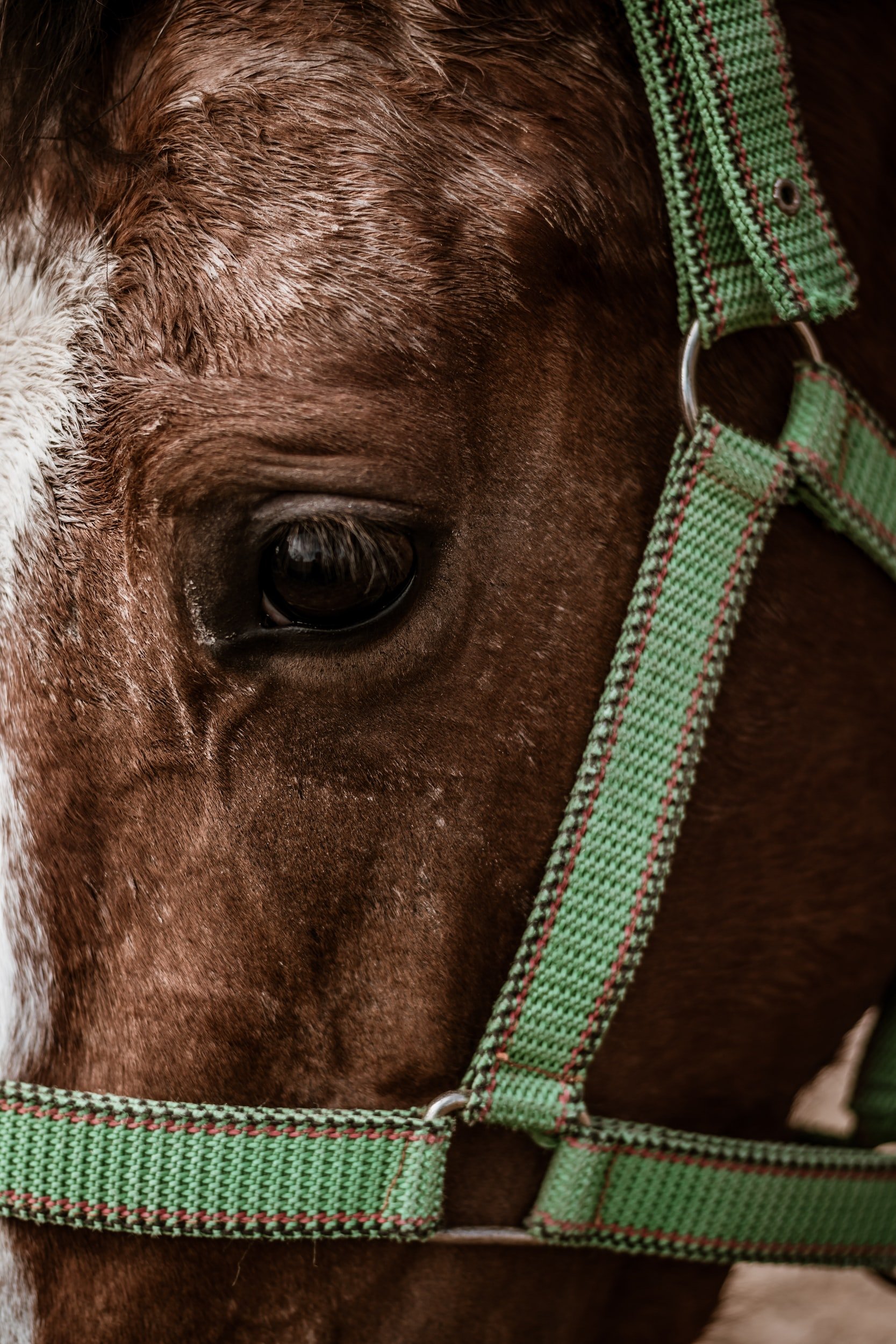
By: Wes Bright, Staff Member
There are those in the horse racing industry that feel there might have been some funny business taking place with the Kentucky Horse Racing Commission's vote to phase out Lasix. Among these is Dale Romans. In a letter to the Courier Press, Romans accused one of the biggest proponents of the plan of foul play by stating that "certain members of the Jockey Club, serving on the Racing Commission, have threatened other commission members with expulsion if they vote against the ban of race day Lasix. In my opinion, the underhanded tactics must end."[1] These assertions give cause for an open records request to enlighten us to the Commission's actions regarding this regulation.
The phase out plan passed 7-5 with one abstention. Of the seven that voted yes, a few commissioners stand out. Even though they had an early opportunity to speak, Commissioners Houston and Leavitt failed to comment on their reasoning.[2] Commissioner Lavin voted on the incorrect belief that Lasix does not have an impact on bleeding.[3] Both Commissioner Bonnie and Commissioner Farmer based their decisions on the idea that Lasix is a performance enhancer.[4] An earlier KJEANRL blog post dealing with Lasix puts an end to this argument.[5] These five commissioners either had nothing to say or their reasoning was very weak.
The comments made by Commissioner Jones are also concerning. They focused on the process this regulation went through to reach a vote. Chairman Beck had a "Lasix committee" hold a public forum, but they did not create a report.[6] They simply drafted a regulation that was up for a vote. The regulation did not go through the Drug Research and Rules Committee like most regulations of this type.[7] The Commission did not produce any type of study as to the effects of this regulation.[8] Also, during the April vote, Commissioners Ludt and Pitino voted against the ban of Lasix for all two year olds. However, on the June 13 vote, Pitino was nowhere to be found and Ludt abstained from voting.[9] It is hard to understand why Commissioner Pitino would be missing from this vote on such a big issue. Although we may never know for sure, it seems that there were questionable actions taken in passing the Lasix phase out plan.
_____________________
[1] Dale Romans,
Commentary: Horse trainer urges Kentucky not to ban Lasix drug
,
CourierPress.com
(June 11, 2012), http://www.courierpress.com/news/2012/jun/11/no-headline---ev_12romans-commentary/?print=1.
[2] Transcript of Meeting Minutes at 37-38, Kentucky Horse Racing Commission (June 13, 2012) (transcript of the June 13 meeting of the KHRC where the 7-5 vote was cast).
[3]
Id.
at 38.
[4]
Id.
at 43-48.
[5] Wes Bright,
How Does Lasix Enhance Performance in Horses
,
KJEANRL.com
(Nov. 4, 2012), http://www.kjeanrl.com/search/label/Lasix.
[6]
See
Transcript at 26,
supra
note 2.
[7]
Id.
at 26.
[8]
Id.
[9] Transcript of Meeting Minutes at 104-105, Kentucky Horse Racing Commission (Apr. 16, 2012 (transcript of the April 16 meeting of the KHRC where a 7-7 vote was cast).

By: Clay Duncan, Staff Member
The San Joaquin River is located in central California and was once host to the largest Chinook salmon population in the United States.[1] However, this all changed in 1942 when the San Joaquin River was damned up.[2] Although the damming proved beneficial to agricultural production, it dried up a large stretch of the river and cut the salmon off from their spawning grounds.[3] This prompted a collection of environmental groups to file suit in 1988 to get some water released and hopefully restore the salmon population to its prior prominence in the river.[4]
Eventually, in 2009, Congress introduced the San Joaquin River Restoration Act in order to effectuate a settlement reached between several environmental and fishing groups.[5] The settlement had a twofold objective: to return the salmon to the San Joaquin River and minimize water supply impacts on farmers.[6] In October 2009, the first tangible step was taken toward reaching the desired ends as the first restoration flows were released down the San Joaquin River.[7] As recent as March 14 of this year, flows were released down the river from the Friant Dam at 400 cubic feet per second.[8]
The Bureau of Reclamation, located within the Department of the Interior and charged with seeing that the settlement is carried out as planned, intends to employ and recirculate various water flows over the next five years.[9] In order to achieve the stated objectives, it will take a concerted effort from the agencies involved and the private contractors in the surrounding region.[10] It remains to be seen whether all affected parties will do what is required to implement this long-term plan and bring the salmon back to the San Joaquin River.
__________________________
[1] Gary Pitzer,
A Briefing on the San Joaquin River Restoration Program
,
Water Education Foundation
, 3,
available at
http://www.watereducation.org/userfiles/SanJoaquinRestoration_web.pdf.
[2]
Id.
[3]
Id.
[4]
Id.
[5]
Id.
[6] Pitzer,
supra
note 1, at 3.
[7]
Id.
[8] Interim Flows,
San Joaquin River Restoration Program
, http://restoresjr.net/activities/if/index.html (last visited Mar. 14, 2013).
[9]
See Draft Environmental Assessment: Recirculation of Recaptured Water Year 2013-2017 San Joaquin River Restoration Program Flows
,
U.S. Department of the Interior Bureau of Reclamation
, 8,
available at
http://www.usbr.gov/mp/nepa/documentShow.cfm?Doc_ID=12692.
[10]
See Id.
at 9.

By: Amanda Stubblefield, Staff Member
In early March, freshman Congressman Andy Barr (R-KY) introduced H.R. 998, the Equine Tax Parity Act, in order to "amend the Internal Revenue Code of 1986 to reduce the holding period used to determine whether horses are § 1231 assets to twelve months."[1] Presently, owners must hold equine capital assets for twenty-four months in order to take advantage of the preferential tax treatment for capital gains.[2] Therefore, this proposed amendment would be a significant change - cutting the required holding period in half. The bill has been referred to the Committee on Ways and Means.
Barr claims the change would "bring parity to the tax code for the Commonwealth's signature industry" which would result in "helping put Kentuckians back to work."[3] The Congressman also suggests amending the tax code would "finally eliminate a 44-year-old tax provision that discourages investment in the equine industry, bringing much needed relief to an economic sector that supports 1.4 million full-time jobs."[4]
Although this proposal would undoubtedly help the equine industry, which has been struggling over the past several years, it seems unlikely the change will be adopted. Congress made an informed and careful decision when implementing the extended holding period requirement. Congress found the "purposes for which animals are held is ambiguous... because the taxpayer cannot immediately know, for example, which part of a livestock crop will be retained for breeding purposes and which part will be sold in the ordinary course of business."[5] Therefore, in order to address the uncertainty issue, Congress decided the typical one-year holding period "generally is not long enough to resolve the question of whether the taxpayer is holding the animal for one of the specified purposes or whether is holding it for sale."[6] Furthermore, Congress was also concerned that the usual one-year holding period "allows taxpayers to make short-term, tax-motivated investments in cattle and horses... and thus, the taxpayer is able to convert ordinary income into capital gains through a short-term investment."[7]
Despite the fact that most business assets need to be held for only twelve-months prior to receiving preferential capital gains treatment, there are several exceptions that were specifically placed into the tax code after careful consideration by Congress, and horses are only one part of the broad category of "livestock" subjected to the increased holding requirement in 26 U.S.C. § 1231(b)(3). Thus, although the amendment would likely benefit the equine industry, "Barr"ing any major changes it is unlikely the bill will make it past the Ways and Means Committee.
_____________________________
[1] 113th Congress, H.R. 998 (March 6, 2013),
available at
: http://thomas.loc.gov/home/gpoxmlc113/h998_ih.xml.
[2] 26 U.S.C. § 1231(b)(3) (1999).
[3] "Federal Bill Would Reduce Capital Gains Holding Period for Horses to One Year,"
National Thoroughbred Racing Association
(Mar. 7, 2013), http://www.ntra.com/en/news-media/press-releases/2013/3/7/federal-bill-would-reduce-capital-gains-holding-period-for-horses-to-one-year/.
[4]
Id.
[5] Tax Reform Act of 1969, Senate Report, 1969-3 C.B. 423 (I.R.S.), S. Rep. No. 91-552, 1959 WL 101215, Nov. 21, 1959.
[6]
Id.
[7]
Id.
[8]

By: Joe Schuler, Staff Member
Last year, more than 650,000 Kentuckians accessed one of the state's charitable food banks for assistance feeding their families.[1] This represents an increase of 84% from just four years ago.[2] The growth is attributed to the financial strain created by the economic recession and slow recovery period.[3]
Anytime a need increases so rapidly, it is sure to be a challenge for nonprofit organizations to keep up with the demand. Rising food prices has also caused a reduction of as much as 50% in the amount of commodities provided to the food banks by the U.S.D.A.[4] Intensifying the problem is a simultaneous decline in charitable giving to the food banks.[5]
Kentucky food banks have been hopeful that a proposed tax credit would help bring relief. Kentucky House Agricultural Committee Chairman Tom McKee introduced the measure in hopes of increasing the supply of fruits and vegetables available to needy families.[6] If passed, farmers would be entitled to a credit equal to 10% of the amount of eligible agricultural products donated to nonprofit food programs.[7] Eligible products include fruits and vegetables and beef, poultry, pork, fish and other edible products raised or grown in Kentucky.[8]
The bill passed the House unanimously on February 21, making many hopeful that it would ultimately be approved.[9] However, it was sent to the Senate Appropriations and Revenue Committee, where it stalled.[10] With the General Assembly's remaining days planned only for the consideration of vetoes, it appears that the proposal will not be adopted this year.[11] It is unclear why the bill stalled in committee.
Food banks believe the credit would result in more food being available to needy families in Kentucky by providing farmers with a financial incentive to donate their products.[12] The incentive may be particularly effective for the estimated 1/4 of vegetable crops that are ultimately wasted.[13] Given this waste and the unmet need, it seems likely that the food banks will continue to seek support among state legislators in hopes that the credit can be adopted in future sessions. Until then, they, and the 650,000 Kentucky families who rely on them, will have to continue to rely on other charitable donations.
______________________
[1] Dan Conti,
Bill Would Give Kentucky Farmers Tax Credit for Food Bank Donations
,
WFPL News
(Feb. 20, 2013, 1:40 PM), http://www.wfpl.org/post/bill-would-give-kentucky-farmers-tax-credit-food-bank-donations.
[2]
House Bill 141
,
God's Pantry Food Bank,
http://www.godspantry.org/content/house-bill-141 (last visited Mar. 11, 2013).
[3]
Id.
[4]
Id.
[5]
Id.
[6] Conti,
supra
note 1.
[7] H.B. 141, 114th Gen. Assem., Reg. Sess. (Ky. 2013),
available at
http://www.lrc.ky.gov/record/13rs/HB141.htm.
[8]
Id.
[9]
Id.
[10]
Id.
[11]
2013 Regular Session Calendar
,
Kentucky Legislative Research Commission,
http://www.lrc.ky.gov/sch_vist/13RS_calendar.pdf (last updated Mar. 7, 2013).
[12]
House Bill 141
,
supra
note 2.
[13]
Id.