

Blog By: Sophia Sears
After H.R. 2648 (Protecting Horses from Spring Act of 2023) failed to pass at the end of the 118th Congress, H.R. 1684 (Prevent All Soring Tactics Act–the “PAST Act”) was reintroduced to the 119th Congress in February of 2025.[1] The proposed law seeks to amend an existing law, the Horse Protection Act (“HPA”).[2] The HPA currently bans the practice of soring.[3] Soring entails purposely inflicting pain onto a horse, typically through the use of chemicals or action devices, with the goal of exaggerating the horse’s leg-movement, thus potentially improving the horse and rider’s performance results in competitions.[4] This practice, if used, typically occurs in particular breed classes at horse shows, including those of Tennessee Walking Horses.[5] Equestrian sports rely on maintaining a social license with the general public, meaning the sport requires the acceptance of the public to be able to continue as a socially, morally, and legally admissible activity.[6] Emphasizing the importance of equine welfare and well-being throughout equestrian sports ensures that the equestrian industry maintains a social license to operate.[7]
The PAST Act aims to reduce instances of equine abuse by broadening the definition of soring, explicitly listing banned equipment, and increasing penalties for violations of the Act.[8] Additionally, the Act grants licenses to inspectors at sanctioned equine events, through the United States Department of Agriculture (the “USDA”), increasing their authority and eradicating the existing self-regulatory system involving Designated Qualified Persons (“DPQs”).[9] Under the existing regulatory structure, a DQP is an individual who is, “appointed and delegated authority by the management of any horse show, exhibition, sale or auction” to detect and determine whether a horse is being subjected to soring and enforce the rules of the HPA.[10] The licensing for DPQs is granted through certified DPQ programs which are run by Horse Industry Organizations (“HIOs”) such as the Missouri Fox Trotting Horse Breed Association.[11] The HIO must apply to the USDA to have their programs certified and to maintain the legitimacy of their DPQ certification program.[12] The PAST act will eliminate this existing structure which allows for self-policing and will grant increased power to the USDA,[13] which would hopefully reduce instances of equine soring.

Importantly, the proposed legislation requires that the USDA only issue licenses to those who are free from conflicts of interest at the equine events and give preference to licensed or accredited veterinarians when issuing the inspector licenses.[xiv] Under the current structure, there is no requirement that DPQs be free of conflicts of interest when inspecting horses at sanctioned shows.[xv] Allowing DPQs with conflicts of interest poses substantial threats to the wellbeing of horses subjected to soring, as the DPQ has the ability to potentially overlook signs of abuse if it benefits them.[xvi] Further, the Act provides more extensive and explicit guidelines regarding what devices and practices are banned in order to prevent soring.[xvii] The presence of such guidelines makes determining whether a horse may be experiencing soring a more established process and further protects equine wellbeing.
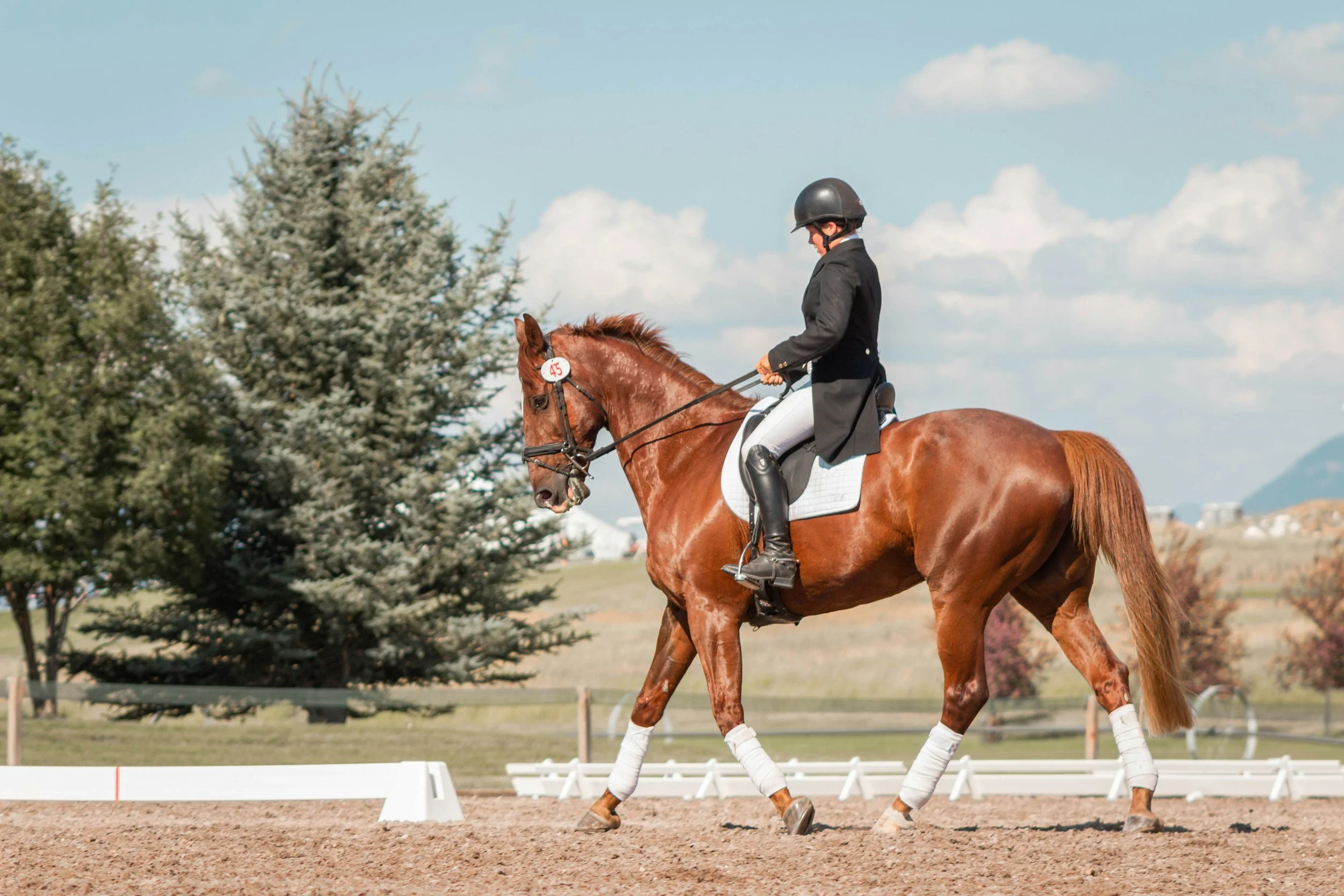
Despite the intention of the proposed act, some individuals within the agricultural and equine industries have expressed concern with the proposed inspector changes. They argue that the law is an act of governmental overreach; it is attempting to regulate an industry which it does not understand.[xviii] They are concerned that the proposed inspector qualification, which entails being a licensed veterinarian, could lead to the USDA hiring unqualified persons to lead such inspections because there is currently a shortage of equine veterinary professionals.[xix] While the number of American equine veterinarians is declining, it does not mean that the USDA would resort to hiring unqualified inspectors.[xx] Under the Act, a licensed veterinarian is preferred but if one is not available, then the inspector is still required to be a veterinary technician or a state or local animal control officer–all of whom will also be specifically trained on how to inspect a horse for evidence of soring.[xxi]
The PAST Act promotes the welfare of horses who may otherwise be subjected to soring.[xxii] Increased regulation in equestrian sports and activities is a common trend across the American equine industry. In 2020 Congress founded the Horseracing Integrity and Safety Authority (HISA).[xxiii] HISA implemented regulations which promote equine welfare within the American thoroughbred racing industry following national outcry against previous racing practices such as unethical doping.[xxiv] Further, United States Equestrian Federation has long championed prioritizing equine wellbeing, developing rules which directly address preventing cruelty or the unethical treatment of horses.[xxv] Creating regulations which prioritize equine welfare allows the American public to socially accept the use of equine athletes in sport.[xxvi] The fewer instances of equine abuse occur, especially in a competitive setting, the more the public will socially permit the ongoing use of horses in sport.[xxvii] Ultimately, a law which federally protects equine athletes promotes the social license to operate among non-equestrians and ensures the longevity of equestrian disciplines involving gaited horses. The equine industry benefits from the creation of and adherence to statutes protecting equine welfare such as the PAST Act.
[1] Animal Welfare, Am. Horse Council (Nov. 3, 2025), https://horsecouncil.org/issues/animal-welfare/ [https://perma.cc/Q4ML-MPAF ].
[2] PAST Act of 2025, H.R. 1684, 119th Cong., §1 (2025).
[3] Horse Protection Act, U.S. Dep’t Agric. (Jan. 28, 2026), https://www.aphis.usda.gov/hpa [https://perma.cc/946K-QU57].
[4]Soring in Horses, Am. Veterinary Medical Ass’n., (2012), https://www.avma.org/sites/default/files/resources/soring_horses_bgnd.pdf [https://perma.cc/WB4B-N6PH].
[5] U.S. Dep’t Agric., supra note 3.
[6] What is a social license to operate?, World Horse Welfare, https://www.worldhorsewelfare.org/what-we-do/sport-and-leisure-horses/what-is-a-social-licence-to-operate?srsltid=AfmBOoptx94Sg7SMgFgtEVbscm6_cRsuMtwpLCViIlhHUkhPfz8cREQW (last visited Mar. 20, 2026) [https://perma.cc/4XYS-8DSH].
[7] Id.
[8] PAST Act of 2025, H.R. 1684, 119th Cong., §1 (2025).
[9] Horse Protection Inspectors: Frequently Asked Questions, U.S. Dep’t Agric. (Jan. 13, 2026), https://www.aphis.usda.gov/hpa/hpi-faqs [https://perma.cc/5G6F-EXC3].
[10] Supra note 3.
[11] Id.
[12] Id.
[13] Supra note 1.
[14] PAST Act of 2025, H.R. 1684, 119th Cong., §1 (2025). SUPRA NOTE 8?
[15] U.S. Dep’t agric., supra note 9.
[16] Horse Protection; Licensing of Designated Qualified Persons and Other Amendments, 15 Fed. Reg. 1821-1831 (July 2016), https://www.govinfo.gov/content/pkg/FR-2016-07-26/pdf/2016-17648.pdf [https://perma.cc/Q4QS-AQXD].
[17] PAST Act of 2025, H.R. 1684, 119th Cong., §1 (2025). SUPRA NOTE 8?
[18] Sid Miller, Op-ed: New Horse Protection Act Rules, More Harm Than Good?, AG Daily (Jan. 17, 2025), https://www.agdaily.com/livestock/op-ed-new-horse-protection-act-rules-more-harm-than-good/ [ PERMA LINK KEEPS FAILING)
[19] Id.
[20]Retention in Equine Practice, Am. Ass’n. Equine Prac., https://aaep.org/guidelines-resources/veterinarian-resources/sustainability/ (last visited Mar. 20, 2026) [https://perma.cc/JL4H-VW7D].
[21] U.S. Dep’t. agric. supra, note 9.
[22] PAST Act of 2025, H.R. 1684, 119th Cong., §1 (2025). SUPRA NOTE 8?
[23] About Us, Horseracing Integrity Safety Auth., https://hisaus.org/about-us (last visited Mar. 20, 2026) [https://perma.cc/V9K8-KT6A].
[24] Id.
[25] Horse Welfare, U.S. Equestrian Fed. (https://www.usef.org/horse-welfare (last visited Mar. 20, 2026) [https://perma.cc/2MZ5-4G89].
[26] Janet Douglas et. al., Social License to Operate: What Can Equestrian Sports Learn from Other Industries?, National Center for Biotechnology Information (Aug. 22, 2022).
[27] Id.