
Blog By: Reed Burrow
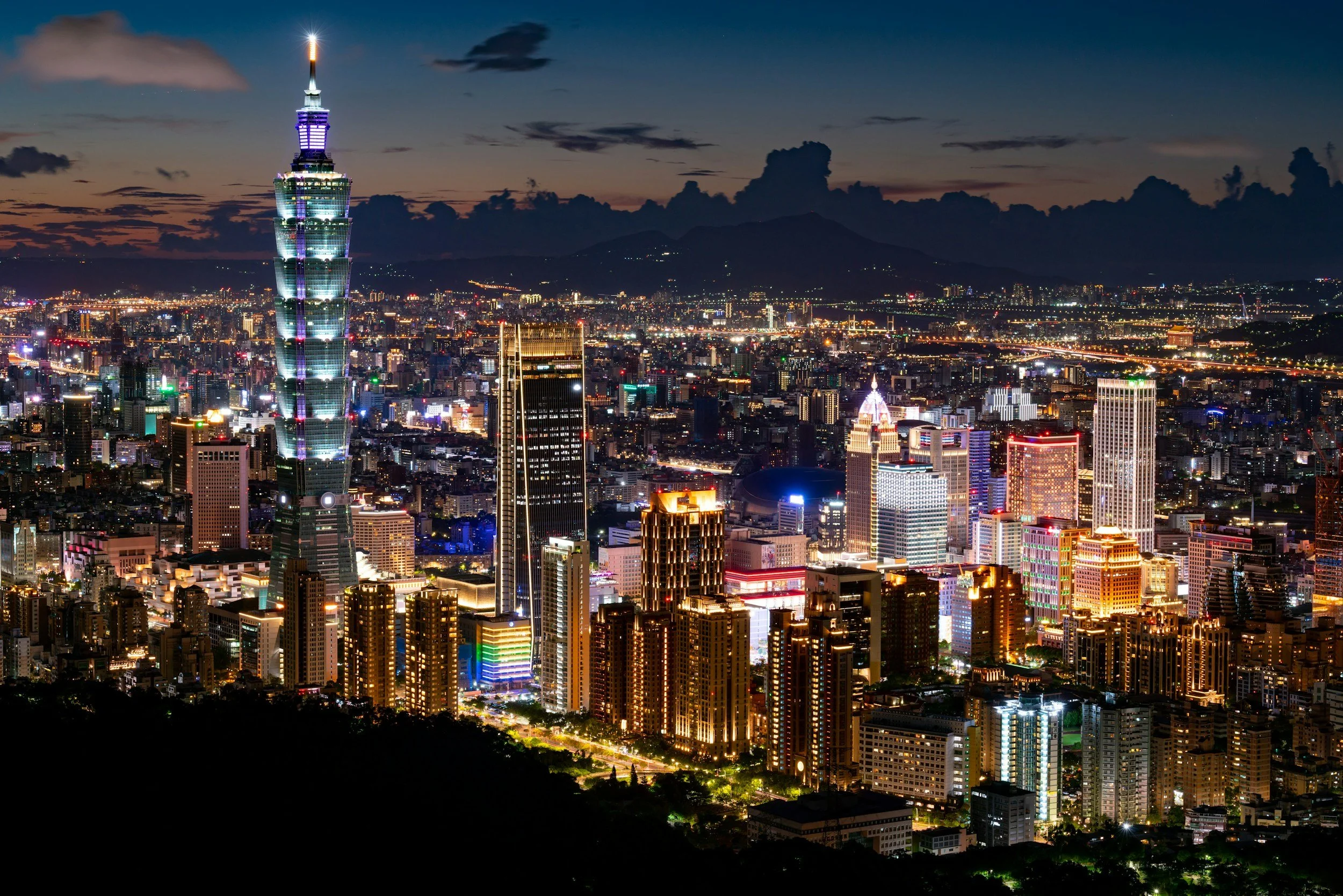
The small nation of Taiwan has found itself at the center of a potentially major geopolitical conflict.[1] Taiwan produces a large share of the world’s microchips (“chips”), which are used in technologies ranging from smartphones to artificial intelligence (“AI”).[2] As a result, Taiwan has earned increased attention from major world powers.[3] Taiwan’s growing importance has drawn the attention of China in particular, as the Chinese government has become increasingly vocal in asserting its claim to the island.[4]
China has long claimed Taiwan as part of its territory, while Taiwan has maintained that it is self-governing.[5] Although China has a clear military advantage and lies only about 100 miles from Taiwan’s coast, China has hesitated to take direct military action.[6] Many experts attribute that hesitation to Taiwan’s “silicon shield,” a term referring to Taiwan’s central role in the global chip supply chain.[7]
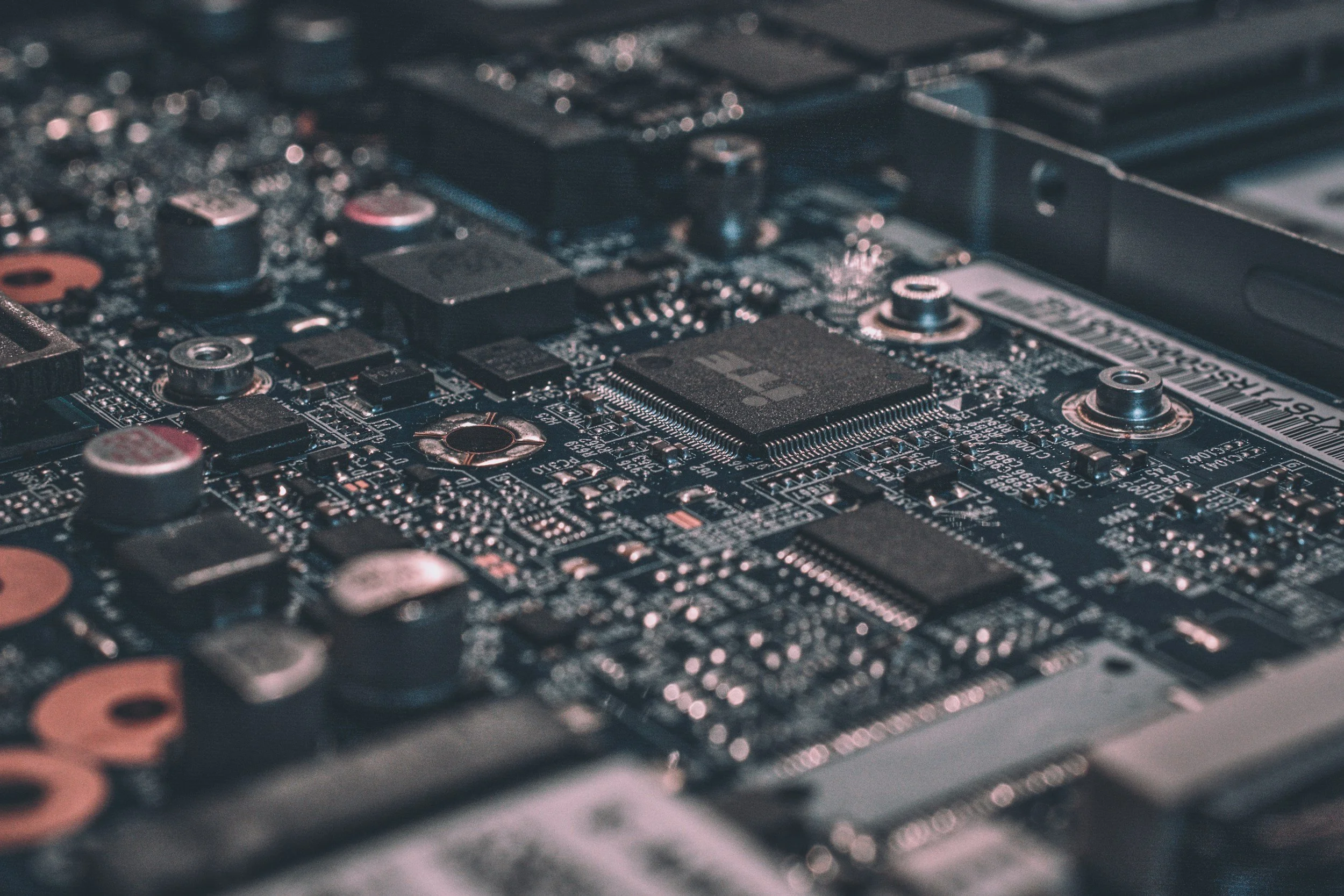
Taiwan dominates the global chip manufacturing market.[8] In 1987, the world’s first semiconductor foundry was established in Taiwan.[9] A semiconductor foundry (“foundry”) is a specialized manufacturer that produces chips designed by other companies.[10] Since 1987, the foundry model has expanded significantly in Taiwan.[11] The foundries there now produce more than 90% of the world’s most advanced chips and generate 60% of global foundry revenue.[12] Substantial investment in manufacturing infrastructure and the development of a highly specialized workforce have made Taiwan’s production capabilities and efficiency extremely difficult to replicate.[13] As a result, countries such as the U.S. are highly dependent on Taiwan for chip production.[14]
This dependence matters even more in the age of AI.[15] AI plays an increasingly important role in military capabilities, economic growth, and technological development.[16] Logic chips are especially important for AI because they serve as the “brains” that allow AI systems to process information.[17] U.S. companies primarily specialize in designing logic chips, but 44.2% of U.S. logic chip imports are manufactured in Taiwan.[18] That reliance reflects the fact that U.S. companies currently lack the manufacturing infrastructure needed to match the production capabilities and efficiency of Taiwanese foundries.[19]
The lack of U.S. chip manufacturing infrastructure is partly due to the red tape surrounding the construction of foundries.[20] In contrast, a single permit from the Taiwanese government can allow construction to begin almost immediately.[21] U.S. workers also command higher wages than similarly skilled workers in Taiwan,[22] which increases the incentive for U.S. companies to outsource manufacturing to Taiwan rather than build their own foundries. Estimates suggest that building and operating a foundry in the U.S. would cost about 30% more over a ten-year period than in Taiwan.[23]
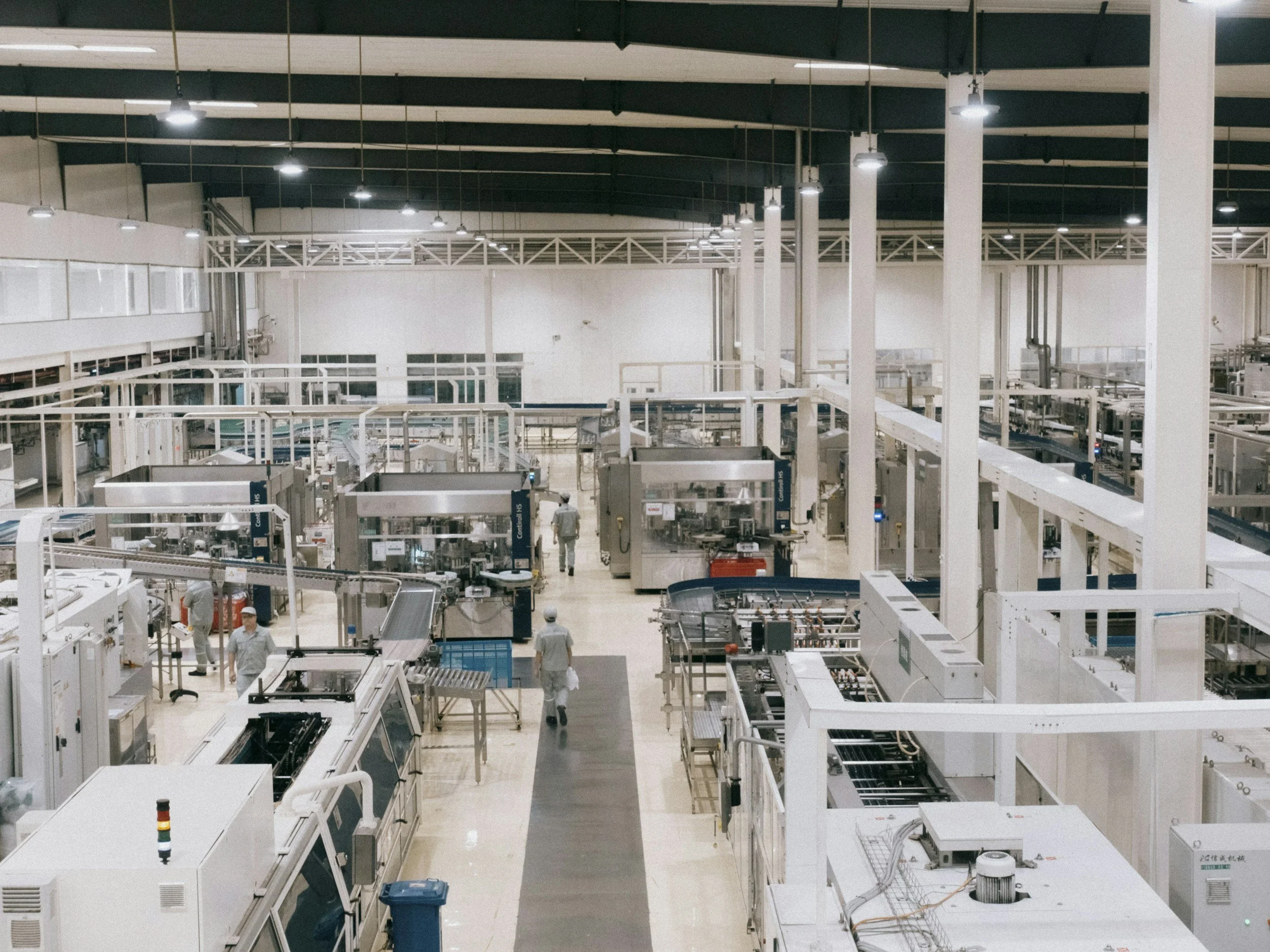
The U.S.’s dependence on Taiwan helps explain Taiwan’s “silicon shield.” Over the past several years, China has repeatedly conducted military drills around Taiwan but has hesitated to take direct military action.[24] Part of that hesitation could stem from the difficulty of seizing Taiwan while preserving the foundries that make the island so economically valuable. If China were to invade Taiwan, it is possible that Taiwan would destroy its foundries rather than allow them to fall into enemy hands.[25] China also relies on Taiwan for up to 60% of its chip imports,[26] so serious damage to, or the complete loss of, Taiwan’s foundries would be devastating for China. More broadly, the “silicon shield” refers to the possibility that countries heavily dependent on Taiwan’s chip production could intervene if China attempts to invade Taiwan.[27] This would turn a regional conflict into a broader international one.
The U.S. is particularly implicated in a potential conflict due to the Taiwan Relations Act.[28] The Act established unofficial relations and identified peace and stability in the Western Pacific as a key U.S. interest.[29] In contrast to the mutual defense treaty it replaced,[30] the Act does not obligate the U.S. to defend Taiwan.[31] Instead, it leaves decisions about the U.S. response to threats against Taiwan to the President and Congress, who are to “determine the appropriate action.” [32] Nevertheless, the U.S. has a substantial interest in preventing China from gaining control of Taiwan’s foundries because China could cut off or severely limit chip trade with the U.S. to strengthen its position in AI development.
Regardless of external factors affecting the silicon shield, its strength ultimately relies on two basic inputs: water and energy. Chip manufacturing requires enormous amounts of purified water,[33] and Taiwan’s water supply is heavily weather-dependent.[34] About 80% of Taiwan’s rainfall arrives within a six-month period,[35] and Taiwan relies on that rainfall to meet 50% of its water needs.[36] However, Taiwan’s mountainous terrain makes rainfall collection difficult.[37] Further, water pipe leaks cost the island 14% of its stored water,[38] indicating a storage issue. This combination of factors leaves the island vulnerable to drought. That vulnerability was highlighted in 2021, when Taiwan experienced one of its worst droughts in recent history.[39] Some of the largest foundries cut water use by up to 15%, and the government still had to pay farmers to forego planting crops so that water could be redirected to critical industries, including chip manufacturing.[40]
Energy is a similar point of vulnerability for Taiwan.[41] Taiwan decommissioned its last nuclear reactor in 2025[42] and now imports approximately 96% of its energy sources.[43] Government officials also recently acknowledged that Taiwan would fail to meet its goal of generating 20% of its energy from renewable sources for the second year in a row.[44] As a result, Taiwan remains heavily dependent on fossil fuels for electricity generation.[45] This dependence creates another structural weakness in the silicon shield, as foundries rely on a stable, uninterrupted power supply.[46]
Taiwan’s silicon shield is a powerful deterrent, but it is not impenetrable. The shield’s strength depends on Taiwan’s ability to keep its foundries operational.[47] If water or energy shortages significantly limited Taiwan’s chip output for an extended period of time, the shield would weaken. In that scenario, China would likely reassess the cost of military action. Another harsh reality is that other countries might hesitate to intervene in what could become a major armed conflict if Taiwan’s economic value were diminished, even temporarily. This risk will grow over time as the U.S. and other countries continue to invest in domestic chip production and gradually reduce their dependence on Taiwan.[48]
For that reason, strengthening Taiwan’s silicon shield will require more than economic importance. Taiwan must use its current economic importance to secure stronger diplomatic support, including mutual defense commitments. Taiwan should also strengthen the infrastructure that keeps its foundries operational. It must make its foundries more water efficient and invest more heavily in desalination plants, facilities that remove salt and minerals from seawater to produce freshwater.[49] On the energy side, Taiwan should continue investing in renewable energy and seriously consider reactivating or replacing its nuclear reactors. In the context of Taiwan’s silicon shield, natural resource security is national security.
[1] U.S.-Taiwan Relations in a New Era: Responding to a More Assertive China, Council on Foreign Relations (Tuesday, June 20, 2023), https://www.cfr.org/event/us-taiwan-relations-new-era-responding-more-assertive-china [https://perma.cc/H5P6-ZNQ4].
[2] Tripp Mickle, The Looming Taiwan Chip Disaster That Silicon Valley Has Long Ignored, N.Y. Times (Feb. 24, 2026), https://www.nytimes.com/2026/02/24/technology/taiwan-china-chips-silicon-valley-tsmc.html [https://perma.cc/46SG-F58C].
[3] See Yen Nee Lee, 2 Charts Show How Much the World Depends on Taiwan for Semiconductors, CNBC (Mon, Mar. 15 202 8:37 PM EDT), https://www.cnbc.com/2021/03/16/2-charts-show-how-much-the-world-depends-on-taiwan-for-semiconductors.html [https://perma.cc/B57D-ZC2C].
[4] Ben Blanchard, China Can’t Decide Whether We Are a Country, Taiwan Foreign Minister Says, Reuters (May 21, 2025 6:11 AM EDT), https://www.reuters.com/world/china/china-cant-decide-whether-we-are-country-taiwan-foreign-minister-says-2025-05-21/ [https://perma.cc/6295-FBYB].
[5] Id.
[6] China and Taiwan: A really simple guide, BBC (7 January 2024), https://www.bbc.com/news/world-asia-china-59900139 [https://perma.cc/TKY3-KQS4].
[7] Joyce Huang, Can Taiwan’s Silicon Shield Protect It against China’s Aggression?, Voice of America (May 10, 2021 11:14 AM), https://www.voanews.com/a/east-asia-pacific_can-taiwans-silicon-shield-protect-it-against-chinas-aggression/6205660.html [https://perma.cc/Z8JY-6ZGN]; Viktor Šimov, The Silicon Shield Erosion: Fortifying Taiwan Against Geopolitical Shocks, Inst. for Sec. & Dev. Pol’y (2025-05-06), https://www.isdp.eu/the-silicon-shield-erosion-fortifying-taiwan-against-geopolitical-shocks/ [https://perma.cc/NWN9-WHFQ]; Sarah Wu, Chip industry rethinks Taiwan risk after Pelosi visit but options limited, Reuters (October 7, 2022 7:00 AM EDT), https://www.reuters.com/technology/chip-industry-rethinks-taiwan-risk-after-pelosi-visit-options-limited-2022-10-07/ [https://perma.cc/X97L-EZHB].
[8] Lee, supra note 3.
[9] Hau Lee & Seungjin Whang, Taiwan Semiconductor Manufacturing Company: The Semiconductor Services Company, Stan. Graduate Sch. of Bus. (2006), https://www.gsb.stanford.edu/faculty-research/case-studies/taiwan-semiconductor-manufacturing-company-semiconductor-services [https://perma.cc/KXG3-EB5X].
[10] Tasho Tashev, What Is a Foundry? Semiconductor Fabs Explained, Webopedia (Mar. 6, 2025 2:13 PM), https://www.webopedia.com/technology/semiconductor-foundry/ [https://perma.cc/X82X-3AQ5].
[11] Rupert Wingfield-Hayes, The secret sauce for Taiwan’s chip superstardom, BBC News, (16 December 2023), https://www.bbc.com/news/world-asia-67213293 [https://perma.cc/R4ZF-846N].
[12] Semiconductors including chip design for AI, Int. trade admin. (2025-12-01), https://www.trade.gov/country-commercial-guides/taiwan-semiconductors-including-chip-design-ai [https://perma.cc/8XZX-GAYY].
[13] Wingfield-Hayes supra note 11.
[14] See Mickle supra note 2; See also Lee supra note 3.
[15] See Mickle supra note 2.
[16] Anupama Vijayakumar, Potential Impact of Artificial Intelligence on the Emerging World Order, Nat. Lib. of Med. (2023 Oct 30;11:1186), https://pmc.ncbi.nlm.nih.gov/articles/PMC10618639/#:~:text=It%20states%20that%20AI%20will,is%20crucial%20for%20AI's%20evolution[https:// [perma.cc/33P8-BJDR].
[17] Emily G. Blevins et al., Cong. Rsch. Serv., Semiconductors and the Semiconductor Industry (Apr. 19, 2023), https://www.congress.gov/crs-product/R47508 [https://perma.cc/42WZ-75P4].
[18] Lin Jones et al., U.S. Exposure to the Taiwanese Semiconductor Industry, U.S. Int’l Trade Comm’n (Nov. 2023) https://www.researchgate.net/publication/377435107_US_EXPOSURE_TO_THE_TAIWANESE_SEMICONDUCTOR_INDUSTRY
[https://perma.cc/SM9E-HUXR].
[19] Seaton Huang, Onshoring Semiconductor Production: National Security Versus Economic Efficiency, Council on Foreign Relations (Apr. 17, 2024 1:52 p.m.), https://www.cfr.org/articles/onshoring-semiconductor-production-national-security-versus-economic-efficiency [https://perma.cc/R5V4-G829].
[20] How Red Tape Hamstrings ‘Reshoring’, Fisher Invs. (12/04/2025), https://www.fisherinvestments.com/en-us/insights/market-commentary/how-red-tape-hamstrings-reshoring [https://perma.cc/UA8Z-U36N].
[21] Id.
[22] Id.
[23] Turning the Tide for Semiconductor Manufacturing in the U.S., Semiconductor Indus. Ass’n., https://www.semiconductors.org/turning-the-tide-for-semiconductor-manufacturing-in-the-u-s/ (last visited Feb. 23, 2026) [https://perma.cc/7TZZ-RPNN].
[24] See Amrita Jash, China’s Military Exercises Around Taiwan: Trends and Patterns, Glob. Taiwan Inst., (Oct. 2, 2024), https://globaltaiwan.org/2024/10/chinas-military-exercises-around-taiwan-trends-and-patterns/ [https://perma.cc/KD95-KX2F];China Flexes Blockade Capabilities Near Taiwan on Second Day of Military Drills, NPR (Dec. 30, 2025 6:52 AM ET), https://www.npr.org/2025/12/30/g-s1-103963/china-flexes-blockade-capabilities-near-taiwan-on-second-day-of-military-drills [https://perma.cc/6Y2P-TU2C].
[25] George Russell, Taiwan ‘Should Destroy TSMC’ If China Invades: US Strategists, Asia Fin. (Jan. 5, 2022), https://www.asiafinancial.com/taiwan-should-destroy-tsmc-in-china-invasion-nikkei [https://perma.cc/8BGV-RXTC].
[26] Zoe Desch, Three Reasons Why China Can’t Afford to Invade Taiwan, Responsible Statecraft (Jun. 11, 2025), https://responsiblestatecraft.org/china-taiwan-2672344549/ [https://perma.cc/RB72-MBWX].
[27] Stella Robertson, Is the ‘Silicon Shield’ Real?, Domino Theory (Sep. 6, 2024), https://dominotheory.com/is-the-silicon-shield-real/ [https://perma.cc/U3JK-GFFV].
[28] See Taiwan Relations Act, H.R. 2479, 96th Cong. (1979).
[29] Id.
[30] Stephen J. Yates, The Taiwan Relations Act After 20 Years: Keys to Past and Future Success, The Heritage Found. (Apr. 16, 1999), https://www.heritage.org/asia/report/the-taiwan-relations-act-after-20-years-keys-past-and-future-success [https://perma.cc/FVS7-DTU6].
[31] Taiwan Relations Act, supra note 28.
[32] Id.
[33] Kirsten James, The Water Challenge for Semiconductor Manufacturing: What Needs to Be Done?, World Econ. Forum. (Jul. 19, 2024), https://www.weforum.org/stories/2024/07/the-water-challenge-for-semiconductor-manufacturing-and-big-tech-what-needs-to-be-done/ [https://perma.cc/DM7N-DDR6].
[34] Emily Feng, Epic drought in Taiwan pits farmers against high-tech factories for water, NPR (Apr. 19, 2023), https://www.npr.org/sections/goatsandsoda/2023/04/19/1170425349/epic-drought-in-taiwan-pits-farmers-against-high-tech-factories-for-water [https://perma.cc/VUT2-L6VY].
[35] I DEC Corp., Why Is rain-soaked Taiwan always running out of water?, https://www.hdec-corp.com/en/envir/natural-water-en/%E7%82%BA%E4%BB%80%E9%BA%BC%E5%8F%B0%E7%81%A3%E9%9B%A8%E9%87%8F%E8%B1%90%E6%B2%9B%E5%8D%BB%E5%B8%B8%E5%B8%B8%E6%9C%89%E7%BC%BA%E6%B0%B4%E7%9A%84%E5%95%8F%E9%A1%8C%E5%91%A2/
(last visited Feb. 23, 2026) [https://perma.cc/JWV8-4VUT].
[36] Olivia Lai, The Taiwan Water Shortage Dilemma, Earth Org. (Apr. 8th 2022), https://earth.org/the-taiwan-water-shortage-dilemma/ [https://perma.cc/R53R-SX23].
[37] Feng, supra note 35.
[38] Id.
[39] Id.
[40] Kevin Zhang, How Water Scarcity Threatens Taiwan’s Semiconductor Industry, The Diplomat (Sept. 19, 2024), https://thediplomat.com/2024/09/how-water-scarcity-threatens-taiwans-semiconductor-industry/ [https://perma.cc/VDZ9-BQ7K].
[41] See Int’l Trade Admin., Taiwan - Energy Generation and Storage, (2025-12-10), https://www.trade.gov/country-commercial-guides/taiwan-energy-generation-and-storage [https://perma.cc/ZZD8-ZYC6].
[42] World Nuclear Ass’n, Nuclear Power in Taiwan (Sept. 19, 2025), https://world-nuclear.org/information-library/country-profiles/others/nuclear-power-in-taiwan [https://perma.cc/LG8D-55JV].
[43] See Int’l Trade Admin, supra note 41.
[44] Taejun Kang, Taiwan Delays 20 Per Cent Renewables Target Beyond 2026 as Tighter Solar Rules Slow Rollout, Eco-Business (Feb. 9, 2026), https://www.eco-business.com/news/taiwan-delays-20-per-cent-renewables-target-beyond-2026-as-tighter-solar-rules-slow-rollout/ [https://perma.cc/TTK4-Z2KQ].
[45] Gavin Maguire, Taiwan Bucks Asia’s Clean Power Drive with Record Gas Burn, Reuters (October 31, 2025 7:00 AM EDT), https://www.reuters.com/business/energy/taiwan-bucks-asias-clean-power-drive-with-record-gas-burn-2025-10-31/ [https://perma.cc/VUC4-D6ZH].
[46] Henri Berthe & Praveen Kulkarni, Empowering semiconductor fabs with Galaxy UPS: Maximizing uptime, efficiency, and safety, Schneider Electric (October 10, 2025), https://blog.se.com/energy-management-energy-efficiency/2025/10/10/empowering-semiconductor-fabs-with-galaxy-ups-maximizing-uptime-efficiency-and-safety/ [https://perma.cc/DA6E-SNHW].
[47] Robertson, supra note 27.
[48] Bill Wiseman et al., Semiconductors have a big opportunity—but barriers to scale remain, McKinsey & Co. (April 21, 2025), https://www.mckinsey.com/industries/semiconductors/our-insights/semiconductors-have-a-big-opportunity-but-barriers-to-scale-remain [https://perma.cc/5WEQ-X3MZ].
[49] Copper Dev. Ass’n Inc., Desalination Plants, https://copper.org/applications/marine/cuni/applications/desalination_plants/ (last visited Feb. 23, 2026) [https://perma.cc/5VZP-8SL8].