
Blog By: Shelby Davidson
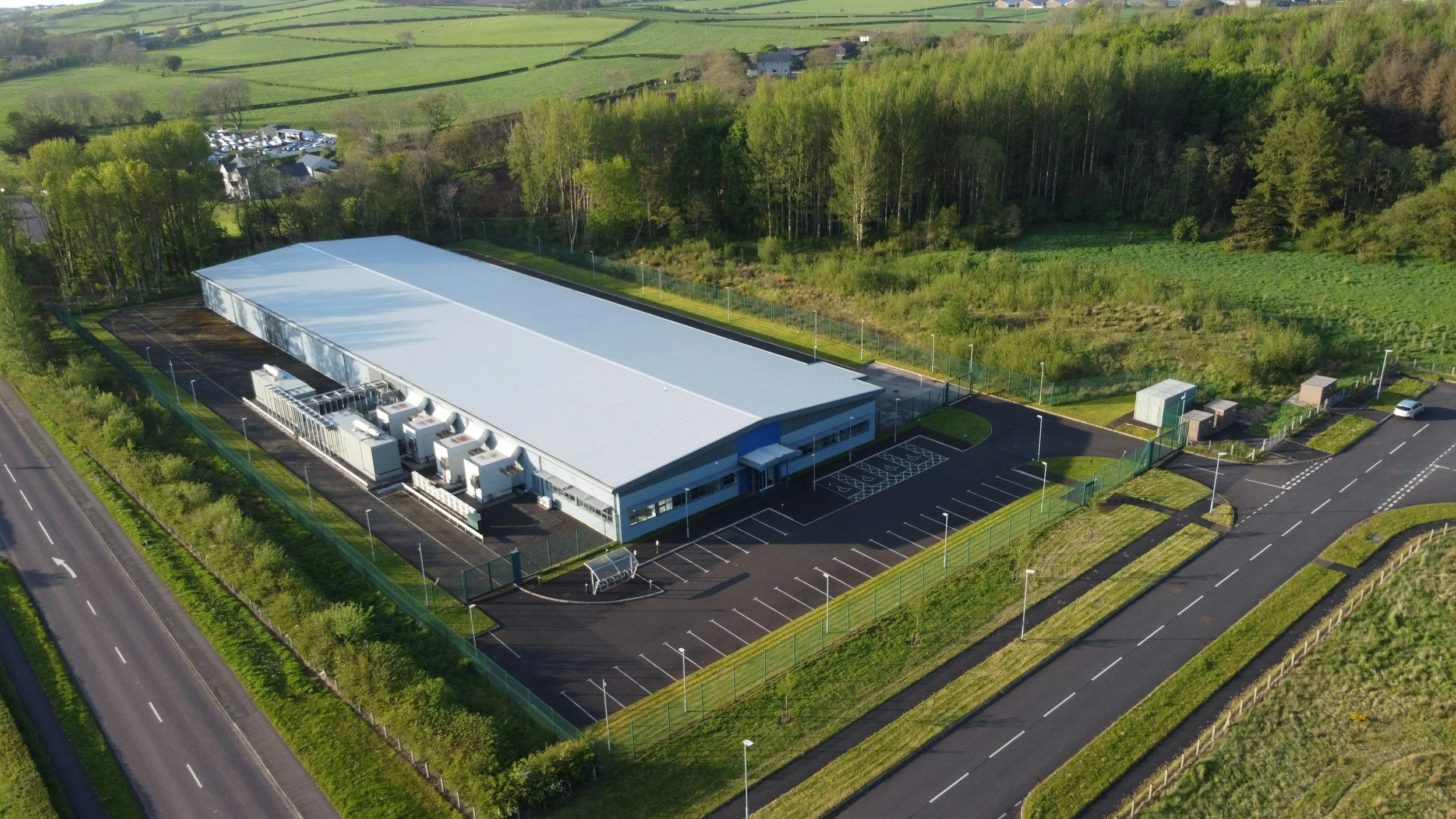
Nearly as prolific as the use of AI tools is the debate about balancing their usefulness with the environmental threats that loom in the communities where the data centers supporting these programs are built. Kentucky is among many other states that have cast themselves into the ring, hoping to prevail in the gauntlet to attract tech companies and the jobs they may bring with them upon constructing a data center in the region. Though Kentucky has already passed some laws regulating the economic commitments of data centers moving to the state, the Republican-led House of Representatives has yet to take any steps to demand environmental protections against the unique threat that data centers pose. This blog will discuss the actions of the neighboring state, West Virginia’s recent lawmaking surrounding the data center regulation (or lack thereof). Kentucky should view this legislation as a cautionary tale and move to protect the environment of our state, rather than the economic interests of out-of-state corporations.

30% of the world’s data centers are in the United States, and data centers account for 2% of the nation’s energy.[1] In Western states, where data centers are more ubiquitous, local communities have already felt the struggles that come along with the momentary economic boost that comes from a data center.[2] In The Dales, Oregon, a local newspaper discovered documents that revealed that a data center owned by Google used over a quarter of the town’s water supply.[3] In towns across the southwest, fed by the Colorado River and impacted by the super drought that has been ongoing for the past several years, local citizens continue to fear what data centers’ hyper consumption of water means for their communities.[4]
Closer to home, in Charleston, the West Virginia State House passed a sweeping bill that robbed local communities of any ability to take meaningful steps to protect themselves from very real concerns that cities out west have identified.[5] In November of 2025, the West Virginia State House passed a law governing or preventing the governance of data centers in the state.[6] The bill, House Bill 2014, which passed the House, concerns how data centers coming to the state can create microgrids, and how the West Virginia Department of Commerce can regulate such grids and the data companies that use them.[7] A microgrid is “a local energy system capable of operating independently or in conjunction with larger power grids. Microgrids often rely on local energy sources like natural gas, solar power, or battery storage, making them a resilient and efficient solution for critical infrastructure, industrial sites, and rural communities.”[8] They are also crucial to many data centers to ensure that they are consistently and efficiently powered in a manner that many local power grids in West Virginia cannot fully support.[9] Unfortunately, a downside to such efficiency is that utility prices in the surrounding area can be driven up as demand for energy increases.[10]

After the passage of HB 2014, local West Virginians protested in droves. Though the Bill sold itself as an inoffensive energy regulation bill, it robbed local county and municipal governments of any right to regulate data centers that might come to town.[11] Despite 930 concerned residents of the state airing their grievances to the House and Senate committees, no further action or amendments have been adopted to rein in the absolute power the state has to allow the construction of data centers.[12] HB 2014 and the legislative rules that were passed in early February allow data centers and the companies that build them unprecedented freedom to develop across the state.[13] Under these new rules, West Virginia Municipalities will be unable to regulate where data centers are built, how they use water, or how they engage with the power grid in a given location.[14] These concerns become even more pressing when considering the most vulnerable communities in West Virginia. In Mingo County, WV, where development talks are already underway for a new data center, concerned citizens ask why a new development would have access to untapped water sources when citizens often go days and sometimes weeks without access to clean, potable water.[15]
Though Kentucky has not yet progressed as far as West Virginia, legislation is developing in response to the AI boom heard around the world. Though economic incentives are tempting, Kentucky’s legislature should not place them above the environment or the health and safety of its residents, as West Virginia has. Kentucky’s current legislation has only passed common-sense economic protections for localities that plan to welcome data centers. Under a new law recently passed in Frankfort, data centers coming to Kentucky would enjoy considerable tax breaks; however, they would also commit to funding and constructing their own microgrids, offloading the burden of funding such projects from local communities.[16]

These protections are good first steps in the right direction, but there is yet more steps Kentucky can take to protect itself against the pollutants that are commonly released by AI data centers. One concrete action Kentucky can take is to mimic the regulatory scheme in Virginia.
Virginia is the state with the most data centers in the country, and the industry is tightly regulated.[17] Though Kentucky has taken steps in the correct direction, Virginia has laid the groundwork for comprehensive checks that Kentucky lacks. For example, the Virginia Department of Environmental Quality strictly regulates water intake, electricity usage, and carbon emissions. The VA Legislature has even gone so far as to set limits on how frequently emergency generators can be used to power a data center, should there be an interruption in data service.[18]
The debate surrounding the ethics of AI is still ongoing; however, its sudden boom in the last several years has led many States to incentivize companies to expand, bringing economic opportunities to their communities. Kentucky must place environmental protection on the same pedestal as economic growth before AI causes irreparable harm.
[1] Shannon Osaka, A New Front in the Water Wars: Your Internet Usage, The Wash. Post, (April 25th, 2023), https://www.washingtonpost.com/climate-environment/2023/04/25/data-centers-drought-water-use/, [https://perma.cc/C9N6-Z66W]
[2] Id.
[3] Id.
[4] Id.
[5] Caity Coyne, WV House Passes New Data Center Development Rules Without Local Control, Water Protection Provisions, West Virgina Watch: Environment & Energy, (Feb. 18, 2026), https://westvirginiawatch.com/2026/02/18/wv-house-passes-new-data-center-development-rules-without-local-control-water-protection-provisions/ [https://perma.cc/4MND-JYPV]
[6] Id.
[7] Id.
[8] What WV’s New Energy Microgrid Bill Means For Our Energy Future, WVNews, (Jan. 26, 2026), https://www.wvnews.com/what-wv-s-new-microgrid-bill-means-for-our-energy-future/article_c6db29a9-7c23-4571-ad78-292e5fb7b389.html [https://perma.cc/H7X2-KDXS]
[9] Id.
[10] Rachel Reed, How Data Centers May Lead to Higher Electricity Bills, Harvard Law Today: Faculty Scholarship, (Sept. 3, 2025), https://hls.harvard.edu/today/how-data-centers-may-lead-to-higher-electricity-bills/, [https://perma.cc/NCQ2-3A98].
[11] Cait Coyne, Supra note V.
[12] Id.
[13] Id.
[14] Id.
[15] Id.
[16] Piper Hansen, Data Center Companies Coming to KY Will Pay Fee, Utility Costs Under New Bill, Herald Leader (Feb. 26, 2026), https://www.kentucky.com/news/politics-government/article314846990.html [https://perma.cc/8MAP-7R6V].
[17] Id.
[18] Id.