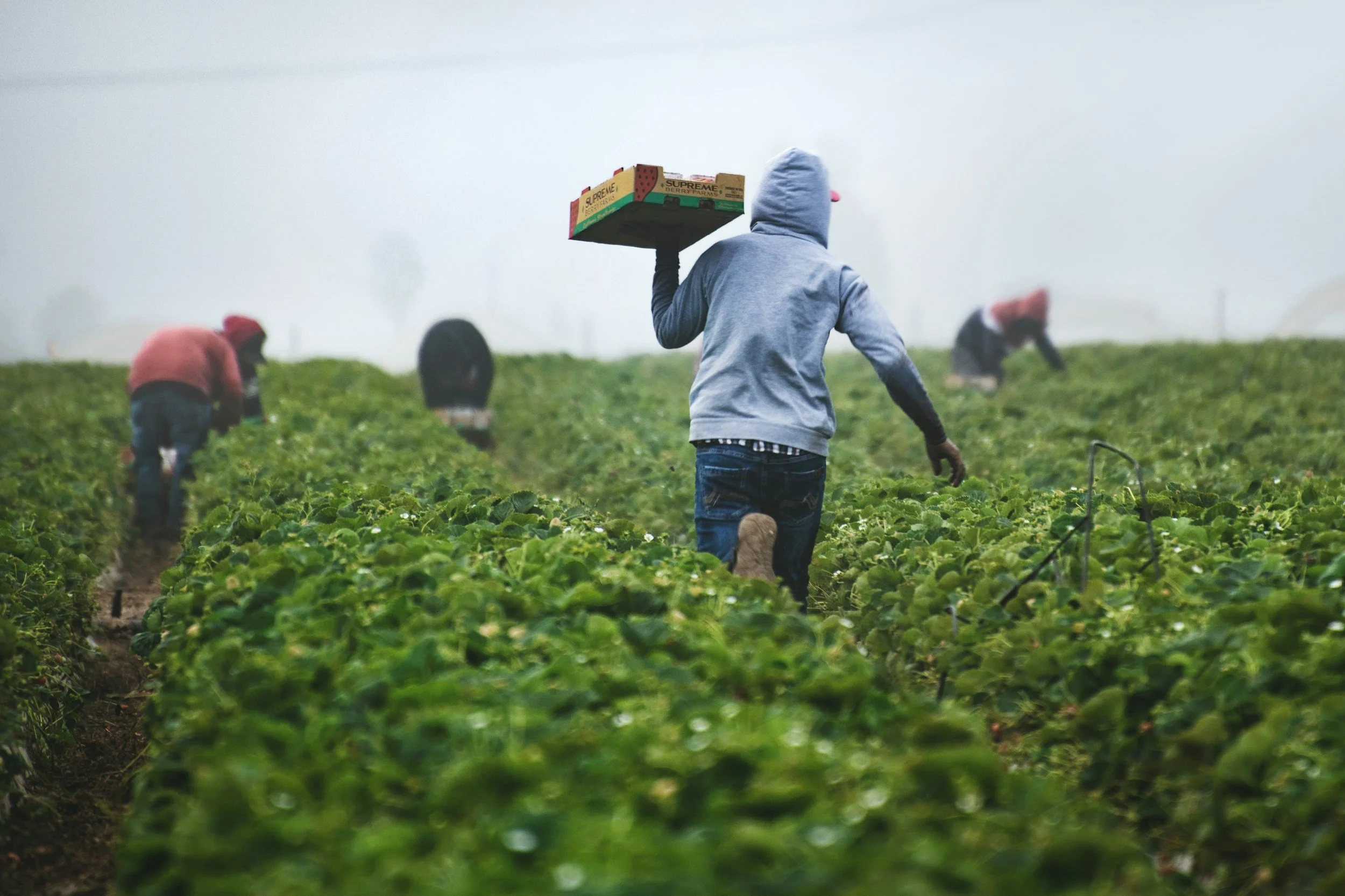



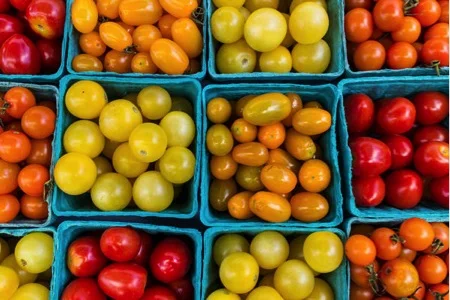
The local food movement is growing stronger and is expanding exponentially across the United States. Local Food sales topped $11.7 billion last year according to the United States Department of Agriculture (USDA) which has invested more than $800 million in more than 29,100 local and regional businesses and infrastructure projects. This investment is part of a federal initiative called “Local Foods, Local Places,” which invites communities to participate by providing direct technical support to build strong local food systems.[ii] Over 4,000 local and regional food businesses and projects – including food hubs, farm-to-school programs, and initiatives to expand health food access to low-income communities – can be pinpointed in every state across the country. Kentucky leads the nation in participation in this federally funded local food project.
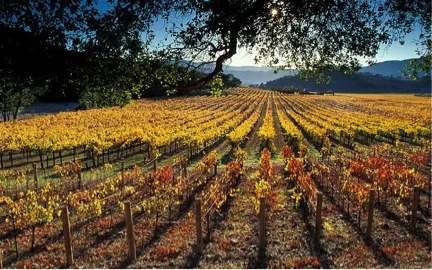
Impact of California’s Drought on Wine Industry
With the continuing drought in California, the agricultural industry may be fearful of losing its top spot on the ERA’s list for the top agricultural producing state— worth roughly $46 billion and employing 1.7 million people. However, one particular crop may not be as threatened as the rest—California’s celebrated grapevine.
Urban Agriculture on the High Rise: How Vertical Farming will Influence the World’s Cities
Dr. Dickson Despommier, professor of public health at Columbia University, created the concept of “vertical farming” back in 1999. Dr. Despommier and his students discovered that with a city, like New York, instead of looking towards flat land for food growth, the city should start looking up. Dr. Despommier and his class on medical ecology estimate that 30-story vertical farm towers could feed 50,000 people.
Bees and the Controversial Use of Neonicotinoid Pesticides
The recent upsurge in mass numbers of unexplained bee deaths has stirred debate over what could be causing these incidents around the globe. Some scientists now believe that a specific class of pesticides called neonicotinoids might be to blame. Last December, the European Union enacted a two-year ban on three types of neonicotinoid pesticides in response to the European Food Safety Authority’s report that stated that neonicotinoids pose “high acute risks” to pollinators, likes bees. The U.S. currently has no such ban in place. However, the EPA has expressed similar apprehension over the insecticide’s long-term effects, and certain U.S. cities are currently considering instituting local bans.
Putting More Green in Your Pocket and in the Ground
San Francisco, California recently became the first city in California to implement a new state law offering a tax break to urban individuals who use their property to grow food. This new state law allows residents to use their urban property to produce food and, in return, the assessed value of their property is lowered, thereby lowering their property tax.
UK Successfully Harvests First Legal Hemp Crop
After years of legislative consideration, the University of Kentucky (“UK”) recently harvested in mere minutes its first legal hemp crop under the Industrial Hemp Program. In September, UK yielded ten-foot stalks at Spindletop Farm in Lexington, Kentucky. The harvest marked Kentucky’s first legal hemp harvest in seventy years. UK planted the hemp in conjunction with the Kentucky Department of Agriculture (“KDA”) under the Industrial Hemp Program (“Program”) established by the Federal Farm Bill.
How the Kentucky Grape and Wine Council’s Grants Promote Kentucky Wineries
With a seemingly Dionysian blessing, Kentucky has once again become a wine producing state. Prior to Prohibition, “Kentucky was the third largest grape and wine producing state in the nation.” Prohibition, which placed a cork in this production, deeply hurt Kentucky wineries with the resurgence of Kentucky wineries occurring only in the past two decades. “‘Ten years ago, Kentucky had only two or three wineries….” Now, over sixty wineries and vineyards thrive in Kentucky.
Coming to a Cornfield Near You: The Global Race to Precision Agriculture and Use of UAVs
The days of the horse-drawn plow are far behind us, and the age of precision agriculture is quickly taking over. By “collecting real-time data on weather, soil and air quality, crop maturity and even equipment and labor costs and availability” farmers can make predictive decisions about how to manage their crops. Scientists around the world believe that precision agriculture will be the solution to answering the world’s food production challenges that will inevitably arise as the global population increases.