
Blog By: Luke Price
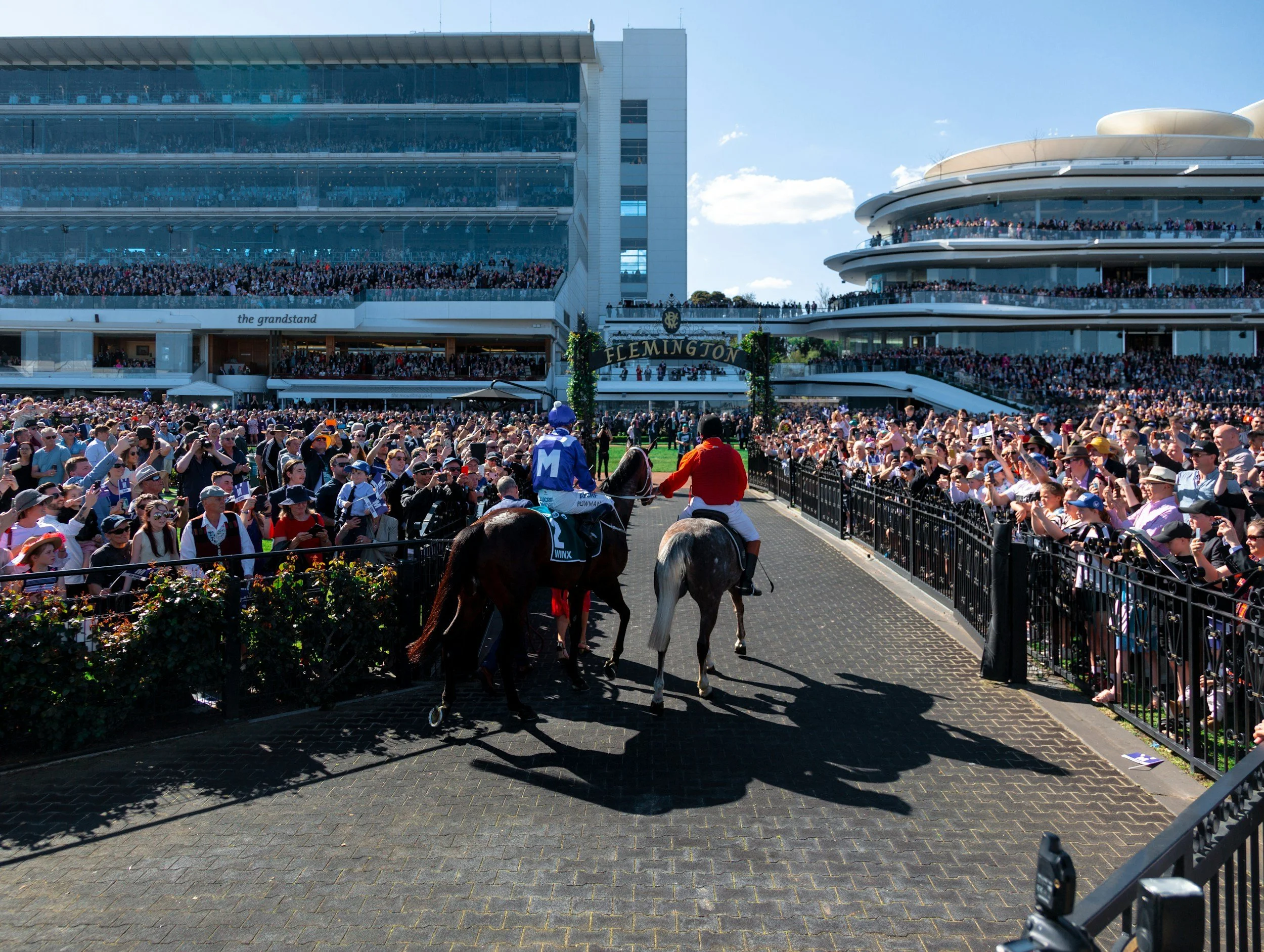
During the 2025 Kentucky Derby, over $1.2 million in prediction market trading was linked to the race.[1] None of those transactions took place through the pari-mutuel wagering system or under state racing commission supervision.[2] Nevertheless, participants risked money on the outcome of a regulated horse race. This development raises a fundamental legal question: when financial trading allows individuals to profit from a race result, does wagering occur if no traditional bet is placed?
Federal law was designed to address such situations. For nearly fifty years, the Interstate Horseracing Act of 1978 (IHA) has provided the primary legal framework for interstate wagering on horse racing in the United States.[3] The statute requires consent from racing associations, horsemen’s groups, and state racing commissions before wagers may be accepted across state lines.[4] Congress implemented this system to protect competition integrity, ensure proper allocations of funds to purses, and preserve strong state-level oversight of gambling and equine welfare.[5]

Prediction markets now challenge the boundaries of this legal framework. By classifying horse race outcomes as tradable “event contracts” under federal commodities regulation, platforms such as Kalshi and Polymarket monetize regulated equine events while asserting that they facilitate financial derivatives trading rather than gambling.[6] As these platforms operate under Commodity Futures Tradition Commission (CFTC) oversight, they contend that federal regulation authorizes nationwide operation without state racing commission approval.[7] In contrast, traditional sports betting remains licensed and supervised on a state-by-state basis.[8]
This situation generates a conflict between federal commodities regulation and federal racing law. The IHA governs interstate wagering on horse races, requiring consent from three parties before accepting any “wager…with respect to the outcome of a horse race.”[9] Industry leaders assert that prediction market event contracts fall within this definition. Dennis Drazin, CEO of Monmouth Park, stated, “I believe this is controlled by the IHA. And I certainly will be in court if they try and offer a wager [on the Haskell Stakes].”[10] Similarly, Churchill Downs CEO Bill Carstanjen emphasized, “We have federal law [the IHA] that governs how we operate.”[11] Prediction markets contend that their contracts differ fundamentally from traditional wagers because they may be bought and sold before an event concludes, classifying them as financial derivatives outside the IHA’s scope.[12] However, this reasoning prioritizes form over substance. If individuals risk money on a horse race outcome, such activity falls within the IHA’s jurisdiction regardless of its classification.
Beyond jurisdictional disputes, prediction markets threaten the stability of the state-centered regulatory structure essential to horse racing. State racing commissions function as comprehensive oversight bodies responsible for animal welfare, competitive integrity, drug testing, and public safety.[13] Revenue generated from pari-mutuel wagering supports these critical regulatory functions.
Additionally, prediction markets operating outside state commission jurisdiction evade integrity monitoring systems designed to detect race-fixing and doping.[14] This creates regulatory blind spots, especially when suspicious wagering patterns may indicate corruption. The impact on animal welfare is significant, as state commissions increasingly use regulatory authority to enhance equine safety through medication restrictions, veterinary requirements, and training regulations.[15] If prediction markets are allowed to monetize races without oversight, comprehensive state regulation becomes unattainable.
Congress should act promptly to amend the IHA to prevent irreparable harm. First, the IHA should be revised to explicitly define “interstate off-track wager” as including any financial instrument or derivative that derives value from horse race outcomes, regardless of regulatory classification.[16] This amendment must clarify that no federal authority, including the CFTC, may authorize such instruments without compliance with IHA consent requirements. Second, the amendment should strengthen private rights of action, enabling racing associations, horsemen’s groups, and state commissions to seek injunctive relief and statutory damages against unauthorized prediction market operations.[17] These damages should be substantial enough to deter unauthorized use. Third, state racing commissions should immediately assert jurisdiction over prediction market contracts involving races in their states, issuing cease-and-desist orders and pursuing litigation as necessary. Massachusetts and Nevada have demonstrated that state enforcement can achieve initial success; other racing states should adopt similar measures.[18] Finally, the racing industry must present a unified response. Although track operators, horsemen’s groups, and state commissions have routinely faced obstacles to cooperation, prediction markets present an existential threat that calls for a coordinated national strategy.
If prediction markets circumvent the IHA’s consent requirements and state oversight, any regulated activity with identifiable outcomes could be reclassified as a CFTC-regulated “event contract,” thereby exempting it from frameworks that protect public health, safety, and welfare. This development threatens not only racing revenue but also animal welfare, competitive integrity, and the authority of state regulators. When prediction markets monetize horse racing without commission oversight, both equine welfare and industry integrity are compromised. Racing stakeholders, state regulators, and federal lawmakers should acknowledge this threat and take timely action.
[1] T.D. Thornton, The Week in Review: Drazin on Prediction Markets as Threat to Racing: ‘No One Seems to Sense the Danger Yet’, Thoroughbred Daily News (Nov. 23, 2025) https://www.thoroughbreddailynews.com/the-week-in-review-drazin-on-prediction-markets-as-threat-to-racing-no-one-seems-to-sense-the-danger-yet/ [https://perma.cc/TSN6-4EGG].
[2] Id.
[3] Interstate Horse Racing Act of 1978, Pub. L. No. 95-515, 92 Stat. 1811 (codified as amended at 15 U.S.C. § § 3001-3007).
[4] 15 U.S.C. § 3004(a) (2018).
[5] Id.
[6] Ray Paulick, View from the Eighth Pole: Prediction Markets Pose Potential Challenge to Horse Racing, Paulick Rep. (Mar. 20, 2025) https://paulickreport.com/news/ray-s-paddock/view-from-the-eighth-pole-prediction-markets-pose-potential-challenge-to-horse-racing [https://perma.cc/4BQF-UED8].
[7] Jaqob Sharifi, Betting on the Future: A Legal Evaluation of Prediction Markets, Vander. L.R. (Jan. 11, 2026). https://law.vanderbilt.edu/betting-on-the-future-a-legal-evaluation-of-prediction-markets/ [https://perma.cc/J45Q-BSVP].
[8] Pat Evans, Will US State Prediction Markets Legislation Make Any Difference?, iGaming Bus. (Feb. 12, 2026) https://igamingbusiness.com/gaming/gaming-regulation/us-state-prediction-markets-legislation-analysis/ [https://perma.cc/9WVW-BKJS].
[9] 15 U.S.C. § 3002(3) (2018).
[10] Thornton, supra note 1.
[11] Tom Nightingale, Churchill Downs CEO Wants to School Prediction Markets on Horse Racing, SBA Americas (Oct. 28, 2025) https://sbcamericas.com/2025/10/28/churchill-downs-ceo-prediction-markets/ [https://perma.cc/4XG2-G7D2].
[12] See Sharifi, supra note 5.
[13] Ky. Rev. Stat. Ann. § 230.215(2) (2024).
[14] Buddy Frank, Frank Floor Talk: Understanding Prediction Markets (and Their Threat), CDC Gaming (Nov. 25, 2025) https://cdcgaming.com/commentary/frank-floor-talk-understanding-prediction-markets-and-their-threat/ [https://perma.cc/NFQ3-EHP2].
[15] See Ky. Rev. Stat. Ann. § 230.260(8) (2024).
[16] See 15 U.S.C. § 3002(3) (2018).
[17] See 15 U.S.C. § 3005 (2018).
[18] Evans, supra note 6.