

Blog by: Georgia Arrington
In 1947, Congress enacted the original version of the Federal Insecticide, Fungicide, and Rodenticide Act (FIFRA) to govern the registration, distribution, sale, and use of pesticides in the United States.[1] FIFRA’s primary objective is to ensure that, when applied as instructed, pesticides will not generally cause unreasonable risk to human health or the environment.[2] Under FIFRA, the EPA uses pesticide-specific restrictions, label requirements, and Worker Protection Standards (WPS) to protect people, including agricultural workers, and the environment.[3] The WPS requires employers to protect two types of employees involved in the production of agricultural plants or commodities: agricultural workers and pesticide handlers.[4] The EPA lists the groups covered by the WPS to protect employees on farms, forests, nurseries, and greenhouses from occupational exposure to agricultural pesticides.[5]

The EPA should expressly include golf courses in its list of groups covered by the WPS, as golf courses and their assistants fully satisfy the EPA’s “pesticide handlers” description because golf course workers’ tasks include mixing, loading, and applying pesticides.[6] Golf courses used for recreational purposes are also excluded from coverage by the WPS.[7] Even if a pesticide bears an “Agricultural Use Requirements” section on its labeling,[8] which would facially appear to trigger the WPS, the EPA makes the distinction that golf courses not used to produce sod will not be considered agricultural establishments covered by the WPS.[9] Absent such explicit inclusion under the WPS, it should come as no surprise that a mortality study of golf course superintendents from 1996 revealed elevated levels of brain cancer, non-Hodgkin’s lymphoma, prostate cancer, and large intestine cancer compared to the general U.S. male population.[10]

Epidemiological information about the occupational health risks for golf course superintendents was virtually nonexistent at the time of the referenced 1996 report,[11] and nearly three decades later, remains strikingly sparse. In 1995, New York’s Environmental Protection Bureau surveyed total pesticide usage on fifty-two Long Island golf courses and reported that an average of seven pounds of pesticides were applied per acre annually, nearly five times the national agricultural average of 1.5 pounds.[12] While this study focused on a particular region of the U.S., that contrast remains significant given that agricultural workers are expressly protected under the WPS, whereas, golf course workers are not. The Golf Course Superintendents Association is best positioned to collect pesticide-use data, yet its refusal to make pesticide records on U.S. golf courses publicly available hampers current efforts to determine the risks associated with pesticides on golf courses.[13] Perhaps transparency in golf course pesticide use would result in greater public awareness, which could finally lead to meaningful regulation from the EPA for these silent killers.[14] Nevertheless, recent data does suggest that golf course dependence on pesticides has only increased, as golf course superintendents reported an increased reliance upon fungicides, herbicides, and insecticides from 2015 to 2021.[15] Moreover, a study conducted in 2025 revealed that people living within one mile of golf courses were 2.26 times more likely to receive a Parkinson’s diagnosis than those whose homes were six or more miles away.[16]
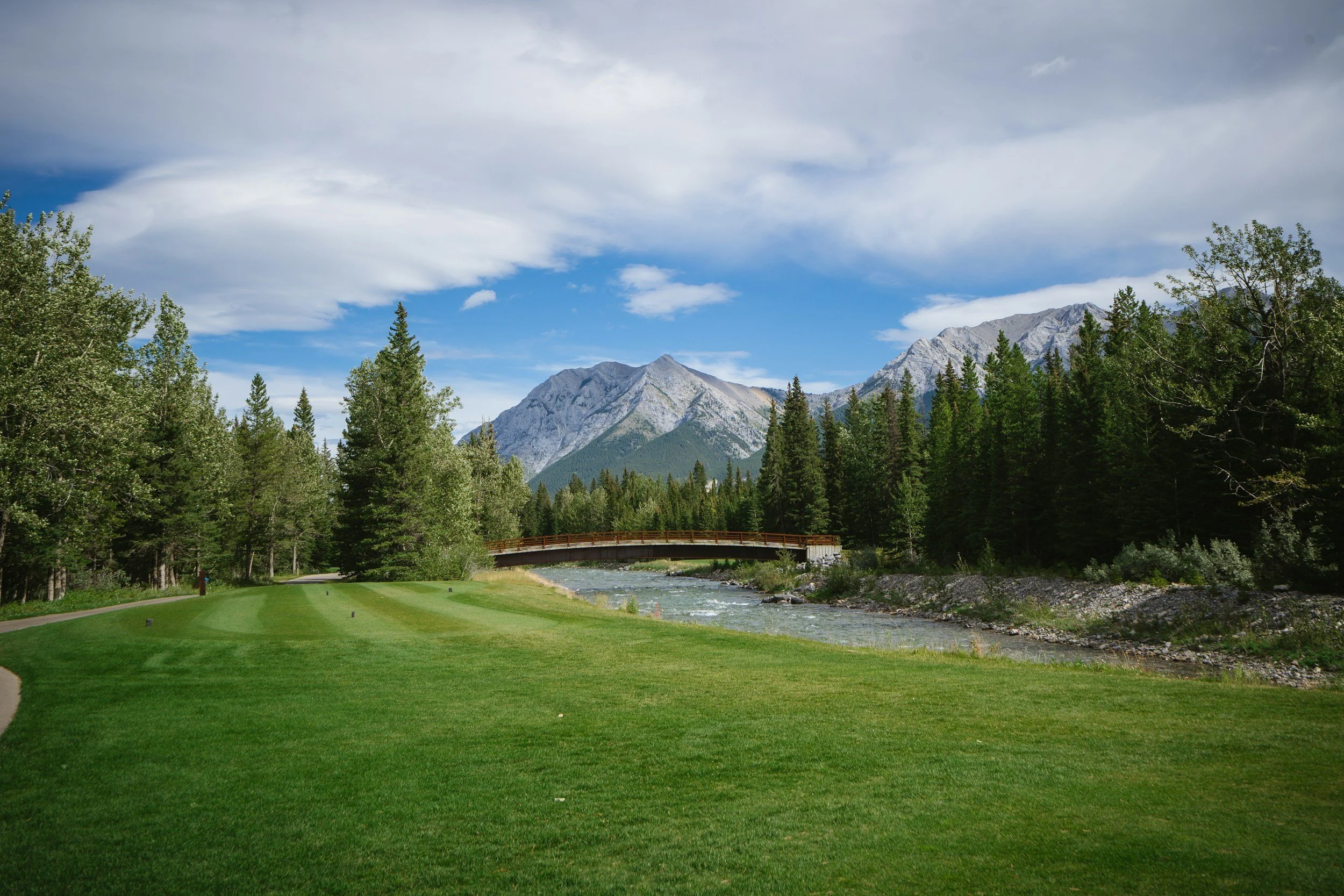
Despite evidence that the largely unregulated use of pesticides on golf courses is causing unreasonable risk to human health, the EPA continues to turn a blind eye when making regulatory decisions. In 2021, the EPA banned the use of the brain-damaging pesticide chlorpyrifos on all food crops, yet did not ban its use on fence posts, turf fields, or golf courses.[17] Despite the herbicide 2,4-dicholorophenoxyacetic acid (2,4-D) being classified as a possible carcinogen and having been an active ingredient in the cancer-causing herbicide Agent Orange, the EPA has refused to ban 2,4-D, which remains widely used on golf courses.[18] Equally alarming, the EPA has unilaterally only removed five pesticides in the past two decades.[19] Additionally, over a quarter of all U.S. agricultural pesticides used—amounting to 322 million pounds annually—are banned in all EU member states.[20] This disparity underscores the broader gaps in federal oversight of pesticide use in the U.S., with golf courses remaining openly unaddressed in the EPA’s regulatory scheme. Continued regulatory inconsistency, coupled with a lack of explicit protection under the WPS, leaves golf courses and their workers in a regulatory gray area. Without regulatory change, FIFRA will continue to offer no meaningful protection to one of America’s favorite pastimes.
[1] Federal Insecticide, Fungicide, and Rodenticide Act (FIFRA) and Federal Facilities, Env’t Prot. Agency (Jan. 23, 2026), https://www.epa.gov/enforcement/federal-insecticide-fungicide-and-rodenticide-act-fifra-and-federal-facilities [https://perma.cc/MG7T-TGVP].
[2] Id.
[3] Id.
[4] Pesticide Laws and Regulations, Montana State University Pesticide Education Program (last visited Feb. 14, 2026), https://www.montana.edu/extension/pesticides/reference/laws.html [https://perma.cc/TEY3-2AG2].
[5] U.S. EPA, Agricultural Worker Protection Standard (WPS), Pesticide Worker Safety (April 28, 2025), https://www.epa.gov/pesticide-worker-safety/agricultural-worker-protection-standard-wps [https://perma.cc/LTX7-E7NB].
[6] Alice E. Acury-Quandt et al., Hazardous Materials on Golf Courses: Experience and Knowledge of Golf Course Superintendents and Grounds Maintenance Workers from Seven States, 54 Am. J. Indus. Med. 2 (June 1, 2012), https://pmc.ncbi.nlm.nih.gov/articles/PMC3092004/pdf/nihms274628.pdf [https://perma.cc/GJT5-EYN7].
[7] Pesticide Laws and Regulations, supra note 4.
[8] Id.
[9] U.S. EPA, Determining Your WPS Responsibilities (Chapter 1) of the WPS: How to Comply Manual (2017).
[10] Burton Kross, Proportionate Mortality Study of Golf Course Superintendents, 29 Am. J. Indus. Med 501 (May 3, 1995), https://www.beyondpesticides.org/assets/media/documents/golf/documents/Proportionate%20mortality%20study%20of%20golf....pdf [https://perma.cc/ULY3-XM87].
[11] See id.
[12] Toxic Fairways: Risking Groundwater Contamination from Pesticides on Long Island Golf Courses, Op. Att’ys Gen. 5 (2007).
[13] Michael A.H. Bekken et al., Analyzing Golf Course Pesticide Risk Across the US and Europe—The Importance of Regulatory Environment, 874 Sci. Total Env’t 9, 10 (Mar. 1, 2023), https://www.sciencedirect.com/science/article/pii/S0048969723011142?fr=RR-2&ref=pdf_download&rr=9ce036349b9d81e5 (choose “View PDF”) [https://perma.cc/RQK3-2K2T].
[14] See id.
[15] J. Bryan Unruh, Investigating Pest Management on U.S. Golf Courses, Golf Course Management Magazine (Mar. 2023), https://gcmonline.com/course/environment/news/pest-management-on-us-golf-courses [https://perma.cc/8R79-JUX7].
[16] Golf Course Pesticides, Drinking Water, & Parkinson’s Risk, Parkinson’s Foundation (Aug. 5, 2025), https://www.parkinson.org/blog/science-news/golf-courses [https://perma.cc/RA5P-PBNJ].
[17] Danielle Melgar, Banned Pesticides Are Still Sprayed on Golf Courses, U.S. Pub. Int. Rsch. Grp. (Oct. 19, 2021), https://pirg.org/edfund/articles/we-need-to-set-our-priorities-straight/ [https://perma.cc/4YKN-QKQJ].
[18] Botox for Your Lawn: Pesticides, Cancer & Golf Courses, WKPS L. Blog (Mar. 28, 2023), https://waterskraus.com/botox-for-your-lawn-pesticides-cancer-golf-courses/ [https://perma.cc/Q6ST-SFZT].
[19] Nathan Donley, How the EPA’s Lax Regulation of Dangerous Pesticides Is Hurting Public Health and the US Economy, Brookings (Sept. 29, 2022), https://www.brookings.edu/articles/how-the-epas-lax-regulation-of-dangerous-pesticides-is-hurting-public-health-and-the-us-economy/#:~:text=Meanwhile%2C%20the%20EPA%20fails%20at,even%20the%20strictest%20use%20directions. [https://perma.cc/MNE3-PVQU].
[20] Id.