
By: Noah Carroll
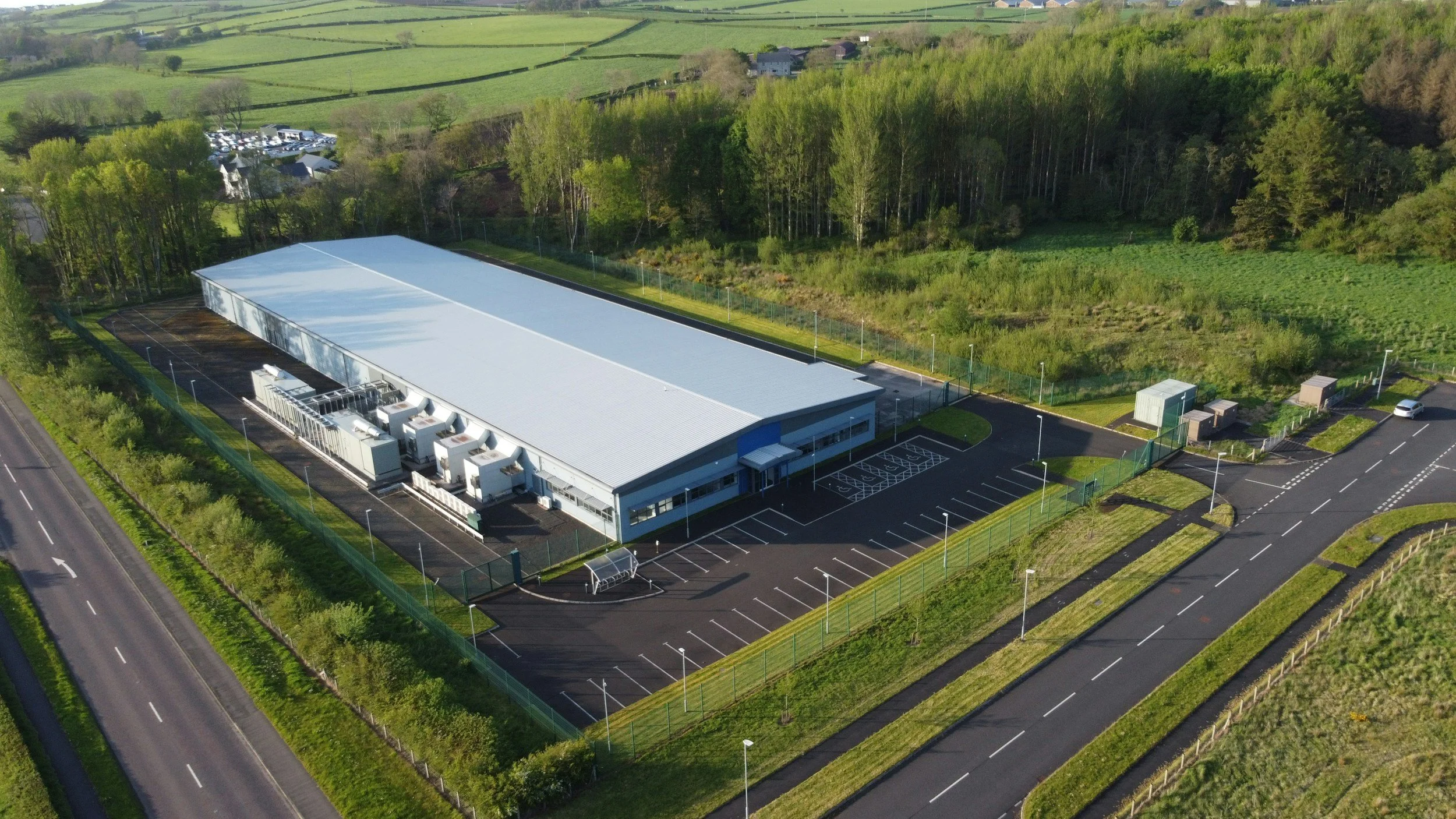
The antique nature of right to farm zoning laws has become increasingly more apparent and controversial within the legal community as a result of the rise of data centers and the possibility of considerable investments in low-income areas.[1] This debate is perhaps most contentious in Kentucky where agriculture is a shared heritage, and right to farm zoning laws are viewed as historically and presently important.[2] Critics say that this “romantic” notion of agrarian living has led to a gross oversight in the rapidly changing economic environment in the nation and the Commonwealth.[3]Further, critics claim that right to farm zoning laws are currently limiting the Commonwealth's ability to attract and maintain investment from data centers and their often-large conglomerates.[4] This is controversial given how the current Kentucky statute conflicts with carbon sequestration zoning movements, which would otherwise allow for economic development in underdeveloped areas.[5] Ordinances for underground carbon-dioxide storage, a form of storage that data centers must consider for full functionality to support energy generation, are being slowed by current right to farm legislation.[6] Legislators are currently grappling with whether or not the ordinances will have a positive or negative impact on the environment and Kentucky communities.[7]
Proponents of right to farm legislation, at least in the context of its conflict with carbon sequestration zoning, argue that Kentucky legislators should not bow down to the immense financial pressure of powerful companies.[8] They largely predict that were right to farm laws disregarded in favor of grand financial gains, the state would effectively be diminishing the Commonwealth’s land and people for a temporary financial investment.[9] These actions, critics caution, would result in the citizens of Kentucky becoming detrimentally reliant on the temporary investments rather than focusing on long term financial expectations.[10]

Beyond fears of economic volatility, those same supporters raise the ever-pressing concerns of both environmental and health impacts of data centers given their close proximity to population centers.[11] Cities, such as Lexington, have already taken broad steps to ensure such centers will face substantial zoning opposition.[12] In Woodford County Kentucky, there has been a moratorium and outright ban passed on data center development.[13] The reason for heavy-handed legislative actions in Lexington and other communities is somewhat self-explanatory, as the public outcry against data centers, particularly those positioned near residential areas, has only grown louder in the past decades.[14] Data centers may already be attempting to avoid population centers due to the same public reaction which forced the hands of local legislators, yet companies tend to be tied to population centers due to the extensive infrastructure requirements for efficient operations.[15]

Proponents of sequestration zoning initiatives and storage ordinances contend that agrarian concerns and populist objections are no more than alarmist attempts to limit out of state and foreign investment. Further, they argue that, rather than diminishing the Commonwealth’s land and people, that by attracting and aiding in the implementation of data centers and their required storage, data center companies would actually serve to help guard the developmental outlook of the land and provide large economic benefits to otherwise historically underdeveloped and impoverished areas.[16] Arguments are also made against bans such as those in Woodford County, with groups such as The Data Center Coalition characterizing the counties outright ban on data center development as innately anti-business and anti-economic development.[17] Supporters tend to rely on the numbers, which are attractive even to the most skeptical outside examiner.[18] Unfortunately for the data center companies, the most recent legal movements—both from environmental nonprofits and local legislators—appear to signify a strengthening, rather than a lessening of restrictions.[19]
The statutory protections of agrarian living and the public’s evident appreciation of the agrarian lifestyle are not mere nostalgic recollections of old history, instead they are critical parts of the Commonwealth and its people.[20] The Commonwealth must not compromise its regulatory standards for corporate entities whose future acts are determined by the bottom dollar rather than the interests of the common Kentuckian. Further, the Commonwealth is in no way being left behind economically, Kentucky is marching forward into an economic future that by most metrics is more optimistic than those faced by much of the Nation, including those which have sought to court the corporate entities that today it is recommended Kentucky legislators and citizens should refuse.[21] There is no argument powerful enough, economic or otherwise, that should lead Kentucky into disregarding its agrarian past, or hindering an already struggling agrarian present because of brief economic interest in a field which is increasingly viewed with skepticism. Legislators face a difficult choice between immediate financial gain and preserving the agrarian lifestyle which many Kentuckians continue to enjoy.
[1] Ky. Energy Plan. & Inventory Comm'n, Epic Rep. No. 2026-001, Data Centers in Kentucky: Policy Analysis for the General Assembly (last viewed October 12, 2026), https://caer.uky.edu/sites/default/files/2026-06/epic-report-no-2026-001.pdf [https://perma.cc/A69N-BB5H].
[2] Id.
[3] Press Release, NetChoice, New Economic Study Says Data Centers Would Deliver Hundreds of Millions in Tax Revenue for Kentucky Communities (2026), https://netchoice.org/commonwealth-economics-partners-new-economic-study-says-data-centers-would-deliver-hundreds-of-millions-in-tax-revenue-for-kentucky-communities/ [https://perma.cc/VV9H-HBE3].
[4] Id.
[5] Ky. Rev. Stat. Ann. § 413.072 (2026).
[6] Liam Niemeyer, Kentucky Would Regulate Carbon Storage Wells Under Plan Developed Through Collaboration, Ky. Lantern (Mar. 6, 2026), https://kentuckylantern.com/2026/03/06/kentucky-would-regulate-carbon-storage-wells-under-plan-developed-through-collaboration/ [https://perma.cc/79AD-MMGJ].
[7] Liam Niemeyer, A Kentucky County Becomes First in State to Permanently Ban Data Center Construction, Ky. Lantern (Sept. 10, 2026), https://kentuckylantern.com/2026/09/10/a-kentucky-county-becomes-first-in-state-to-permanently-ban-data-center-construction/ [https://perma.cc/VZ5N-FS8F].
[8] Id.
[9] Id.
[10] Id.
[11] WLEX Web Staff, Lexington Urban County Council Unanimously Extends Data Center Moratorium for One Year, Set to End Oct. 2027, LEX 18 NEWS (Oct. 9, 2026, 6:00 PM), https://www.lex18.com/news/local-news/lexington-extends-data-center-moratorium [https://perma.cc/WSJ9-NYJ9].
[12] Id.
[13] Woodford County, Ky., Ordinance No. 2026-08 (enacted Sept. 8, 2026).
[14] Lexington Urban City Council, supra note 11.
[15] Ky. Energy Plan. & Inventory Comm’n, supra note 1.
[16] NetChoice, supra note 3.
[17] Niemeyer, supra note 7.
[18] Id.
[19] Id.
[20] H.B. 677, 2026 Gen. Assemb., Reg. Sess. (Ky. 2026).
[21] Ky. Energy Plan. & Inventory Comm'n, supra note 1.