

By Isabella Crouch
In modern media production, high-value stunt, performance, and racing equine—which represent substantial capital investments and require specialized physical training—may be provided to studios under temporary production agreements.[1] To achieve biomechanical realism in films, studios have the ability to deploy an array of data-collection technologies to capture the animal’s physical biometric and kinematic dynamics.[2] These harvested biometric inputs can then be inserted into artificial intelligence (AI) behavioral models to synthesize a digital clone that can be animated indefinitely.[3] Industry animal-welfare guidelines, such as the American Humane Society’s Guidelines for the Safe Use of Animals in Filmed Media, define production access to horses as strictly temporary, setting physical work limits and requiring written assurance upon production wrap that the animal has been safely returned to its lessor.[4] However, despite these physical boundaries, the legal landscape has yet to significantly touch on the issue of boilerplate contractual clauses that may raise biometric data ownership uncertainty.[5]
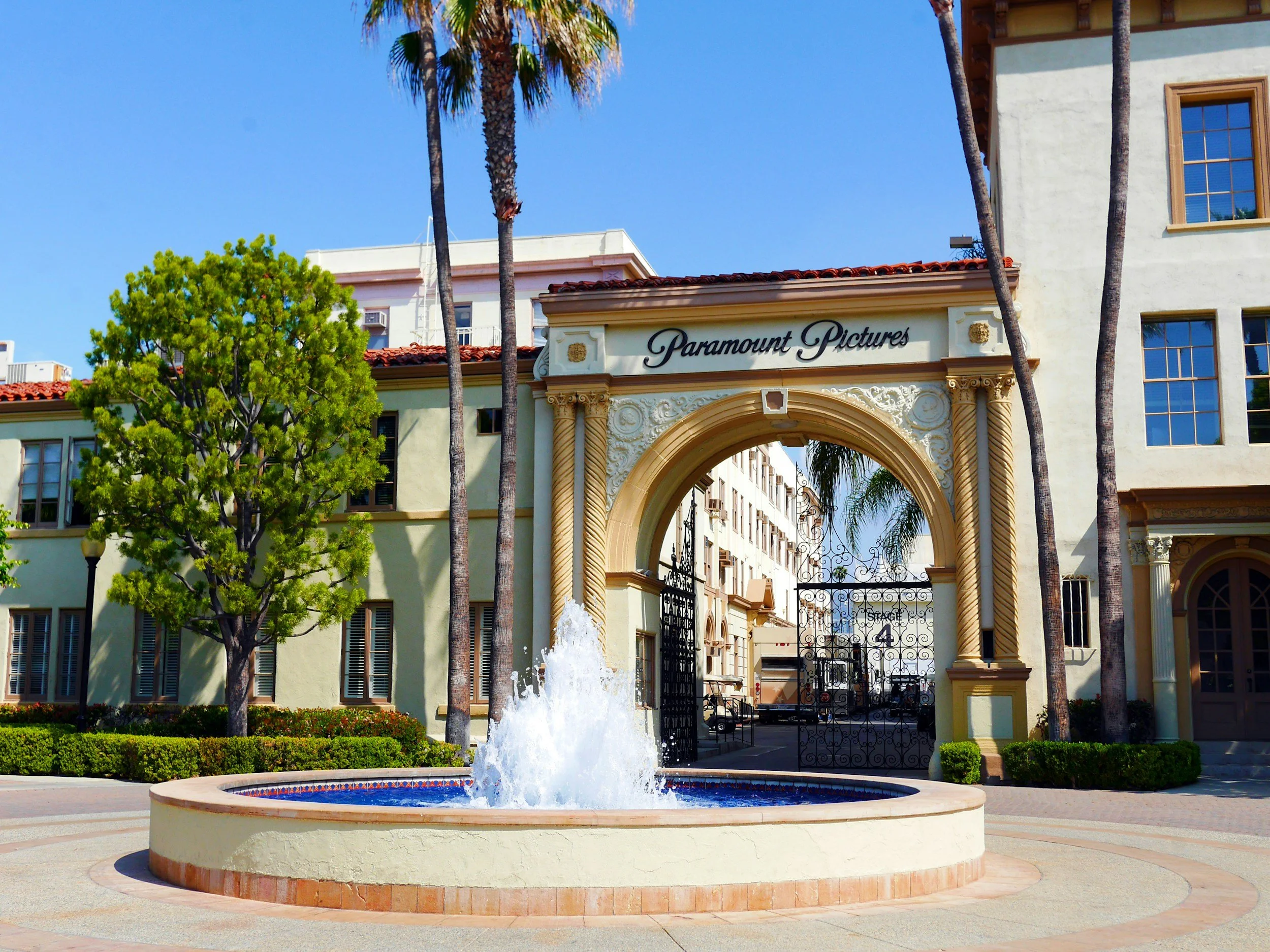
Since civil law classifies animals as personal property, courts consistently hold that non-human assets lack standing to assert the Right of Publicity.[6] Consequently, equine owners may have to rely on insufficient commercial contract and property law doctrines to challenge corporate provisions which seize the physical biometric and kinematic dynamic data of the horse for future use.[7] The question then becomes, whether a production agreement is viewed as a statutory lease under Uniform Commercial Code (U.C.C.) Article 2A, or as a traditional common law commercial bailment.[8] Regardless, courts should examine whether provisions authorizing the use of an equine stunt horse’s biometric data exceed the scope of the owner’s authorization, particularly as to its perpetual digital exploitation.
When a production agreement qualifies as a statutory lease of personal property governed by U.C.C. Article 2A, it opens the door to judiciary discretion to neutralize overreaching digital extraction provisions.[9] Specifically, U.C.C. § 2A-108(1) provides that if a “court as a matter of law finds a lease contract or any clause of a lease contract to have been unconscionable at the time it was made, the court may refuse to enforce the lease contract” or “it may so limit the application” of the clause to avoid any unconscionability.[10] In studio leasing clauses, seizing perpetual digital clones are regularly presented on a non-negotiable basis in the boilerplate language of the contract, which may and should open the door for a court to examine the clause’s scope and practical effects to support a finding of unconscionability.[11] A provision like this, requiring an equine owner to surrender control over the commercial use of biometric data indefinitely, should be scrutinized for substantive unfairness under U.C.C. § 2A-108.

Conversely, if a court analyzes the studio production agreement through the lens of a traditional common law commercial bailment, the studio would hold the horse as a bailee entrusted with limited physical possession for a specified purpose.[12] Under settled bailment principles, a bailee’s possessory rights are strictly bounded by the scope of entrustment, and the bailee owes an affirmative duty to safeguard the chattel without exceeding its authorized use.[13] The Restatement (Second) of Torts § 227-228 established that a bailee who uses a chattel in a manner exceeding the scope of the bailment, or that seriously violates the bailor’s right to control its use, is liable for property conversion.[14] Applying U.C.C. § 2A-108, by analogy, alongside the Restatement provisions provides a potential framework for evaluating whether converting temporary physical custody into the commercial exploitation of the biometric data represents an unconscionable expansion of the bailee’s limited rights.[15] Without a protective legal framework, as such, production companies may seek to extend temporary access to equine subjects into continuing reuse of biometric data without meaningful limits or renewed consent.
As equine owners continue to invest substantially in breeding, conditioning, and distinctive performance capabilities, production agreements may compensate only for the limited data collection use, while granting the studio potentially endless rights to commercially exploit the data derived.[16] Reusing this biometric data across future media, without restraint or further compensation, raises concerns that studios are unjustly enriching themselves.[17] Such agreements also raise fundamental questions of commercial fairness.[18] Ultimately, because neither legal framework expressly resolves the issues arising from the collection and perpetual use of equine biometric data, it is imperative that courts and legislatures utilize U.C.C. § 2A-108, alongside Restatement (Second) of Torts § 227-228, to develop defined limits of permitted use and meaningful safeguards against contractual equine biometric data exploitation.
[1] Lauren Didelot, Paws Off My Image: Why Rights of Publicity Should Be Expanded, 32 J. Intell. Prop. L. 40, 57 (2025); see generally Am. Humane Soc’y, Guidelines for the Safe Use of Animals in Filmed Media ch. 8F (2025).
[2] Yasmin Ali, Motion Capture Improves Animation of Animals, BBC News (Sept. 7, 2015), https://www.bbc.com/news/science-environment-34175225 [https://perma.cc/E3LJ-QYSP]; see also Avatar: Detailed Action Report, Am. Humane Soc’y, https://www.americanhumane.org/production/avatar/ [https://perma.cc/J9XE-TFP3] (last visited Oct. 26, 2026).
[3] Ali, supra note 2; Massive Announces AI-controlled Horse & Rider Agent, Massive Software (July 31, 2017), https://www.massivesoftware.com/pr-horse_agent.html [https://perma.cc/K53C-57BR].
[4] Am. Humane Soc’y, supra note 1, § 8-137.1.
[5] Chinmayi Sharma & Elijah Gordon, Bailing Out Biometrics, 18 J. Tort L. 387, 416-17, 424 (2025).
[6] Didelot, supra note 1, at 46-47.
[7] Id. at 48-49.
[8] U.C.C. § 2A-108 (A.L.I. & Unif. L. Comm’n 1987); Restatement (Second) of Torts § 227-228 (Am. L. Inst. 1965).
[9] See §2A-108.
[10] § 2A-108(1).
[11] Sharma & Gordon, supra note 5, at 416-17.
[12] Id. at 404-5
[13] Id. at 432.
[14] Restatement (Second) of Torts § 227-228 (Am. L. Inst. 1965).
[15] U.C.C. § 2A-108; Restatement (Second) of Torts § 227-228; Sharma & Gordon, supra note 5, at 433.
[16] Didelot, supra note 1, at 57; Avatar: Detailed Action Report, supra note 2.
[17] Sharma & Gordon, supra note 5, at 438.
[18] Id. at 420-21.