
By: Harper Lawson
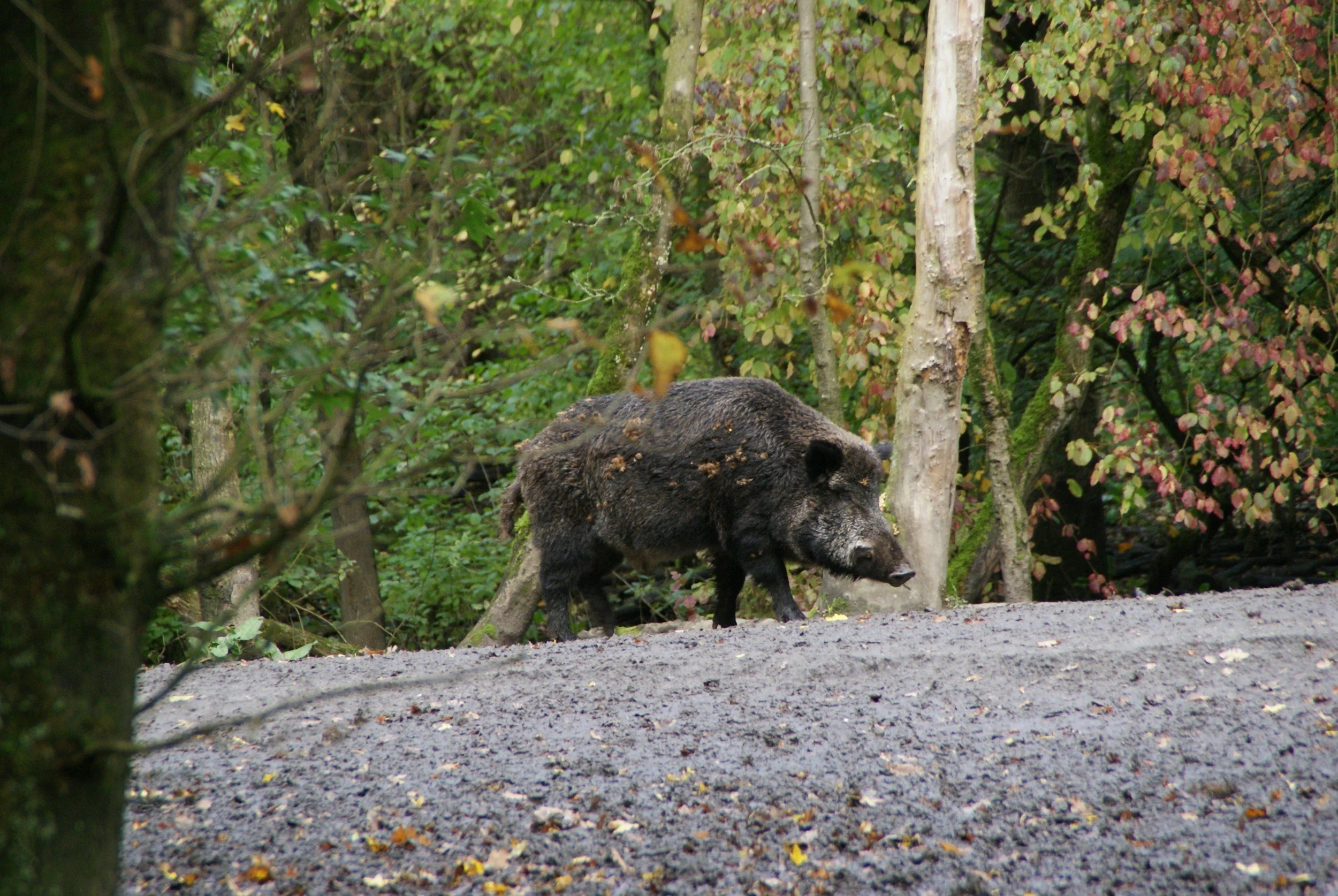
Introduced by European settlement in the 1500’s what once was a couple of stray farm animals has ballooned into a growing ecological bomb.[1] America’s feral hogs are not naturally occurring instead they are a hybrid of escaped domestic pigs and Russian boars, this hybrid nature causes problems both in the species’ ability to reproduce and in classification.[2] Feral hog herds, or sounders, with a population around seven million cause up to 3.4 billion in agricultural damage across thirty-five states.[3]
Initially, state and federal agencies responded by announcing an open season on feral hogs.[4] Hogs were hunted without limit; the result was a disaster, not only did populations grow but the hunting caused surviving hogs to become more elusive and scattered.[5] Another issue arises in how many hogs are killed.[6] Researchers indicate that to keep populations from growing 75 percent of a region’s hogs need to be killed every year, simply said hunters struggle to keep up.[7] Statutes pushing hunting have also led to the illegal transport of hogs into unaffected states like Michigan, Kentucky, and Ohio via opportunistic hunters who wish to take advantage of no-limit hunting.[8]
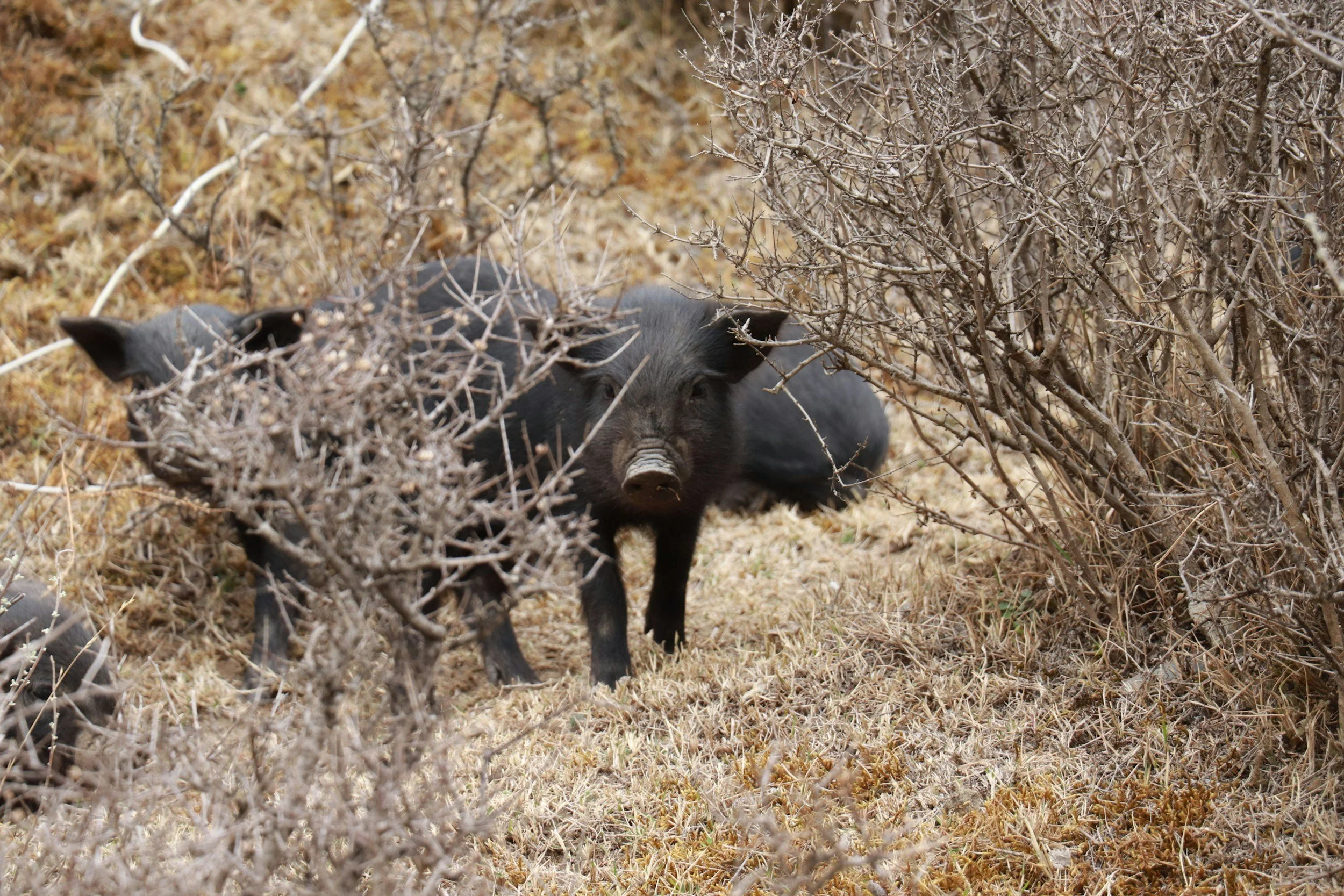
Trapping is the best solution because trapping the whole sounder the animals are prevented from dispersing and results in a higher culling compared to recreational hunting.[9] Kentucky banned recreational hunting of feral hogs in a 2024 executive regulation which sets an example, the ban eliminates both a cause for the dispersing of sounders and the incentive for illegal transport.[10] As a result of this new regulation, Kentucky has seen a major decline in their population of feral hogs.[11] Kentucky joins the ranks of other states such as Indiana where state legislation regulated recreational hunting and led to the eventual eradication of feral hogs in Indiana.[12]
States like Texas are an example of how a reliance on hunting only feeds the problem of feral hogs, despite high records of culled hogs the population in Texas is still growing at a rate of 21 percent each year.[13] In 2019, Texas removed the requirement of a license to hunt feral hogs on private lands in an effort to increase hunting.[14] In this same legislation, Texas incentivizes the hiring of private guides for the express privilege of hunting feral hogs on private property and game parks.[15] The prioritization of hunting feral hogs leads to a scattering of hog populations and the creation of an entrenched industry with an interest in preventing the total eradication of hogs, factors which have led to the introduction of population to unaffected states.[16]
In Ohio, the state legislature has struggled to follow the same regulative goals as expressed in Kentucky. In 2024, Ohio’s legislature passed the § 1533.75 of Ohio’s Revised Code, which banned the hunting of feral hogs save on private lands.[17] However, Ohio’s legislation has faced serious pushback from private hunting parks.[18] In fact, the statute was deemed unconstitutional by the Court of Appeals on the grounds the description of feral hogs was overly broad and could be implied to apply to the transport of farm pigs as well as feral hogs.[19] The state has moved to appeal the case before Ohio’s Supreme Court, but the entire debacle highlights the struggle faced by states attempting to regulate feral hogs, both in the difficulty to describe the hybrid species and the issue of entrenched opposition to reforms.[20]
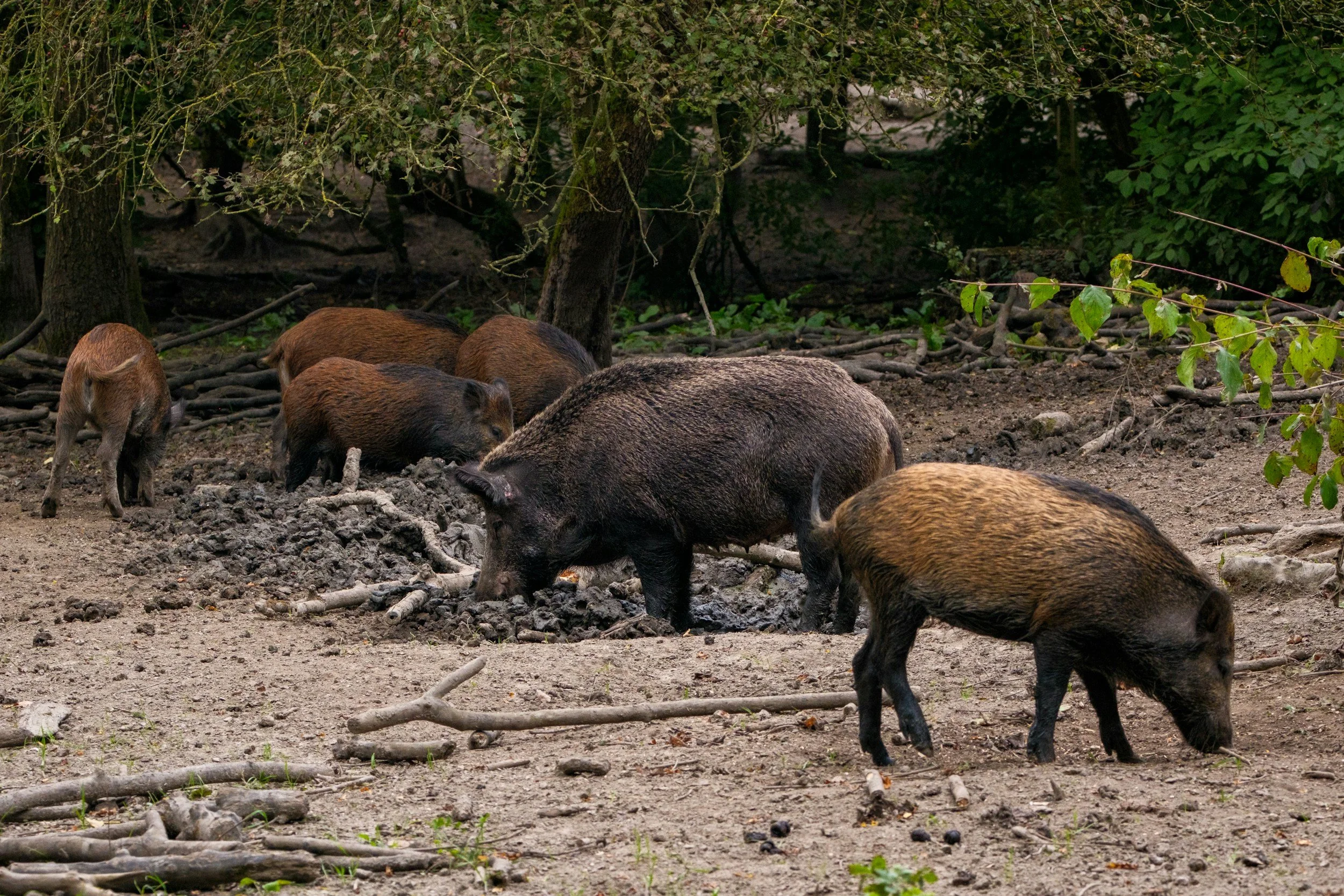
While states struggle with litigation from hunters and statutory road gaps the population of feral hogs continues to explode, whereas reforms in states like Kentucky have produced incredible results.[21] States like Texas, with their ineffective means of eradication, act as safe harbors for hog populations preventing total elimination and threaten successful eradication efforts, despite successful reforms elsewhere.[22] Porous borders and disunified administrative goals make a federal initiative necessary for true eradication.[23] Federal policy, mirroring Kentucky’s, would unify state eradication programs into a national effort and eliminate the problem of state borders which often limit successful programs to the confines of their administrative boundaries.[24] Without a unified effort to modify statutes regarding feral hogs, the problem will only worsen with time leaving farmers to pick up the pieces of a disjointed and out-of-date methodology.
[1] Feral Swine Population Distribution, Animal & Plant Health Inspection Serv., U.S. Dep’t of Agric. (Apr. 7, 2026), https://www.aphis.usda.gov/operational-wildlife-activities/feral-swine/distribution [https://perma.cc/94AP-7Z2D].
[2] Feral Swine Identification, Animal & Plant Health Inspection Serv., U.S. Dep’t of Agric. (Nov. 17, 2025), https://www.aphis.usda.gov/operational-wildlife-activities/feral-swine/identification [https://perma.cc/S7PQ-WSDC]; U.S. Dep’t of Agric., supra note 1.
[3]Feral Swine: Managing an Invasive Species, Animal & Plant Health Inspection Serv., U.S. Dep’t of Agric. (Aug. 31, 2026), https://www.aphis.usda.gov/operational-wildlife-activities/feral-swine [https://perma.cc/2XC5-9RRF]; Distribution and Expansion, Coping with Feral Hogs, Tex. A&M AgriLife Extension, (last visited Oct. 19, 2026) https://feralhogs.tamu.edu/feral-hog-distribution-and-expansion/ [https://perma.cc/AXX7-TQQE]; U.S. Dep’t of Agric., supra note 2.
[4] Terence J Centner & Rebecca M Shuman, Governmental Provisions to Manage and Eradicate Feral Swine in Areas of the United States, 44 Ambio 121 (May 21, 2024), https://link.springer.com/article/10.1007/s13280-014-0532-9 [https://doi.org/10.1007/s13280-014-0532-9].
[5] Michael Marks, Texas Has a Feral Hog Problem. Hunting Them Makes It Worse., KUT 90.5 (Apr. 7, 2022), https://www.kut.org/2022-04-07/texas-has-a-feral-hog-problem-hunting-them-makes-it-worse [https://perma.cc/K9X5-SLVM].
[6] See Ginger Rowsey, Wild Hogs Root Up More Trouble for U.S. Farmers, Farm Progress (Nov. 10, 2022), https://www.farmprogress.com/crops/wild-hogs-root-up-more-trouble-for-u-s-farmers [https://perma.cc/WU7N-ZZUB].
[7]Rowsey, supra note 6; Feral Hogs, Tex. Parks & Wildlife Dep’t, https://tpwd.texas.gov/huntwild/wild/nuisance/feral_hogs/ (last visited Oct. 19, 2026) [https://perma.cc/HH2U-YVFT].
[8] Rowsey, supra note 6.
[9] Study Finds U.S. Feral Hog Population Can Be Managed, National Hog Farmer (Oct. 11, 2023), https://www.nationalhogfarmer.com/livestock-management/study-finds-u-s-feral-hog-population-can-be-managed[https://perma.cc/2HKG-8YUE].
[10] See id.; Ky. Rev. Stat. Ann. § 150.186 (West); 301 Ky. Admin. Regs. 3:03.
[11] Aerial Effort Removes More Than 1,800 Wild Pigs at Land Between the Lakes, LEX 18 (June 17, 2026 at 6:46 ET), https://www.lex18.com/news/covering-kentucky/aerial-effort-removes-more-than-1-800-wild-pigs-at-land-between-the-lakes[https://perma.cc/GP79-QLPU].
[12]Indiana Used to Have a Wild Pig Problem, but Now They’re All Gone, IndyStar (Nov. 13, 2023), https://www.indystar.com/story/news/environment/2023/11/13/indiana-used-to-have-a-wild-pig-problem-but-now-theyre-all-gone/71529821007/ [https://perma.cc/ZFM7-BCFU]; 312 Ind. Admin. Code 9-3-18.6.
[13] Tex. Parks & Wildlife Dep’t, supra note 7.
[14]Marks supra note 5; Ryan Wieding et al., An Update on Feral Pig Laws and Regulations in Texas, Nat. Res. Inst., Tex. A&M Univ.(Apr. 1, 2026), https://nri.tamu.edu/blog/2026/april/an-update-on-feral-pig-laws-and-regulations-in-texas/ [https://perma.cc/N9YH-SM35].
[15] Wieding et al, supra note 14.
[16] Marks, supra note 5; Tex. Parks & Wildlife Dep’t supra note 5.
[17] Ohio Rev. Code Ann. § 1533.75 (West).
[18] See Shawnee Ridge Hunting, LLC v. LaRose, 281 N.E.3d 1147 (Ohio Ct. App. 2026).
[19] Id.
[20]See Id., appeal granted, 283 N.E.3d 474 (Ohio 2026).
[21]Tex. Parks & Wildlife Dep’t, supra note 7; LEX 18, supra note 9; U.S. Dep’t of Agric, supra note 3.
[22] Tex. Parks & Wildlife Dep’t, supra note 7.
[23] North America’s Feral Pig Problem, Conservation Frontlines, (last visited Oct. 19, 2026) https://conservationfrontlines.org/2025/12/north-americas-feral-pig-problem/ [https://perma.cc/4JZ8-GT2W].
[24] Marks supra note 5; Cetner & Shuman supra note 4.