



A haze is looming on Kentucky. Public opinion has shifted to favor the legalization of marijuana. This shift was expressed in a major way with the legalization of the recreational use of marijuana in both Colorado and Washington.

In this blog, 2L staffer Jordan Grady delves into the debate surrounding presidential grants of extended deadlines for compliance with EPA emissions standards set forth under the HON Rule. The HON Rule seeks to regulate hazardous air pollutants discharged from chemical manufacturing facilities throughout the country. In looking to the Clean Air Act Section 112(i)(4), which grants the president the authority to issue compliance extensions, this blog argues that individualized, rather than en masse, grants of extensions are required to ensure the president is acting within the intended scope of Section 112(i)(4).
In this blog, 2L staffer Kylee Greene analyzes the current landscape of Kentucky’s Farm Animal Activity Act’s (FAAA) horse racing exemption. She argues that the definition of “horse racing activity” under the FAAA is inadequate and proposes a three-factor test that considers the nature of the farm animal activity, whether the plaintiff’s injury occurred on the racetrack, and the temporal proximity between the plaintiff’s injury and the race.
In this blog, staffer Aaron Withers examines House Bill 320, which in 2024 shortened Kentucky's limitations period for civil rights and wrongful-discharge claims from five years to three without saying whether the change reaches claims that had already accrued. Withers argues that under KRS 446.080(3), claims that accrued before July 15, 2024 remain subject to the five-year period, and that courts lack authority to write in the grace period the General Assembly left out. He urges the General Assembly to adopt a default transition rule in KRS Chapter 446, explaining why certainty matters to Kentucky farms and mineral interests.
In this blog, 3L staffer Emma Johns examines how equine genetic testing raises questions about control over genetic information and disclosure obligations in Kentucky horse sales. She argues that Kentucky should encourage clearer sale and testing agreements governing disclosure, sample retention, and data use, while clarifying when known genetic results trigger the warranty exception for sellers who knowingly sell diseased animals.
In this blog, 3L staffer Jordan Guancione explores how Kentucky divorce courts should value unborn racehorses by looking to how courts have divided unvested pensions and stock options. She examines the “immediate offset” method as a potential solution for dividing an asset whose future value remains uncertain.
Dr. Dickson Despommier, professor of public health at Columbia University, created the concept of “vertical farming” back in 1999. Dr. Despommier and his students discovered that with a city, like New York, instead of looking towards flat land for food growth, the city should start looking up. Dr. Despommier and his class on medical ecology estimate that 30-story vertical farm towers could feed 50,000 people.
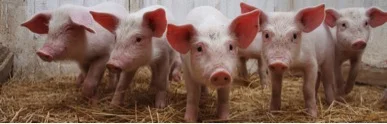
In Kentucky, “feeding garbage to swine” is prohibited, even if the garbage has been treated. Additionally, garbage fed swine cannot be imported into the state. Across the Kentucky border in Indiana, a bill was introduced in the House that may amend Indiana law to allow treated garbage to be fed to swine.
Recently, students from all over the country have started pushing their college or university to divest from fossil fuel companies. Students at Swarthmore College, where the movement was born in 2011, have been staging a sit-in for nearly a month asking the school to sell its holdings in the top 200 coal, oil, and gas companies.
In 2008, California voters concerned with the condition of egg laying hens, and other farm animals, took to the ballot and passed the initiative known as Proposition 2. At the time Prop 2 was passed, ninety-five percent of U.S. farm hens were kept in cramped, wire battery cages stacked on top of each other in warehouses.
The Kentucky Horse Racing Commission (KHRC) recently approved a controversial proposal to allow racetracks in the Commonwealth to card races where the competing horses would not be allowed to be administered furosemide on race day. Furosemide, an anti-bleeding medication commonly known as Lasix, is intended to decrease the effects of exercise-induced pulmonary hemorrhage (EIPH). While some initially thought the vote could have an impact at the 2015 Breeders’ Cup World Championships, which is scheduled to be run at Keeneland on October 30-31, Keeneland President and CEO Bill Thomason said he does not expect Keeneland to schedule any Lasix-free races until 2016.
The 141st running of the Kentucky Derby is upon us. Although most taxpayers have filed their 2014 returns with the IRS, cashing a winning ticket on May 2nd could come with a price. Racetrack winnings, like other gambling income, are subject to federal income tax. Currently, the Internal Revenue Service permits taxpayers to deduct gambling losses against winnings. The tax-code’s treatment of racetrack gambling proceeds has not changed much over the years, but many handicappers were relieved to see that the exemption escaped the new limits on itemized deductions that Congress enacted in 2013.
For the first time in California’s history, Governor Jerry Brown has ordered a 25 percent cut in urban water usage. “People should realize we are in a new era. The idea of your nice little green lawn getting watered every day, those days are past,” Brown remarked. The restrictions consists of not washing down sidewalks or driveways, recirculating water in fountains, and only serving water to customers per request at restaurants, among many other things. The mandatory water restrictions are the consequence of a drought that has harangued the Southwest for four consecutive years.
The Tennessee Gas Pipeline has transported natural gas throughout eighteen Kentucky counties over the past seventy years. Recently, Kinder-Morgan Energy Partners submitted a proposal to the Federal Energy Regulatory Commission to repurpose the pipeline and enable it to carry natural gas liquids. While it is uncertain if the proposal will even be approved, much debate exists regarding the environmental impact if the gas line is converted.