

Did Obama Become President to Make Jobs For Lawyers?

Image Source

By: David W. Harper, Jr., Staff Member

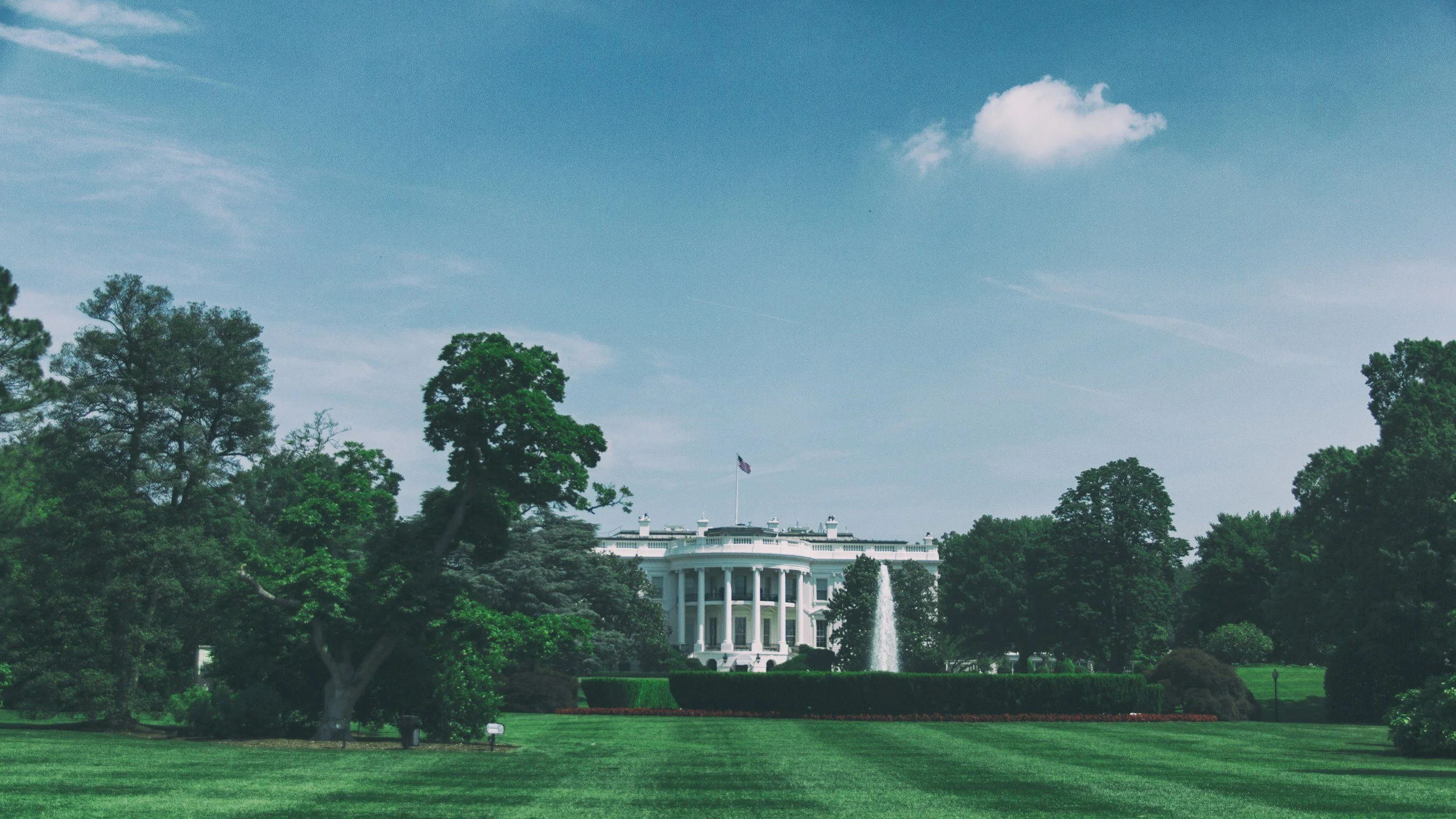
President Obama is doing his best to help the legal market. Plainly, the demand for Administrative lawyers is on the rise. While George Orwell would disprove of Obama’s 1984-esque legislation, attorneys should rejoice. With each new piece of convoluted, highly regulatory legislation comes high demand for legal advice.[1] Just as securities lawyers joked that the implementation of the Sarbanes-Oxley Act was kind of like the Full Employment Act for securities lawyers, the Affordable Care Act can be seen as the Full Employment Act for health care lawyers.[2] Will the possible amendment to the Ethanol Mandate be the next source of boom for the legal market?

As a result of the Affordable Care Act, there appears to be an increase in demand for health care lawyers to help navigate the lengthy, confusing provisions. In fact, some estimate a 20 percent increase in health care specialists in the legal field by 2018—that is approximately 600 new health care lawyers.[3] In addition to health lawyers, the Affordable Care Act could spark an increase in divorce lawyers. An unintended consequence of Obamacare is that a couple could avoid paying thousands of dollars in federal taxes and health premiums if they divorced; this has been labeled the “wedding tax.”[4] Should a couple choose economics over morality, divorce lawyers would be in high demand as well.[5]

Just as the Sarbanes-Oaxley Act sparked demand for securities lawyers and the Affordable Care Act has sparked demand for health care lawyers, will revisions to the current Ethanol mandate spark a demand for environmental litigators and administrative lawyers? The Environmental Protection Agency is debating reducing the amount of renewable fuel that the oil industry must use.[6] In response, ethanol backers are threatening to file a lawsuit if the EPA indeed decides to scale back the mandate.[7] Ethanol backers would certainly include farmers, as roughly 40 percent of America’s corn crop goes to support ethanol product.[8] Therefore, should the EPA decide to reduce the amount of required ethanol the oil industry must use, many may seek legal help—for instance, the oil industries for oversight and compliance issues and ethanol backers for litigation—creating another “demand-through-legislation” for lawyers. Different from the Sarbanes-Oaxley Act and Obamacare, the Ethanol mandate could spark a broader demand for attorneys as actors will seek legal help for a variety of reasons (compliance and litigation, among others). At a time where the legal market is arguably over-saturated and depressed, it appears President Obama is trying hard to help his former profession prosper.
_________________
[1] Catherine Hollander, Obamacare Is Creating Jobs—Yes, Really (Sept. 26, 2013), http://www.nationaljournal.com/magazine/obamacare-is-creating-jobs-yes-really-20130936.
[2] Id.
[3] Id.
[4] Jacqueline Leo, Why Divorce Lawyers Will Love Obamacare (Oct. 2, 2013), http://www.thefiscaltimes.com/Articles/2013/10/02/Why-Divorce-Attorneys-Will-Love-Obamacare.
[5] Id.
[6] Ryan Tracy, EPA Revisits Ethanol Mandate as Fuel Use Slips (Aug. 8, 2013), http://online.wsj.com/news/articles/SB10001424127887323968704578652011231792732
[7] Darren Goode, Will President Obama slash ethanol mandate? (Nov. 11, 2013), http://dyn.politico.com/printstory.cfm?uuid=CB1F5D72-3B88-4516-B105-E64E55E043DD.
[8] Christopher Helman, Attention Fracktivists: Corn Ethanol Is The Real Enviornmental Culprit (Nov. 11, 2013), http://www.forbes.com/sites/christopherhelman/2013/11/11/attention-fracktivists-corn-ethanol-is-the-real-environmental-culprit/.

Cultivating Justice for Survivors of Rape on American Farms

Image Source

By: Laken Gilbert, Staff Member

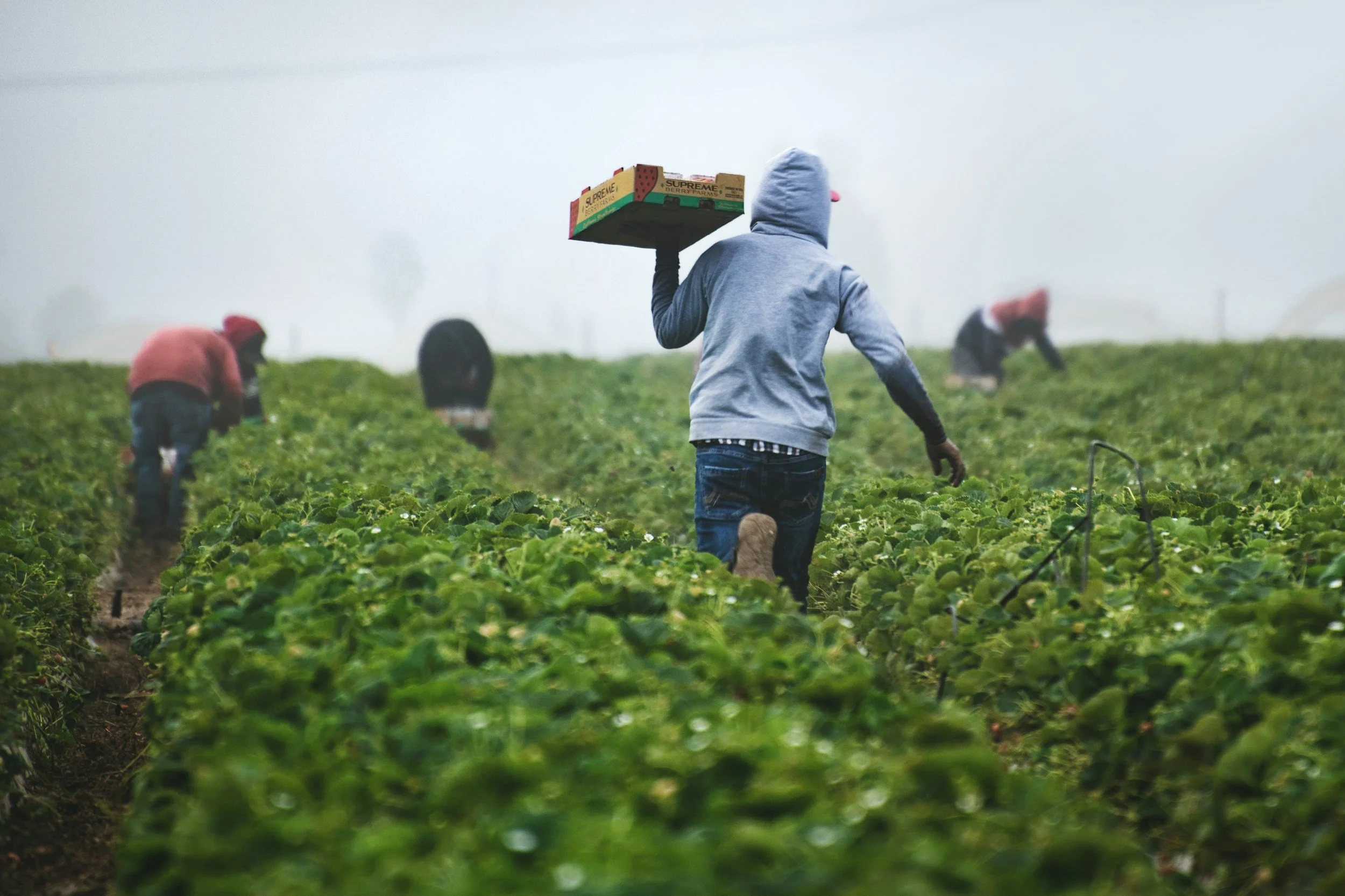
In America, over 500,000 women work in the fields and most are undocumented immigrants.[i] Women in the fields are especially vulnerable to unwanted sexual advances by farm supervisors.[ii] It is a scarcely-reported epidemic for many reasons, including the fear of deportation and lack of alternative work.[iii] No one knows how many women who work on American farms have been harassed or assaulted.[iv] However, a recent year-long investigation uncovered that since 1998, in the agriculture industry, none of the supervisors accused of assault or rape named in lawsuits filed by the Equal Employment Opportunity Commission (EEOC) have been tried in criminal court.[v] This suggests gross under-reporting in the criminal arena that must be addressed if justice is to be cultivated for survivors of rape on American farms.

In an effort to strengthen the ability of law enforcement agencies to prosecute such crimes while providing survivors protection from immediate risk of removal, Congress enacted the Victims of Trafficking and Violence Prevention Act (VTVPA) in 2000.[vi] The law provides temporary legal status, in the form of a U-visa, for those who are survivors of qualified crimes and are likely to be helpful to law enforcement.[vii] A petition for a U-visa requires, among other things,[viii] certification from an appropriate law enforcement agency that the survivor is cooperating and such agencies have broad discretion when it comes to signing the certification.[ix] However, the Vera Institute of Justice reported in 2011 that in many jurisdictions, law enforcement agencies do not use U-visas regularly or efficiently.[x] The Institute cites reasons such as lack of agency protocols, insufficient training, misunderstanding of law enforcement’s role in the process, and fear that using the U-visa will have negative consequences.[xi]

The plight of women farmworkers and the lack of prosecution of their offenders evidence the need for law enforcement to use U-visas more for the preservation of crucial testimony. Kris Zuniga, sergeant for a police department in rural California, says many farm workers do not get a rape exam.[xii] “And a week goes by, two weeks go by, three weeks go by, and you’ve lost that physical evidence, so now you’re down to a ‘he said, she said’ and those are tough, tough to prosecute.”[xiii]

Increasing law enforcement’s use of U-visas can help curb the lack of evidence in a criminal case. Not only would more women come forward if U-visas were widely used, but many of them would do so sooner, better preserving physical evidence. Furthermore, by using U-visas at the investigation stage, law enforcement can be better situated when moving a case to trial by ensuring that survivor will be present to testify. To achieve this, agencies need to increase training on the implications (or lack thereof) of using U-visas and how providing that protection early on can help increase evidence against offenders. Upsetting the imbalance of power in the fields is essential if justice is to be cultivated for these survivors. Refusing to use U-visas does nothing less than to perpetuate this imbalance and puts offenders on notice that their crimes will not be pursued.
_________________
[i] Rape in the Fields, Frontline (June 25, 2013), http://cironline.org/rapeinthefields.
[ii] Sasha Khokha, Silenced By Status, Farm Workers Face Rape, Sexual Abuse, NPR (Nov. 5, 2013, 5:26 PM), http://www.npr.org/2013/11/05/243219199/silenced-by-status-farm-workers-face-rape-sexual-abuse.
[iii] Id.
[iv] Id.
[v] Id.
[vi] U.S. Dept. of Homeland Security, U Visa Law Enforcement Certification Resource Guide, http://www.dhs.gov/xlibrary/assets/dhs_u_visa_certification_guide.pdf.
[vii] Rodolfo Estrada, How Law Enforcement Is Using The U-Visa, VERA Institute of Justice (Oct. 2011) http://www.vera.org/sites/default/files/resources/downloads/U-visa-practice-brief.pdf.
[viii] Requirements are: they have suffered “substantial physical or mental abuse” as a result of being a victim of one or more specified criminal activities; they possess information about those criminal activities; they help—or are willing to help—with the detection, investigation, or prosecution of the criminal activities; and they were victims of criminal activities that occurred in the United States or that violated the country’s laws. Id.
[ix] Id.
[x] Id.
[xi] Id.
[xii] Sasha Khokha, Despite Barriers, Farm Worker Breaks Silence About Rape Case, NPR (Nov. 6, 2013, 4:26 PM), http://www.npr.org/2013/11/06/243288375/despite-barriers-farm-worker-breaks-silence-about-rape-case?utm_content=socialflow&utm_campaign=nprfacebook&utm_source=npr&utm_medium=facebook.
[xiii] Id.

Injury in Frack?


Image Source
By: Catherine Gavin, Staff Member

One of the first and most important steps of bringing a lawsuit is establishing the complaining party has standing.[1] An important aspect of standing is injury in fact.[2] Injury in fact requires a concrete and particularized injury that was actual or imminent. Additionally, the litigant must show that “(1) the agency action increased the risk of actual, threatened, or imminent environmental harm and (2) the litigant must show the increased risk of environmental harm injures its concrete interests by demonstrating either its geographical nexus to, or actual use of the site of the agency action.”[3] Litigants claiming that fracking caused them harm may run into an issue of proving the harm they suffered.

Fracking first began in the 1940s[4] and has since gained great popularity. Hydro-fracking, or more commonly known as fracking, is a multistage process that extracts natural gas.[5] The first stage of fracking includes vertically drilling a well thousands of feet into the ground.[6] A mixture of sand, water and other various chemicals is then put into the well at a high pressure, which then creates tiny fractures in the shale that the natural gas can escape through.[7] The natural gas escapes through the small fractures and is drawn back up to the surface where it can be refined, shipped and sold.[8] Waste water returns to the surface along with the natural gases.[9] Wastewater, if handled improperly, can be potentially harmful due to the radioactive elements that it may contain. [10] Despite the popularity of fracking, it has not escaped public debate and controversy of the supposed harmful effects of fracking.

Groundwater contamination is the most common harm associated with fracking. There are several ways in which a fracking well can cause groundwater contamination or other environmental harm. An improperly drilled well has the potential to case injury.[11] Additionally, handling the mixture of sand, water, and other chemicals improperly above ground can also lead to environmental harm. [12] Finally, incorrect disposal of the flow back waste can lead to harm that is actionable. [13]
It is unknown, however, whether a properly constructed well has the potential to cause groundwater contamination or environmental harm. An abundance of research is under way to determine this very fact. Thus far, research has yet to produce any concrete evidence that proves fracking wells cause groundwater contamination or harm. The Department of Energy, commenting about ongoing research, said that according to preliminary research there is no evidence of groundwater contamination from fracking.[14]

Due to the uncertain correlation between environmental harm and fracking it will be very difficult for a complaining party to meet the standing requirements. If the complaining party cannot prove an injury in fact and thus, not meet the constitutional requirements; he/she may be barred from bringing suit.
_________________
[1] U.S. Const. art. III, § 2.
[2] Id.
[3] Amigos Braovs v. United States BLM, 816 F. Supp. 2d 1118, 1128 (D.N.M. 2011) (citing Comm to Save the Rio Hondo, 102 F.3d 445,499 (10th Cir. 1996)).
[4] John Richardson, The History of Fracking (A Timeline), http://energywithjr.quora.com/The-History-of-Fracking-A-Timeline (last visited November 11, 2013).
[5] Fracking explained what is fracking?, Clean Water Action, http://www.cleanwateraction.org/feature/fracking-explained (last visited November 11, 2013).
[6] Id.
[7] Id.
[8] Id.
[9] Id.
[10] Id.
[11] Morgan Soraghan, Baffled About Fracking? You’re Not Alone, N.Y. Times (May 13, 2011), http://www.nytimes.com/gwire/2011/05/13/13greenwire-baffled-about-fracking-youre-not-alone-44383.html.
[12] Id.
[13] Vicki Vaughan, Shale play a worry for Bexas ozon, mySA (May 23, 2012, 7:53pm), http://www.mysanantonio.com/business/article/shale-play-a-worry-for-bexar-ozone-3581077.php.
[14] Kevin, Begos, Pennsylvania Fracking Study Shows Chemicals Did Not Contaminate Water, Huffington Post Green (July 19, 2013, 5:48pm), http://www.huffingtonpost.com/2013/07/19/pennsylvania-fracking-study_n_3622512.html.

West Virginia Chicken Farmer Prevails in Dispute Over EPA Authority: What Lies Ahead?

Image Source

By: Matthew Forcum, Staff Member

On October 23, 2013, the U.S. District Court for the Northern District of West Virginia held in favor of Lois Alt, a West Virginia poultry farmer, in her dispute with the EPA over regulation of storm water runoff. The disagreement arose in 2011 when the EPA issued a compliance order to Alt that concluded she had violated the Clean Water Act (“CWA”) because her poultry operation had “discharged pollutants … during rain events generating runoff without having obtained an NPDES permit.”[i] Alt was subject to “civil penalties of up to $37,500 per day of violation” and the potential for imprisonment.[ii] Claiming that the agency lacked authority to issue the order, Alt filed a civil action in 2012.[iii]

Seen as a challenge to the EPA’s recent broader exercise of authority to regulate certain discharges at concentrated animal feeding operations (“CAFOs”), Alt’s case has drawn considerable attention.[iv] Some farmer advocates have felt that the federal agency had been “overstepping its bounds.”[v] Although the October 23rd decision could be seen as a victory for Alt, outside observers and other small farmers should remain cautious with respect to how settled the law is.

The dispute centered on the meaning of the agricultural storm water discharge exception to the definition of “point source” in the CWA.[vi] In reviewing administrative agency actions like the EPA’s order, courts generally take a deferential stance to the agency.[vii] The district court noted here however, that the term “agricultural storm water discharge” was not defined in the CWA, and concluded that the term should be given its ordinary meaning.[viii] Importantly, the district court held that the EPA order did not constitute an agency interpretation of the statuary term.[ix] Accordingly, the court was not obliged to give the EPA’s action what is known as “Chevron deference.”[x] Under that extremely deferential doctrine, when an agency’s interpretation of its enabling statute is challenged, the court must determine if the statute is ambiguous.[xi] If it is ambiguous, then the court must uphold the agency’s interpretation so long as it is reasonable.[xii] Is it possible that the EPA could, through future interpretive rulemaking on the runoff issue have another “bite at the apple?”

Under the Supreme Court’s 2005 Brand X Internet Services holding, a district court’s prior judicial construction of a statute trumps an agency construction otherwise entitled to Chevron deference only if the prior court decision holds that its construction follows from the unambiguous terms of the statute.[xiii] The district court here did not explicitly state whether the statutory term was “unambiguous.”[xiv] Arguably, this leaves the door open for the agency to try and “overrule” the district court’s construction under Brand X Internet Services. Assuming then that the EPA has statutory authority to interpret the meaning of “agricultural storm water discharge,” the agency could conceivably through a future rulemaking promulgate a regulation encompassing its preferred definition instead of issuing a mere compliance order as it did in Alt’s case. If challenged, the agency interpretation would then likely be entitled to great deference under Chevron.[xv]

The takeaway here is that the larger dispute in respect to the EPA’s regulatory authority over storm water runoff remains potentially unsettled. This is especially true if the EPA is committed to asserting a more authoritative stance on regulating CAFO runoff Observers should note that the EPA had issued orders nearly identical to the one issued to Alt to other farmers in West Virginia and Virginia.[xvi] Stakeholders should remain alert to the possibility of further legal developments.
_________________
[i] Alt v. United States EPA, No. 2:12-CV-42, 2013 U.S. Dist. LEXIS 152263 at *7-8 (N.D. W.Va. Oct. 23, 2013).
[ii] Id. at *8.
[iii] Id. at *3.
[iv] Rona Kobell, West Virginia poultry famer sues EPA to clarify CAFO regulations, Bay Journal (Oct. 10, 2013), http://www.bayjournal.com/article/west_virginia_poultry_farmer_sues_epa_to_clarify_cafo_regulations.
[v] Vickie Smith, W.Va chicken farmer wins EPA lawsuit over runoff, SFGate (October 23, 2013, 3:47 PM), http://www.sfgate.com/news/science/article/W-Va-chicken-farmer-wins-EPA-lawsuit-over-runoff-4920110.php.
[vi] Alt v. United States EPA, No. 2:12-CV-42, 2013 U.S. Dist. LEXIS 152263 at *10 (N.D. W.Va. Oct. 23, 2013).
[vii] See Id. at *10.
[viii] Id. at *23.
[ix]Id. at *28-29.
[x] Id.
[xi] Chevron U.S.A., Inc. v. NRDC, Inc., 467 U.S. 837, 842-43 (1984).
[xii] Id.
[xiii] Nat’l Cable & Telecomms. Ass’n v. Brand X Internet Servs., 545 U.S. 967, 982 (2005).
[xiv] Alt v. United States EPA, No. 2:12-CV-42, 2013 U.S. Dist. LEXIS 152263 at *23 (N.D. W.Va. Oct. 23, 2013).
[xv] See Chevron U.S.A., Inc. v. NRDC, Inc., 467 U.S. 837, 842-43 (1984).
[xvi] Vickie Smith, W.Va chicken farmer wins EPA lawsuit over runoff, SFGate (October 23, 2013, 3:47 PM), http://www.sfgate.com/news/science/article/W-Va-chicken-farmer-wins-EPA-lawsuit-over-runoff-4920110.php.

"Ag Gag" Laws: Putting a Gag on Food Safety

Image Source

By: Lynsey Freeman, Staff Member

For many Americans, eating meat is a daily occurrence. America represents around five percent of the world’s population, but we raise and slaughter “nearly ten billion animals a year, more than fifteen percent of the world’s total.”[1] The substantial quantity of meat processed on our soil raises curiosity and concern from both journalists and animal rights activists. There has been a steady showing of undercover explorations over the years. One particular animal rights group, Mercy For Animals (MFA), sponsors these types of investigations since 2002.[2] This type of work sparked the enactment of laws across our nation which make it illegal for anyone to enter an animal facility and use a camera, video camera, or any kind of audio recording device without the consent of the owner.[3] Some make it illegal to even be on the property without proper permission.[4] These laws have come to be known as “ag gag” laws.[5] They are currently enacted in seven states.[6]

While many of these undercover investigations focus on animal cruelty, that frequently has a direct correlation to food safety. The connection comes from the fact that animal products, such as raw meat and eggs, create legitimate dangers to human health. One danger is salmonella poisoning, a leading cause of foodborne sickness.[7] Growth hormones, antibiotics, and pesticide and herbicide residues are also potential dangers to meat eaters.[8] History has shown that the government alone cannot control these dangers. Recently, the government shutdown had all inspections of domestic food, except meat and poultry halted; soon after there was a salmonella outbreak that sickened hundreds of people in eighteen states.[9] There are many other examples of large-scale outbreaks that the government has not been able to prevent.

“Ag gag” laws are eliminating an essential check on food safety. The public relies on undercover investigations to expose unsafe food production practices in industrial facilities. This is shown through journalistic exposés that have led to landmark laws. For example, Upton Sinclair's The Jungle, led to the enactment of the Federal Meat Inspection Act in 1906.[10] Animal rights activists have also conducted investigations into organizations, like Sparboe Farms and Butterball, that have resulted in criminal convictions and FDA action.[11] Therefore, the enactment of these “ag gag” laws should be approached with great concern, because they come with more than a gag on investigators, but also a gag on the safety of the food we consume.
_________________
[1] Mark Bittman, Rethinking the Meat Guzzler, N.Y. Times. (Jan. 27, 2008), http://www.nytimes.com/2008/01/27/weekinreview/27bittman.html?pagewanted=all&_=0.
[2] Undercover Investigations: Exposing Animal Abuse, http://www.mercyforanimals.org/investigations.aspx (last visited Oct. 15, 2013).
[3] Animal Research Facility Damage, N.D. Cent. Code Ann. § 12.1-21.1 (West 2013).
[4] Id.
[5] Richard A. Oppel Jr., Taping of Farm Cruelty Is Becoming the Crime (April 6, 2013), http://www.nytimes.com/2013/04/07/us/taping-of-farm-cruelty-is-becoming-the-crime.html?pagewanted=1&_r=3&.
[6] Ag Gag. http://en.wikipedia.org/wiki/Ag-Gag (last visited Oct. 28, 2013).
[7] How Safe is Out Meat E. Coli and Salmonella Contamination Dangers, (Jan. 1997), http://www.motherearthnews.com/real-food/e-coli-and-salmonella-contamination-dangers-zmaz96djzgoe.aspx?PageId=2#axzz2j3CTY98z.
[8] Id.
[9] Ron Nixon, Risk to Food Safety Seen in Furloughs, N.Y. Times. (Oct. 9, 2013), http://www.nytimes.com/2013/10/10/us/politics/risk-to-food-safety-seen-in-furloughs.html?_r=1&.
[10] Stephen Wells, Landmark ‘Ag Gag’ Lawsuit Fights Threat to Freedom of Speech (July 23, 2013), http://www.huffingtonpost.com/stephen-wells/ag-gag-bill_b_3635527.html?.
[11]Cindy Galli, Butterball Farm Worker Guilty of Animal Cruelty (Aug. 28, 2012) http://abcnews.go.com/Blotter/butterball-farm-worker-guilty-animal-cruelty/story?id=17098746; Investigation: Inside Egg ‘Factory Farm’ (Nov. 18, 2011) http://abcnews.go.com/2020/video/investigation-inside-egg-factory-farm-animal-rights-group-video-unsanitary-conditions-2020-14987723.

Shutting Down Our National Parks


Image Source
By: Eric Finke, Staff Member

The government shutdown of 2013 lasted for 16 days at an estimated cost of $24 billion dollars to our economy.[i] Lost in the midst of the shutdown dollar headlines are the effects still felt by the closure of national parks in states across the country including in Kentucky.[ii] The shutdown was not only an inconvenience for tourists, it resulted in furloughed workers and lost revenue for states that depend on such funds. With greater uncertainty to come in the months ahead as Congress once again must negotiate a debt deal, states should consider taking control of the national parks to preserve their natural wonders and local economies.[iii]

Kentucky is home to multiple national parks, rivers, and trails, including Mammoth Cave, Cumberland Gap, Big South Fork, and the Abraham Lincoln Birthplace. [iv] These national parks are part of more than 401 parks across the country. An estimated 715,000 visitors travel to the national parks a day, generating revenue of nearly $415,000 at each site from entrance fees and park services alone.[v] This may not sound staggering by itself, but it is estimated these visitors invest a combined $76 million in local economies each and everyday the parks are open.[vi] Cumberland Gap is located in Bell County, Kentucky where tourism director Judy Barton gave a grim report for hotels, restaurants, and shops that suffered from the shutdown: “When you have a million visitors to the park every year and it closes, that's serious.”[vii]

To avert future reoccurrences of this shutdown hangover on communities, the state of Alaska is looking to fund national parks on a state budget.[viii] The idea resulted from the shutdown itself as states were allowed to reopen parks on their own.[ix] Rather than waiting for a potential shutdown to occur again, states could follow this lead and prepare their own budgets to support the funding of national parks within their states.

Politics aside, Kentucky has been a leader for the country in setting up the healthcare exchange to provide insurance to uninsured residents as part of the evolving Affordable Care Act.[x] If Kentucky is capable of leading the nation in a healthcare exchange at the state level, there must be attention paid to the funding of national parks as well. This forward thinking by the state would help to prevent future economic fallout now being felt by the national parks and their local communities from the government shutdown right here at home.
_________________
[i] Tom Cohen et al., Obama signs bill to end partial shutdown, stave off debt ceiling crisis, CNN.com (Oct. 17, 2013, 12:51 A.M.), http://www.cnn.com/2013/10/16/politics/shutdown-showdown/index.html?utm_source=feedburner&utm_medium=feed&utm_campaign=Feed%3A+rss%2Fcnn_allpolitics+(RSS%3A+Politics).
[ii] Jim Warren, Effects of government shutdown begin to be felt in Kentucky, Kentucky.com (Oct. 1, 2013), http://www.kentucky.com/2013/10/01/2854668/effects-of-government-shutdown.html.
[iii] Kate Sheppard, National Park Closures Could Cost Local Communities $30 Million A Day In Lost Revenue, Huffington Post (Oct. 1, 2013, 5:21 p.m.), http://www.huffingtonpost.com/2013/10/01/national-park-closures_n_4025340.html.
[iv] National Park Service, Kentucky National Parks (last updated Oct. 17, 2013), http://www.nps.gov/state/ky/list.htm?program=parks.
[v] Gregory Korte, Shutdown's economic toll on parks: $76 million a day, USATODAY.com (Oct. 10, 2013, 9:55 a.m.), http://www.usatoday.com/story/news/politics/2013/10/10/national-parks-shutdown-cost/2957033/.
[vi] Id.
[vii] Warren, supra note 2.
[viii] Liz Ruskin, Bills don’t move, but Alaskans in Congress file away, Alaska Public Media (Oct. 22, 2013, 4:43 p.m.),
http://www.alaskapublic.org/2013/10/22/congressman-young-preps-legislation-to-restrain-feds/.
[ix] Josh Hicks, States want reimbursement for funding national parks during shutdown, The Washington Post (Oct. 22, 2013, 6:00 a.m.), http://www.washingtonpost.com/blogs/federal-eye/wp/2013/10/22/states-want-reimbursement-for-funding-national-parks-during-shutdown/
[x] Laura Ungar, Kentucky leads U.S. charge to get uninsured signed up for Obamacare, The Courier-Journal (Oct. 20, 2013), http://www.courier-journal.com/article/20131019/PRIME07/310190023/Kentucky-leads-U-S-charge-get-uninsured-signed-up-Obamacare.

Tarrant and the Future of Interstate Water Disputes

Image Source

By: Connor Egan, Staff Member

This past June, the United States Supreme Court resolved Tarrant Regional Water District v. Hermann,[1] an interstate water dispute between Texas and Oklahoma. While the unanimous opinion was narrowly tailored to the case, its language implicates a change in the Court’s deference to state law in interstate water disputes.

Specifically, Tarrant calls into question the Court’s last major water rights decision, Sporhase v. Nebraska,[2] where state ground water was held to be an article of commerce subject to federal regulation.[3] The Sporhase decision also established that state water compacts[4] were unquestionably bound by “federal constitutional constraints.”[5]

The conflict in Tarrant surfaced when a drought laden Texan water district, Tarrant, applied for a water diversion permit with its northern neighbor.[6] The permit requested access to over a quarter-million acre-feet of water from Oklahoma’s Kiamachi River—enough to supply Tarrant’s 300,000 Texan customers.[7] In support of the request, Tarrant relied on the Red River Compact—a congressionally approved contract between Oklahoma, Texas, Arkansas, and Louisiana, which allocated the water of the Kiamachi River (among other interstate waters) amongst the states. Oklahoma, however, refused to act, citing state statutes barring outside use of its water.[8]

Tarrant filed suit in federal court. It first claimed that the Red River Compact allowed Texas access to all of the Kiamachi River, thus preempting any Oklahoma law.[9] Second, Tarrant argued that the dormant Commerce Clause barred enforcement of state statutes preventing non-residents from accessing unallocated state water.[10] Through Justice Sotomayor, the Court dismissed both claims.

First, the Court found the preemption claim unpersuasive, as the compact did not explicitly address access to intrastate water.[11] The Court interpreted the compact’s silence to mean that Oklahoma retained exclusive ownership of all water within its borders.[12] In support of this holding, Sotomayor described water rights as “an essential attribute of [state] sovereignty.”[13] The Court also hastily rejected the Commerce Clause claim, explaining, “[t]he Oklahoma water statutes cannot discriminate against interstate commerce with respect to unallocated waters because the Compact leaves no waters unallocated.”[14]

Though Tarrant technically upholds the Sporhase precedent in a note to the opinion,[15] some see Tarrant’s language as stepping away from its highly federal predecessor.[16] While it is still too early to tell exactly how Tarrant will play out in future interstate disputes, the Court’s high deference to state law will certainly be a factor in forthcoming water disputes.
_________________
[1] Tarrant Reg’l Water Dist. v. Herrmann, 133 S. Ct. 2120 (2013).
[2] Sporhase v. Nebraska, 458 U.S. 941 (1982).
[3] Id. at 952.
[4] Compacts are federally enforced contracts between states that require Congressional approval.
[5] Sporhase, 457 U.S. at 962.
[6] Tarrant, 133 S. Ct. at 2122.
[7] Christine Klein, The Lesson of Tarrant Regional Water District v. Herrmann: Water Conservation, not Water Commerce, Center for Progressive Reform Blog, (Jun. 19, 2013), http://www.progressivereform.org/CPRBlog.cfm?idBlog=5CA2075E-9126-E28C-666D65E902073C68.
[8] Tarrant, 133 S. Ct. at 2122.
[9] Id. at 2123.
[10] Id. at 2136-37.
[11] Id. at 2132.
[12] Id. at 2132.
[13] Id. at 2132.
[14] Id. at 2137.
[15] Id. at 2133 n.11.
[16] Klein, supra note 3.

Con Robinson: Mastering The Art of Begging For Forgiveness

Image Source

By: Dillon Nichols, Staff Member

Con Robinson owns a composting business on his property at 4247 Georgetown Road just northwest of Lexington. Though zoned for rural agriculture use, the Board of Adjustment (the “Board”) issued Mr. Robinson a conditional permit in 1990, which, until recently, authorized his compositing business.[i] According to the Zoning Ordinance regulations, the intent of agriculture rural (A-R) zoning is “to preserve the rural character of the agricultural service area by promoting agriculture and related uses.”[ii] Conditional uses are additional activities that require the Board’s approval.[iii]

Commercial composting operations are allowed under conditional uses, but the ordinance requires that “the Board specifically consider and be able to find that the proposed use will not constitute a public nuisance by creating excessive noise, odor, traffic or dust.”[iv] The ordinance, however, only permits “the open windrow or static pile method of aerobic processing using plant material, soils and animal manure.”[v] The windrow composting method requires setting up long piles of organic matter and turning them periodically, which, over time, creates compost as microbes decompose the organic waste.[vi]

The true timeline still remains uncertain, but for some time throughout the aughts, Mr. Robinson was operating an illegal rock quarry.[vii] Some say Mr. Robinson’s composting operations ceased as early as 2003.[viii] According to minutes at a Board of Adjustment meeting, Mr. Robinson began digging and blasting on his A-R zoned land.[ix] In 2010, Mr. Robinson applied “for a conditional use permit to conduct a temporary mining and quarrying operation to improve an existing composting site.”[x] In support of his application, Mr. Robinson claimed that he needed to create an all-weather operation because, “[i]n the winter, he found that he could not work in the windrow method because weather conditions were too wet.”[xi] Mr. Robinson received a grading permit from the Division of Engineering to alter his land, presumably to build a flat space to accommodate his enhance compost operation. Board Member Jan Meyer asked Mr. Robinson if building a concrete pad—as other compost companies in the area have done—would allow him to work year around. He responded, “he could not afford to provide that amount of concrete on 22 acres.”[xii]

During the public meeting, eighteen of Mr. Robinson’s neighbors presented evidence in opposition to his ongoing operation and to his new quarry permit request.[xiii] Among other complaints they asserted that Mr. Robinson had: dug up to twenty feet below the surface; operated a commercial quarry business in violation of the zoning ordinance; reduced his composting operation to roughly ten percent of his land; used a type of composting method that violated in the zoning ordinance; damaged their collective property values; engaged in explosive blasting without proper permits that purportedly damaged a neighbor’s house foundation; and created enough limestone dust to kill seventy-five percent of his neighbor’s pine trees.[xiv] The board ultimately rejected Mr. Robinson’s request for a temporary quarry permit.[xv]

In January of this year, the board again examined Mr. Robinson’s supposed commercial composting operation. After finding that Mr. Robinson was violating his various permits, the board revoked his conditional composting permit.[xvi]

Though Mr. Robinson’s questionable activities have been well documented, the “illegal”[xvii] quarry operation is surprisingly under publicized. Given the gravity of this case, the Lexington-Fayette Urban County Government must answer two important questions: will it hold Mr. Robinson accountable and take the necessary steps to disincentive future willful violations of its zoning laws?
_________________
[i] Minutes for the Board of Adjustment Meeting, Urban County Board of Adjustment, October 29, 2010 at 31.
[ii] Lexington-Fayette Urban County, Zoning Ordinance art. 8, § 8-1. (2013).
[iii] Id.
[iv] Id.
[v] Id. (emphasis added).
[vi] See Windrow composting systems can be feasable, cost effective (Research Brief #20), Center for Integrated Agricultural Systems (1996), available at http://www.cias.wisc.edu/crops-and-livestock/windrow-composting-systems-can-be-feasable-cost-effective/.
[vii] Tom Eblen, Lexington's ordinances governing urban industry are inadequate, Lexington Herald-Leader (February 2, 2011) available at http://www.kentucky.com/2011/02/02/1620014_tom-eblen-lexingtons-ordinances.html.
[viii] Breaking the rules with few consequences; Unauthorized quarrying in rural zone for years, Lexington Herald-Leader (February 3, 2013), available at http://www.kentucky.com/2013/02/03/2501294/breaking-the-rules-with-few-consequences.html.
[ix] Minutes, supra n. 1 at 30-37.
[x] Id. (emphasis added).
[xi] Id.
[xii] Id.
[xiii] Id.
[xiv] Id.
[xv] Id.
[xvi] Minutes for the Board of Adjustment Meeting, Urban County Board of Adjustment, January 1, 2013 at 20-21.
[xvii] Eblen, supra n. 3.

Business Planning in Agriculture: Farmers Should Consider Forming a Limited Liability Company

Image Source

By: Matthew Doane, Staff Member

Like any other business, effective business planning is essential when it comes to the formation and operation of a farm. Farmers should consider utilizing a limited liability company, or LLC, when deciding what business entity is the right choice for them. The advantages outlined below are general principles of structure and governance associated with limited liability companies. It is important to note that each state has its own applicable statutes associated with LLC’s, and farmers should consult those before forming a limited liability company.

First and foremost, limited liability companies are seen as separate fictitious entities distinct from their owners.[1] Thus, the most appealing advantage of an LLC is that all LLC owners are protected from personal liability against debts and claims of the business.[2] While there are some exceptions, generally this means that if the business cannot pay its creditor, the creditor cannot pursue any of the LLC owners’ personal assets.[3] Put in an agriculture perspective, if a farm businessperson, acting as a manager of the LLC, takes out a million dollar loan from the local bank for new farming equipment, and for some reason the LLC must default on the loan, the local bank cannot come after the personal assets of LLC members. With all sorts of avenues for farmer liability in today’s world, limited liability associated with an LLC is a huge advantage for the modern day farmer. Forming an LLC allows farmers to not only protect their personal assets, but also peace of mind.

The federal government does not classify LLC’s as a separate tax entity, thus an LLC does not pay any income tax at the entity level, but instead the business’s profits and losses are reported on the individual income tax returns of its members.[4] The advantage of this taxing structure to farmers is obvious: single taxation on any profits that their farm brings in.

Finally, Limited Liability Companies provide flexible ways for management of its day-to-day business. LLC’s can either be “member managed”, with all of the owners of the LLC participating in day-to-day business decisions, or “manager managed”, where owners appoint one or more managers to manage the LLC.[5] Management of an LLC is set out in the LLC’s operating agreement.[6] This flexibility offers farmers a way to manage and control the business operations of the farm while enjoying limited liability to their personal assets.

Utilizing a limited liability company business model provides farmers with limited liability associated with their personal assets, single taxation on profits, and the ability to control and manage the day-to-day business of the farm. Farmers should seriously consider the advantages that an LLC offers to their business.
_________________
[1] Revised Unif. Ltd. Liab. Co. Act § 104(a) (2006).
[2] Id. § 304.
[3] Id.
[4] U.S. Small Business Administration, Limited Liability Company, http://www.sba.gov/content/limited-liability-company-llc (last visited October 21, 2013).
[5] Revised Unif. Ltd. Liab. Co. Act, supra note 1, § 407.
[6] Id.