


Keystone XL Permit Decision, Take Two: Will "National Interest" Prevail in 2013?

By: Megan Pigman, Staff Member

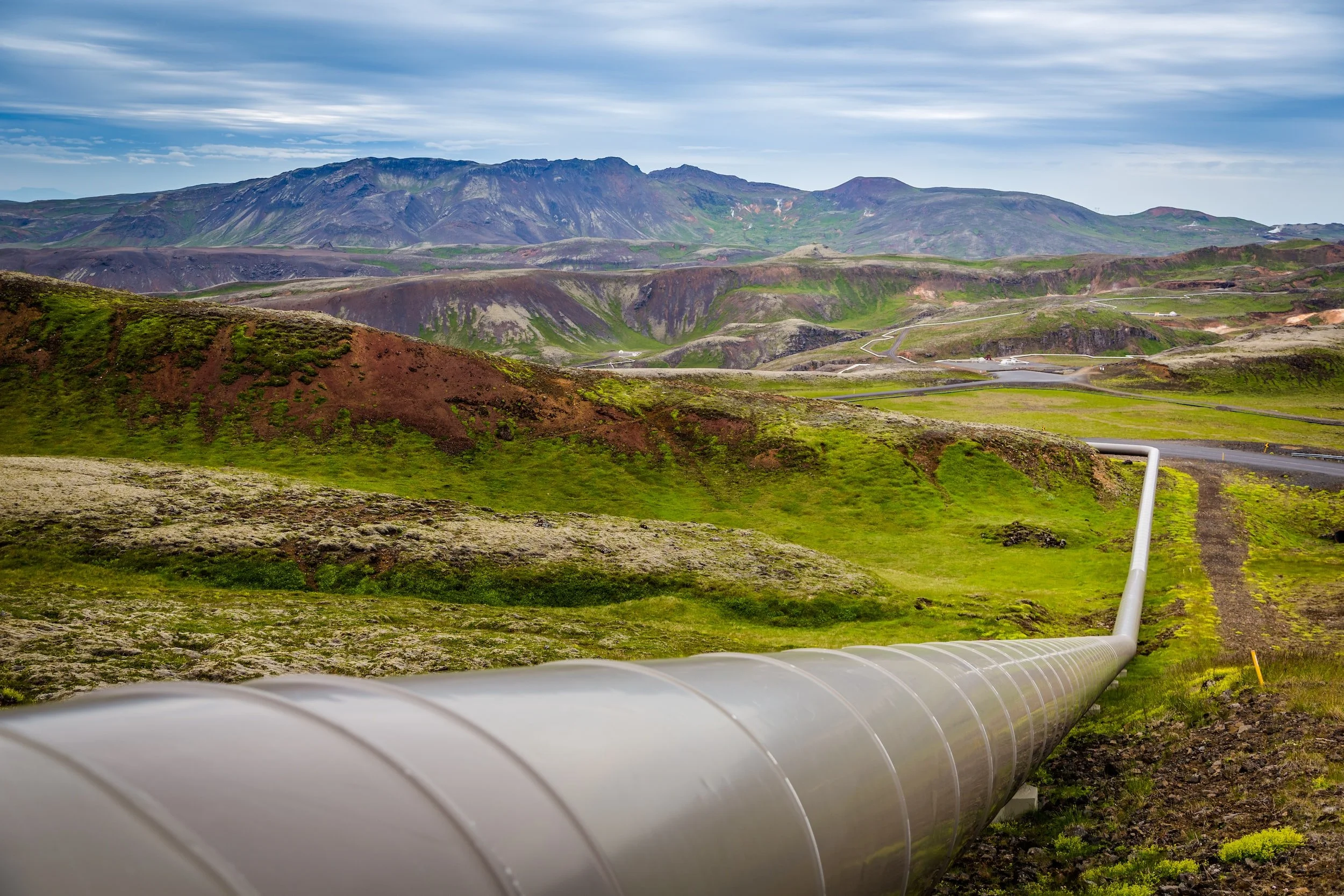
Important concerns of energy independence, environmental impact, and economic growth fuel the debate surrounding the "Keystone XL Project" - a proposal by TransCanada Corp. to construct a 36" underground pipeline that would transport crude oil from Canada, across the border into Montana, and then down to the oil refineries on the Gulf Coast.[1] However, it was not a conclusion based on the merits of balancing such important concerns that led to the project's original permit application being denied in January 2012.

Pursuant to Executive Order 13337, it is the Department of State's (DOS) responsibility to determine whether granting a permit for a proposed pipeline is in the "national interest."[2] It is generally based on this recommendation that the President will decide whether to grant or deny the presidential permit needed to build across the U.S. border. In order to make its national interest determination, the DOS must consider many factors, including: energy security, health, environmental, cultural, economic, and foreign policy concerns.[3] After receiving the initial permit application from TransCanada Corp. in September 2008, the DOS spent three years looking into these concerns as they related to the Keystone XL proposal before issuing its Final Environmental Impact Statement (FEIS) on the project in August 2011.[4]

Despite a finding in the FEIS that Keystone XL would have "no significant impact" on the environment, the DOS announced in November 2011 that it needed more information in order to make its "national interest" determination.[5] A little over a month later, Congress passed the "Temporary Payroll Tax Cut Continuation Act of 2011" which included a provision requiring the President to determine within

60 days

 whether the Keystone XL pipeline is in the national interest.[6]

Even though it had been reviewing the project for three years, on January 18, 2012 the DOS stated that because of Congress' 60 day limit, it had not had adequate time to gather information sufficient to make the national interest determination and, therefore, would be recommending to the President that he deny the Keystone XL permit.[7] The President accepted their recommendation and denied TransCanada Corp.'s permit.[8]

Since the denial of the permit did not preclude subsequent permit applications, TransCanada Corp. submitted a new application May 4, 2012 which offered alternate routing in Nebraska to avoid the "Sandhills" region - an area which was of great concern to environmentalists due to its fragile ecosystem.[9] TransCanada Corp. submitted its own environmental report in September 2012 for the DOS to review in making its new determination.[10] According to the Department of State's "Keystone XL Pipeline Project" website, review of the new application is estimated to be completed in the first quarter of 2013.[11]

While those who strongly oppose or support the construction of the pipeline continue to debate its potential impact on the country, there is one notion that both sides should be able to agree on: for better of worse, the Keystone XL Project is significant and, thus, its application for a presidential permit warrants an outcome based on the factors that the DOS is required to consider when making a "national interest" determination. The DOS's 2011 recommendation being based on lack of sufficient information - whether accurate or not - simply didn't offer enough "closure" on the issue for those across the country who feel much is at stake when it comes to this project. Hopefully, a decision based on the merits as to whether construction of the Keystone XL is in the "national interest" of the country will finally be delivered in 2013.

_______________________

[1] Application of TransCanada Keystone Pipeline, L.P. for a Presidential Permit,

U.S. Department of State Keystone XL Pipeline Project, 

(May 4, 2012),

available at

 http://keystonepipeline-xl.state.gov/proj_docs/permitapplication/index.htm. 

[2]

New Keystone XL Pipeline Application

, 

U.S. Department of State Keystone XL Pipeline Project, 

http://www.keystonepipeline-xl.state.gov/ (last visited Nov. 26, 2012).

[3]

Id.

[4]

Proposed Keystone XL Project Final Environmental Impact Statement: Special Briefing

, U.S. Department of State, Aug. 26, 2011, http://www.state.gov/e/oes/rls/remarks/2011/171117.htm (last visited Nov. 26, 2012).

[5]

Briefing on the XL Pipeline

, 

U.S. Department of State: Diplomacy in Action, 

(Jan. 18, 2012), http://www.state.gov/r/pa/prs/ps/2012/01/181492.htm.

[6]

Id.

[7]

Id.

[8]

Id.

[9] Application of TransCanada Keystone Pipeline, L.P. for a Presidential Permit, 

U.S. Department of State Keystone XL Pipeline Project, 

(May 4, 2012), 

available at

 http://keystonepipeline-xl.state.gov/proj_docs/permitaplication/index.htm.

[10]

New Keystone XL Pipeline Application

, 

U.S. Department of State Keystone XL Pipeline Project, 

http://www.keystonepipeline-xl.state.gov/ (last visited Nov. 26, 2012).

[11]

Id.

Kentucky Contemplates Increased Cigarette Taxes: Symbolic Efforts to Put Out Tobacco Use and Industry

By: Michael Erena, Staff Member

In February of this year, Kentucky Governor Steve Beshear charged the Blue Ribbon Commission on Tax Reform to review and revise the Kentucky tax code.[1] A recent proposal approved by the Commission would increase state cigarette taxes from $0.60 to $1.00 per pack.[2] While the cigarette tax is one of many proposals under consideration by the Commission,[3] it nevertheless raises the question of whether such a tax would serve as a viable and effective option for Kentucky. Furthermore, what does this proposal mean for the tobacco industry in general?

In recent years, hiking cigarette taxes has become a popular strategy employed by state legislatures.[4] The politically appealing cigarette taxes provide monetary incentives to reduce smoking and its negative public health by-products while also bolstering state revenues. Most recently, Illinois lawmakers approved a tax increase from $1.00 to $1.98 per pack, which took effect in July of this year.[5] Despite the overall national trend toward increasing state cigarette taxes, a great disparity remains among the individual states' taxation rates: New York imposes the nation's highest rate of $4.35 while the nation's lowest rate in Missouri is a paltry $0.17 per pack.[6] In November, Missouri voters maintained the national low by rejecting Proposition B, which would have imposed a state increase of $0.73 per pack.[7] This disparity in state cigarette tax rates has led to a booming industry for cigarette smuggling and resale - known as "smurfing" - exacting an estimated governmental cost of $10 billion annually, according to the Bureau of Alcohol, Tobacco, Firearms, and Explosives.[8]

While Kentucky's tax rate would remain relatively low even with the proposed increase and thus not create the sort of high profit margins to incentivize large scale cigarette smuggling operations in Kentucky, it could very well drive Kentucky smokers to take their business across state lines to one of the five border states offering lower prices. Kentucky remains the second highest adult smoking market in the nation,[9] a market that hopefully could be choked down by tax pressures, but one that nonetheless could be outsourced in part to more cigarette-friendly neighbors. This potential for lost cigarette revenues from ubiquitous Kentucky border towns has given pause to some skeptics of the proposal.[10]

Setting aside the potential revenue shifting across Kentucky's borders, it remains to be seen what impact the tax increase would impose on Kentucky's tobacco industry. Although tobacco is not the dominant commodity it once was for Kentucky, it nonetheless produced $325.2 million in cash receipts for 2011.[11] Despite its declining sales, tobacco remains relevant to Kentucky and Kentuckians, and policy decisions such as imposing an increased cigarette tax may very well bring economic and agricultural ramifications.

The steady decline of tobacco sales in Kentucky, and nationwide, is certainly not attributable to any one state's individual tax increases, but rather the result of various and complex factors - chief among them the recognition of the devastating health consequences of tobacco consumption.[12] The fact that Kentucky, one of the principal tobacco-producing states left in the nation, contemplates further increases to its state cigarette tax, arguably decreasing tobacco usage, likely says more about the symbolic decline of the tobacco industry than anything else. Despite stalwart holdouts like Missouri, it seems Kentucky's contemplation of a higher tax falls in line with the national trend that signifies a slow push towards snuffing out an industry.

_____________________

[1] Press Release, Governor Steve Beshear's Communications Office, Gov. Beshear Authorizes Tax Reform Commission (Feb. 9, 2012),

available at

http://migration.kentucky.gov/Newsroom/governor/20120209taxcommission.htm.

[2] Scott Wartman,

Cigarette tax hike among proposed changes by tax commission,

(Nov. 19, 2012, 6:00 PM), http://cincinnati.com/blogs/nkypolitics/2012/11/19/cigarette-tax-hike-among-proposed-changes-by-tax-commission/.

[3]

Id.

[4]

The urge to smurf: When government gets greedy, some people turn to crime

, 

The Economist, 

http://www.economist.com/news/united-states/21567111-when-government-gets-greedy-some-people-turn-crime-urge-smurf (Nov. 24, 2012) ("Since 2007 at least 27 states have raised their cigarette taxes, often to erase deficits or to cover sharp increases in health-care costs.").

[5] Rick Pearson & Ray Long,

Lawmakers OK $1-a-pack cigarette tax hike

, 

Chicago Tribune, 

(May 30, 2012), http://articles.chicagotribune.com/2012-05-30/news/ct-met-illinois-legislature-0530-20120530_1_cigarette-tax-tobacco-tax-measure-tax-hike. 

[6] Map of Cigarette Tax Rates, 

Tobacco Free Kids, 

(July 6, 2012),

available at

www.tobaccofreekids.org/research/factsheets/pdf/0097.pdf.

[7] Michelle Pekarsky,

Missouri Voters Reject Cigarette Tax Hike, 

Fox4kc.com, 

(Nov. 6, 2012, 10:44 PM), http://fox4kc.com/2012/11/06/prop-b-cigarette-tax-in-missouri/.

[8] 

The Economist, 

supra

 note 4.

[9]

Tobacco Use in Kentucky 2012, 

Kentucky Cabinet for Health and Family Services, 

available at

http://chfs.ky.gov/dph/mch/hp/tobaccodata.htm.

[10] Wartman,

supra

note 2.

[11] Lorie Hailey,

Cash Receipts for Kentucky Farm Commodities Nearly $5 Billion in 2011, 

The Lane Report, 

(Nov. 13, 2012), http://www.lanereport.com/15231/2012/11/kentucky-farm-cash-receipts/.

[12]

Vital Signs: Current Cigarette Smoking Among Adults Aged 

≥ 18 Years - United States, 2005-2010, 

Centers for Disease Control and Prevention, 

(Sept. 9, 2011),

available at

http://www.cdc.gov/mmwr/preview/mmwrhtml/mm5745a3.htm.

California's Cap-and-Trade Program: A Potential Model for the Country

By: Maegan Pirtle, Staff Member

California has a history of being at the forefront of state initiatives dealing with urgent environmental problems,[1] and its cap and trade program designed to limit the amount of greenhouse gases produced by industrial polluters is no exception. Under this program, California has set a cap on the amount of carbon that individual industrial entities are permitted to emit and allows those entities that do not use their full allocation to sell excess allowances to other businesses.[2] The hope is that this flexible, market-based approach will incentivize businesses to cut emissions by allowing them to make a profit on unused emission permits.[3]

While the program has been lauded by some as a model for the rest of the country,[4] it is not without its critics. Some argue that the initiative will be too much of a burden on California companies and will ultimately cause businesses to leave the state in droves.[5] On the other side, some environmental groups have also expressed frustration with the program, arguing that it accomplishes too little.[6]

Fears about the impact of this program are to be expected. In addressing serious concerns about industrial pollution, California has adopted a program that is unprecedented outside of the European Union.[7] There is necessarily uncertainty about the effects, both positive and negative, of such a plan. However, there is good reason to believe that effects on business will not be as dire as some are predicting. California, acknowledging these concerns, has taken steps intended to ease the transition, including giving away 90 percent of the initial permits for free with the intent of slowly phasing in the number available for purchase.[8]

Concerns that California's program will not make enough of an impact are also validly considering that one state can only do so much to fix a truly global problem. However, if successful, it has the potential to have wide reaching effects. California's program could serve as a model for the rest of the country, which, as a whole, is responsible for 18 percent of the world's carbon emissions.[9] While there is no guarantee that California's experiment with cap and trade will be as successful as its supporters hope, the potential benefits certainly outweigh the speculative costs.

________________________

[1] Daniel Stone,

California Tackles Climate Change, But Will Others Follow?

, 

Nat'l Geographic 

(Nov. 16, 2012), http://news.nationalgeographic.com/news/energy/2012/11/121116-california-cap-and-trade.

[2] Mem. of P. & A. in Supp. of Verified Pet. for Writ of Mandate and Compl. for Declaratory Relief at 1, Cal. Chamber of Commerce v. Cal. Air Res. Bd. (2012), http://www.calchamber.com/GovernentRelations/Documents/SIGNED_MPA_11-13-12.pdf.

[3] Stone,

supra

 note 1.

[4] Barbara Grady,

Experts Debate Economic Side Effects of California's Cap and Trade Program

, 

Earth Island J. 

(Nov. 16, 2012), http://www.earthisland.org/journal/index.php/elist/eListRead/experts_debate_side_effects_of_CA_cap_and_trade.

[5]

California Debuts Landmark Cap-and-Trade System Aimed at Reducing Carbon Emissions

, 

Wash. Post 

(Nov. 14, 2012), http://www.washingtonpost.com/business/california-to-debut-landmark-cap-and-trade-system-with-pollution-auction/2012/11/14/5da6e20c-2e32-11e2-b631-2aad9dc73ac_story.html.

[6] Grady,

supra

 note 4.

[7]

California Debuts Landmark Cap-and-Trade System Aimed at Reducing Carbon Emissions

,

supra

 note 5.

[8] Stone,

supra

 note 1.

[9] Stone,

supra

note 1. 

Solar Farm Jobs: The Case for Updating Kentucky's Net-Metering Laws

By: Will Emmons, Staff Member

It's no secret that Kentucky's once central crop of tobacco has become less and less a part of our agricultural economy. The 2007 USDA Census of Agriculture reported that Kentucky had shed just shy of 40,000 jobs in tobacco farming in the decade between 1997 and 2007, amounting to just south of 83% of all tobacco jobs in the Commonwealth.[1] While we all reap public health benefits from being part of a society that smokes less, the impact of this decline on our farming communities has been devastating.

In a recent paper, University of Kentucky Professor of Agricultural Economics David Derbetin states that although the shift to producing different commodities cannot produce equivalent income to tobacco, this shift does provide an opportunity for farmers.[2] In this blog post, I argue that Kentucky's energy laws are preventing farmers from producing a lucrative commodity: solar power.

During last year's legislative session, an organization representing small farmers called the Community Farm Alliance sought to update Kentucky's net-metering laws for small scale renewable energy production.[3] Net metering laws, a product of the 1980s, control what benefit utilities companies must give small scale producers of renewable energy for pumping energy into the grid.[4] These laws exist at the state level in 43 states, including Kentucky, and vary widely from state to state.[5] States where the utility companies have a stronger lobby limit the percentage of energy subscribers who may participate. The limitations on the number of kilowatt hours a subscriber may be compensated for and what kind of compensation subscribers receive are also areas of broad variance.[6]

Currently, Kentucky allows small scale energy producers to be compensated for up to 30k into the grid per annum and receive compensation at retail rate from utility companies for this electricity.[7] This is a relatively low limit geared toward domestic producers. However, if we followed North Carolina and upped our limit to 1000kw and required our utility companies to sell more renewable energy, we could provide a real economic opportunity for our small farmers.

In the past five years following a new raft of clean energy legislation, 100 new solar farms have popped up across the Tarheel state.[8] According to one estimate, the boom has created 15,000 new jobs in the renewable energy sector.[9] The winners are North Carolina's formerly tobacco-dependent rural communities. We should follow suit.

____________________

[1]

The Shrinking Role of Tobacco Farming and Tobacco Product in Kentucky's Economy

, 

Campaign for Tobacco Free Kids 

(Feb. 19, 2009), http://www.kyvoicesforhealth.org/news/images/files/Kentucky%20Tobacco%20Farming%20Trends%202-19-09.doc.

[2] David L. Debertin,

Emerging Trends in Kentucky Agriculture and the Future of Rural Kentucky in the 21st Century

, 

University of Kentucky College of Agriculture, 

http://www.uky.edu/~deberti/exten.htm (last visited Nov. 24, 2012). 

[3] Phil N. Ferrill,

Community Farm Alliance criticizes General Assembly's failure to act on net-metering

, 

Barefoot & Progressive 

(April 9, 2011), http://www.barefootandprogressive.com/2012/04/community-farm-alliance-criticizes-general-assemblys-failure-to-act-on-net-metering.html.

[4] Stephanie Watson,

How Net Metering Works

, 

Howstuffworks, 

http://science.howstuffworks.com/environmental/green-science/net-metering.htm (last visited Nov. 24, 2012).

[5]

Net Metering

, 

Database of State Incentives for Renewables & Efficiency 

(Nov., 2012), http://www.dsireusa.org/documents/summarymaps/Net_Metering_map.pdf.

[6]

Id.

[7] Ferrill,

supra

 note 3.

[8] Sammy Fretwell,

Farmers Grow Profit with a New Crop: Solar Panels

, 

News Observer 

(Nov. 12, 2012), http://www.newsobserver.com/2012/11/11/2478266/farmers-grow-profits-with-a-new.html.

[9]

Id.

Protecting Traditions: The Rehabilitation of Kentucky's Horses and Children

By: Yvette DeLaGuardia

In a state in which the horse industry provides over $2.3 billion in goods and services,[1] it makes sense that Kentucky has a significant number of training and rehabilitation centers for one of the state's most valuable commodities,[2] its horses. At these centers, trained staff members utilize the highest quality equine therapy equipment to ensure the horses brought to the facilities are quickly returned to "mental and physical wellness."[3] When considering the significant role the horse industry has played in the history and traditions of Kentucky and the impact the industry has on Kentucky's economy,[4] the fact that many Kentuckians are concerned with the wellbeing of horses should come as no surprise. What may, however, be surprising, is the use of horse rehabilitation centers as a means for a second chance not only for horses, but also for Kentucky juveniles who have found themselves entangled in Kentucky's juvenile justice system.[5]

The Kentucky Department of Juvenile Justice and the Department of Community Based Services have certified the Bluegrass Aquatic Rehabilitation and Training Center in Louisville, Kentucky to provide vocational training to Kentucky's youth. More specifically, the center is able to offer vocational training to juveniles between the ages of 14 to 18 years old[6] who have been committed to the Department of Juvenile Justice or to the Cabinet of Health and Family Services after adjudication and disposition of one or more public criminal offenses.

Kentucky's certification of the rehabilitation center demonstrates the state's attempt to effectuate the current trend in juvenile justice reform, the Juvenile Detention Alternative Initiative.[7] By offering Kentucky's juveniles the opportunity to leave their own "rehabilitation" centers[8] for a few hours a day to gain vocational training, the aggregate effect of the collaborative effort between the Department of Juvenile Justice and the cooperative equine center is to help prevent the institutionalization of juveniles. If more equine rehabilitation centers were to follow the lead of the Bluegrass Aquatic Rehabilitation and Training Center, the rehabilitation of Kentucky's horses and Kentucky's children could be enhanced through decreased institutionalization.

______________________

[1] American Horse Council, Economic Impact of the Horse Industry State Break Out Report (2005),

available at

 http://www.horsecouncil.org/state-breakout-studies-following-states.

[2] Gregory A. Hall,

Kentucky Agricultural Receipts Set Record of Almost $5 Billion, 

Courier Journal.com 

(Sept. 4, 2012 5:48 pm) http://www.courier-journal.com/article/20120904/BUSINESS/309040064/Kentucky-agricultural-receipts-set-record-almost-5-billion?nclick_check=1.

[3] The Kentucky Equine Sports Medicine & Rehabilitation Center Approach, http://www.kesmarc.com/approach.html.

[4] Governor Steve Beshear,

A Step Forward

, The Official Blog of Governor Steve Beshear (July 23, 2010 1:48PM) (describing the horse industry as "vital to the Commonwealth's overall economic health").

[5]

See generally

 http://www.bluegrasstrainingcenter.com/ (providing general information about the available equine services).

[6] 

Ky. Rev. Stat. Ann. 

§ 635.060 (4)-(5).

[7]

See

Juvenile Detention Alternative Initiative, http://www.aecf.org/MajorInitiatives/JuvenileDetentionAlternativesInitiative.aspx.

[8]

See 

Ky. Rev. Stat. Ann. 

§ 610.010 (describing the purpose of Kentucky's juvenile code as treatment based). 

California's Proposition 37: What Does Its Failure Signify for America's Food Industry?

By: Meredith Schuh, Staff Member

The rise of agricultural biotechnology sparked controversial debate regarding the propriety of requiring labeling on food products denoting the presence of genetically modified organisms, or GMOs. Proponents of mandatory labeling maintain consumers have a "right to know" what they are ingesting, especially if the food is "unnatural," or bioengineered.[1] Conversely, anti-labeling groups argue that it is unnecessary to provide labels primarily because of the immaterial difference, even nutritionally, between traditionally grown and genetically modified food.[2] Furthermore, opponents suggest if labeling were a requirement, the cost exacted on producers and consumers would be significant.[3]

Unlike the trend overseas, not a single jurisdiction in the United States has yet to pass a law requiring labeling on bioengineered food products. This is largely due to the position endorsed by the FDA. In 1992, the agency promulgated a policy statement, which did not require special labeling for genetically modified food.[4] Instead, the FDA determined that the general label requirements that apply to conventionally produced food also apply to foods made using biotechnology.[5] The FDA based its decision not to require mandatory labeling on the lack of evidence that bioengineered foods already abundantly sold on the market presented any adverse health risks to the consuming public.[6] However, labeling proponents are predominantly apprehensive about the "unknown" health effects of biotechnology in the food industry.[7]

Notwithstanding the FDA's opinion on the matter, the "Right to Know" food movement garnered strength, culminating recently in Proposition 37, a Mandatory Labeling of Genetically Engineered Food Initiative. Proposition 37 was voted on in California's November 6, 2012 ballot as an initiated state statute; it was ultimately defeated.[8] If the statute had been approved, it would have required labeling for food made from plants or animals with genetically altered material and prohibited labeling such food as "natural," but there were a number of exceptions.[9] According to the polls from last week, about 4.3 million Californians voted in favor of Proposition 37, and although the initiative failed, labeling proponents pledged to continue the fight for increased governmental regulation of the food industry.[10]

However optimistic labeling enthusiasts appear, I believe this most recent setback will have a major impact on the success of the "Right to Know" movement. Opposition to mandatory labeling is strong and apparently, very convincing. Prior to the vote on Proposition 37, news sources reported the initiative was "riding high," but that prediction underestimated the effect of a $46 million advertising campaign funded by opponents of the initiative.[11]

Spurring on the labeling crusade is an irrational fear of the negative effects of consuming genetically modified food sources, but scientific facts should subdue this anxiety.[12] Two decades ago, the FDA released its policy statement declaring there was no material difference between genetically engineered and conventionally produced food,[13] and unless this finding changes, it is likely the U.S. will continue to shy away from mandatory labeling of genetically modified products because of the associated considerable cost. The solution to the problem lies in facilitating public access to pertinent information about the substantiated factual findings concerning GMOs and the food industry.

_____________________

[1] Valery Federici,

Genetically Modified Food and Informed Consumer Consent: Comparing U.S. and E.U. Labeling Laws

, 35 Brook. J. Int'l L. 515, 517 (2010).

[2] Jon Entine,

Food labeling: Should environmentalists be pro-GM?

, Genetic Literacy Project, Sept. 7, 2012, http://www.geneticliteracyproject.org/2012/09/07/food-labeling-should-environmentalists-be-pro-gm/.

[3]

Id.

[4] Statement of Policy: Foods Derived From New Plant Varieties, 57 Fed. Reg. 22984 (May 29, 1992).

[5] FDA: Guidance, Compliance & Regulatory Information,

Guidance for Industry: Voluntary Labeling Indicating Whether Foods Have or Have Not Been Developed Using Bioengineering

, (Nov. 8, 2012), http://www.fda.gov/Food/GuidanceComplianceRegulatoryInformation/GuidanceDocuments/FoodLabelingNutrition/ucm059098.htm.

[6]

Id.

[7] Federici,

supra

 note 1, 521-22.

[8] Marc Lifsher,

Prop. 37 backers vow to continue food regulation efforts

, 

L.A. Times, 

Nov. 7, 2012, http://www.latimes.com/business/la-fi-prop37-genetic-food-labeling-20121108,0,7519439.story.

[9] BallotPedia, California 37, Mandatory Labeling of Genetically Engineered Food (2012), http://ballotpedia.org/wiki/index.php/California_Proposition_37,_Mandatory_Labeling_of_Genetically_Engineered_Food_(2012).

[10] Lifsher,

supra

 note 8.

[11] Marc Lifsher,

Prop. 37 is in the dead heat amid ad blitz, 

L.A. Times, 

Oct. 25, 2012, http://articles.latimes.com/2012/oct/25/business/la-fi-prop37-food-poll-20121024.

[12] Federici,

supra

 note 1, 521-22.

[13]

Id.

 at 517. 

One Man's Trash May Be Everyone's Treasure

By: Rachel Shelton, Staff Member

Garbage is something that everybody has but nobody wants - right? Apparently the opposite is true in Sweden. Sweden has been so successful at using almost all of its own trash to produce energy that Norway is now paying Sweden to dispose of its garbage as well.[1] According to Swedish Waste Management, the incineration of household trash provides enough energy to power 250,000 homes and to meet one-fifth of the country's heat production needs.[2] Only four percent of the nation's trash ends up in landfills.[3] Strangely, waste incineration does not seem to be a hot topic in the current American alternative energy debate. The United States has made some progress toward using incineration as a way both to create energy and to reduce the amount of trash that ends up in landfills, but the practice is underutilized on this side of the Atlantic.

There are currently 86 waste-to-energy trash incinerators in the United States.[4] The Environmental Protection Agency reports that in 2010, about 29 million tons of the nation's municipal solid waste (about 12% of total waste) was combusted to create energy.[5] Capturing the methane from buried trash decomposing in landfills is another way to utilize trash as an energy source; however, EPA researchers found that incinerating trash can generate up to 10 times the amount of electricity from the same amont of waste.[6]

Regulations of waste-to-energy technology do not appear to be hindering development. Recent adaptations to relevant EPA regulations seem to encourage the use of processes that derive energy from waste. Amendments include the clarification of which materials used in the combustion process are considered "solid wastes" for purposes of the Resource Conservation and Recovery Act (RCRA).[7] The definition under the Act determines whether a "combustion unit" qualifies as a waste incineration unit and must meet emissions standards under the Clean Air Act.[8]

Another example concerns regulation of a waste-to-energy process. "Gasification" is a process which "converts any material containing carbon - such as coal, petroleum coke... or biomass - into synthesis gas (syngas)," which can then "be burned to produce electricity or further processed to manufacture chemicals, fertilizers, liquid fuels, substitute natural gas (SNG), or hydrogen."[9] In 2008 the EPA excluded "oil-bearing hazardous secondary materials" from the definition of "solid waste," so that the materials that are used for "gasification" have the same regulatory status as those same types of materials when they are placed back into the petroleum refining process.[10] The purpose of the exclusion was to classify gasification as a petroleum production activity rather than a waste management activity, despite the fact that the production involves reusing waste materials.[11] The emphasis of regulation shifted from the need for disposal of certain materials to their potential to create energy.

The challenges of pursuing energy reform are much greater for a country as large as the United States than for a small country like Sweden. Difficulties of scale aside, the United States would do well to make better use of its trash. Despite the viability of the waste-to-energy process, no new incinerators have been built in the United States since 1995.[12] Fear that the concept may undercut recycling efforts, as well as opposition to incineration, may account in part for American hesitancy.[13] Recycling and reduction of waste would be ideal. Yet currently 54% of the trash in the United States still goes into a landfill.[14] Form a "lesser evils" perspective, the waste-to-energy concept looks promising.

_________________________

[1] Sophia Jones,

Sweden Wants Your Trash

, 

The Two-Way, Breaking News From NPR 

(Oct. 28, 2012), http://www.npr.org/blogs/thetwo-way/2012/10/28/163823839/sweden-wants-your-trash.

[2]

Towards a Greener Future with Swedish Waste-to-Energy The World's Best Example

, 

Avfall Sverige Swedish Waste Management, 

http://www.avfallsverige.se/fileadmin/uploads/forbranning_eng.pdf (last visited Nov. 3, 2012). 

[3]

Towards a Greener Future with Swedish Waste-to-Energy The World's Best Example

,

supra

 note 2.

[4]

Energy Recovery from Waste

, 

Environmental Protection Agency, 

http://www.epa.gov/osw/nonhaz/municipal/wte/index.htm (last updated July 24, 2012). 

[5]

Municipal Solid Waste Generation, Recycling, and Disposal in the United States: Facts and Figures for 2010

, 

Environmental Protection Agency, 

2 (2010) http://www.epa.gov/epawaste/nonhaz/municipal/pubs/msw_2010_rev_factsheet.pdf.

[6] Environmental Protection Agency,

Energy from Waste: Burn or Bury?

, 

Science Matters Newsletter 

(Sept. 21, 2011), http://www.epa.gov/sciencematters/april2010/scinews_energy-from-waste.htm.

[7] Identification of Non-Hazardous Secondary Materials that are Solid Waste, 76 Fed. Reg. 15456 (Mar. 21, 2011) (codified at 40 C.F.R. pt. 241).

[8]

Id.

[9]

What is Gasification?

, 

Gasification Technologies Council, 

http://www.gasification.org/page_2.asp?a=1&b=85 (last visited Nov. 2, 2012).

[10] Regulation of Oil-Bearing Hazardous Secondary Materials from the Petroleum Refining Industry Processed in a Gasification System to Produce Synthesis Gas, 73 Fed. Reg. 57 (Jan. 2, 2008) (codified at 40 C.F.R. pts. 260-61).

[11]

Id.

 at 58.

[12]

Energy Recovery from Waste

,

supra

 note 4.

[13] Elisabeth Rosenthal,

Europe Finds Clean Energy in Trash, but U.S. Lags

, 

N.Y. Times 

(Apr. 12, 2010), http://www.nytimes.com/2010/04/13/science/earth/13trash.html?pagewanted=all&_r=0.

[14]

Municipal Solid Waste Generation, Recycling, and Disposal in the United States: Facts and Figures for 2010

,

supra

 note 5. 

Post Hurricane Sandy Relief for Farmers and Producers

By: Megan Crenshaw, Staff Member

Despite the high estimate of economic damage that has been predicted as a result of recent Hurricane Sandy, overall farm and crop damage appears to be minimal.[1] However, there has been an impact in some areas of the United States and damages are still being assessed. Some severe localized crop damage has occurred in some urban farms in New York.[2] Farmers and ranchers in New Jersey have reported damage.[3] Other crop damage has also been reported in parts of Virginia.[4]

In the event of natural disasters when relief aid is necessary, the United States Department of Agriculture (USDA) provides assistance to farmers through programs administered via the Farm Service Agency (FSA).[5] The FSA "provides assistance for natural disaster losses, resulting from drought, flood, fire, freeze, tornadoes, pest infection, and other calamities."[6]

The USDA's authority to operate FSA programs authorized by the 2008 Farm Bill expired on September 30, 2011.[7] Production losses due to natural disasters occurring after September 30, 2011 are no longer eligible for diaster program coverage under programs that have expired.[8] In light of this eliminated relief, there are still some sources of recovery available for farmers. Those sources include: Disaster Relief and Emergency Assistance, the Emergency Conservation Program (ECP), and the Emergency Loans Programs (ELP).[9]

The FSA has advised farmers and ranchers affected by Hurricane Sandy to keep thorough, detailed records of all losses.[10] These records could be very beneficial when seeking post-Hurricane Sandy relief from the FSA. Records should include livestock death, as well as expenses for feed purchases, costs due to lost supplies, increased transportation of livestock, and damaged farm land and crops.[11] These suggestions that have been given to farmers and producers after Hurricane Sandy are precautions that every farmer and producer facing similar circumstances should take after any natural distaster in order to receive all forms of reimbursement and relief in the future.

_____________________

[1] Brad Plumer,

Is Sandy the second-most destructive U.S. hurricane ever? Or not even top 10?

, 

WashingtonPost.com, 

(Nov. 5, 2012), http://www.washingtonpost.com/blogs/ezra-klein/wp/2012/11/05/is-sandy-the-second-most-destructive-u-s-hurricane-ever-or-not-even-top-10/; Politics/Nation,

Hurricane Sandy slows final crop harvest in eastern U.S. states

, 

EconomicTimes.com, 

(Oct. 30, 2012), http://articles.economictimes.indiatimes.com/2012-10-30/news/34817312_1_corn-harvest-soybean-harvest-crop-progress-report.

[2] Russell McLendon,

Hurricane Sandy wreaks agricultural havoc

, 

MotherNatureNetwork.com, 

(Oct. 31, 2012), http://www.mnn.com/earth-matters/climate-weather/blogs/hurricane-sandy-wreaks-agricultural-havoc.

[3] Tracy Grondine,

Agricultural damage from Hurricane Sandy still being assessed

, 

SoutheastFarmPress.com, 

(Nov. 5, 2012), http://southeastfarmpress.com/livestock/agricultural-damage-hurricane-sandy-still-being-assessed.

[4]

Id.

[5] Farm Service Agency,

Disaster Assistance Programs

, 

USDA.gov, 

http://www.fsa.usda.gov/FSA/webapp?area=home&subject=diap&topic=landing (last visited Nov. 5, 2012).

[6]

Id.

[7] News Release,

Farmers and Ranchers Urged to Record Losses from Hurricane Sandy

, 

USDA 

(Oct. 31, 2012), http://www.usda.gov/wps/portal/usda/usdamediafb?contentid=2012/10/0337.xml&printable=true&contentidonly=true.

[8]

Id.

[9]

Id.

[10]

Id.

[11]

Id. 

American Horse Slaughter Prevention Act and Its Impact on the Horse Capital of the World

By: Jordan Stanton, Staff Member

The American Horse Slaughter Prevention Act is Congress's latest attempt at banning horse slaughter domestically.  This proposed legislation also prohibits the exportation of horses to other countries for slaughter.[1] Although meritorious, legislation of this nature has been proposed before, to no avail.[2] Consequently, regulation of this practice will be left with the states. As the horse capital of the world, us Kentuckians need to consider if this ban is really beneficial to the welfare of the horses that Congress is so keen on protecting. 

From Fiscal Year 2006 to 2011, Congress included language in its annual appropriations bill that prohibited the USDA's use of federal funds to inspect horses being transported for slaughter and horses that were intended for human consumption.[3] During that period, the horse slaughter industry was essentially banned in the United States; however, not outright. Circumventing this prohibition, horses were sent to Canada and Mexico for slaughter.[4] Ironically, the well-being of these animals was hurt by this prohibition. The journey these horses took to our bordering countries was long and hard, and the actual slaughter was far less humane than what was done domestically.[5] Recognizing this result, the Government Accountability Office issued a report that condemned the banning of horse slaughter domestically.[6] Heeding their warning, federal funding was restored to the USDA, which allows horse slaughter to once again commence in the United States.[7] 

Kentucky is home to roughly 320,000 horses, putting it fifth in horse population in the nation.[8] As host to the most prolific horse racing event in the world, The Kentucky Derby, Kentucky has vested interest in maintaining its pro-horse persona. The question then presents itself, should the State of Kentucky enact legislation that prohibits any involvement in the horse slaughter industry? The answer is difficult. Morally, the execution of animals that are staples of American culture is hard to stomach. However, due to the dismal state of our national economy, many horse owners are unable to care for their animals.[9] In Kentucky alone there are 60,000 to 90,000 unwanted horses.[10] The problem has led to unregulated breeding, which has further inflated the crisis.[11] Numerous non-profit organizations have responded to the situation, but their level of funding leaves only a minimal remedial effect.[12]

My solution to the problem may enrage some pro-horse individuals and groups, but it is endorsed by the GAO. Since Kentucky has so many horses, and the number of unwanted horses is growing, why not construct a horse slaughter facility in the Commonwealth? The fate of these horses is much more catastrophic when they are shipped to unregulated slaughter facilities in Mexico and Canada. Why not keep these animals at home, and allow for their slaughter in regulated facilities? This industry could provide a stimulus to Kentucky's economy since horse meat is heavily sought after worldwide.[13] At the end of the day, this position is in the horse's best interest, and those who think otherwise are not acclimated with the facts.

_______________________

[1]

H.R. 2966: American Horse Slaughter Prevention Act

, 

Govtrack.us, 

http://www.govtrack.us/congress/bills/112/hr2966 (last visited Oct. 25, 2012).

[2]

American Horse Slaughter Prevention Act

, 

Animal Welfare Institute, 

http://awionline.org/content/american-horse-slaughter-prevention-act (last visited Oct. 25, 2012). 

[3]

Action Needed to Address Unintended Consequences from Cessation of Domestic Slaughter

, 

United States Government Accountability Office, 

8-9 (June 22, 2011), http://www.gao.gov/new.items/d11228.pdf.

[4]

Id.

 at 10.

[5]

Id.

 at 2.

[6]

See generally id.

[7] Stephen Dinan,

Obama, Congress Restore Horse-Slaughter Industry

, 

The Washington Times 

(Nov. 30, 2011), http://www.washingtontimes.com/news/2011/nov/30/obama-congress-restore-us-horse-slaughter-industry/?page=all.

[8] Dennis Johnston,

Why?

,

Horse Capital of the World 

(Jan. 21, 2010, 4:25 PM), http://horsecapitaloftheworld.blogspot.com/2010/01/why.html.

[9] Wendy Mitchell,

Bill Could Re-Open Horse Slaughterhouses

, 

The Ledger Independent 

(Feb. 3, 2010, 10:00 PM), http://www.maysville-online.com/news/local/bill-could-re-open-horse-slaughterhouses/article_2ebf741c-9c43-5814-bd5e-5fafa1d9dbbe.html.

[10]

Id.

[11]

Id.

[12]

Horse Slaughterhouses Gain Unlikely Ally. PETA?

, 

WHAS11.com, 

http://www.whas11.com/news/Horse-slaughter-re-legalized-in-United-States-134854-18.html (last updated Dec. 2, 2011). 

[13] Julie Harker,

Americans Eat Horse Meat

, 

Brownsfield Ag News for America 

(June 8, 2012), http://brownfieldagnews.com/2012/06/08/americans-eat-horse-meat-study-published/.